
炒新

Search documents
上市首日狂飙12倍,紧接着两个30cm跌停!这才是割韭菜
Sou Hu Cai Jing· 2025-11-25 16:52
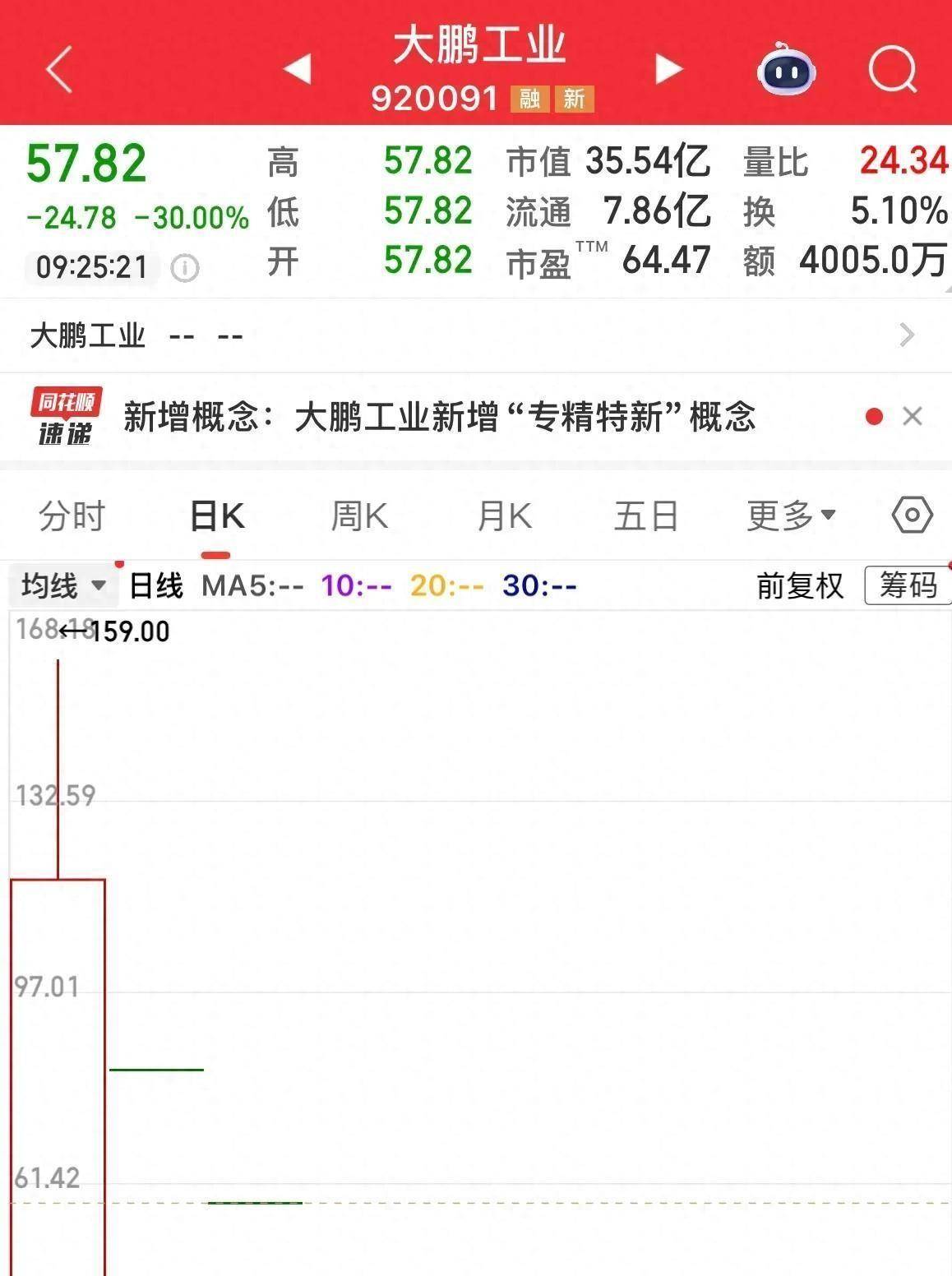
Core Viewpoint - The article discusses the phenomenon of new stocks experiencing extreme volatility on their first trading day, often leading to significant losses for retail investors who chase high prices after initial surges. Group 1: Stock Performance and Market Behavior - A new stock listed on the Beijing Stock Exchange saw its price surge by nearly 1500% on the first day, closing at over 12 times its initial price, allowing investors to earn significant profits [1] - However, the stock faced a drastic decline the following day, hitting the daily limit down of 30%, resulting in substantial losses for those who bought at the peak [1][6] - Within three days, the stock price dropped by two-thirds, illustrating the volatility and risks associated with new stock listings [1][6] Group 2: Investor Dynamics - The majority of trading activity on the first day is driven by retail investors, with 99.7% of accounts involved in buying new stocks being individual investors [4] - Retail investors often exhibit a fear of missing out (FOMO), leading them to buy into stocks that are rapidly increasing in price without considering the underlying fundamentals [4][8] - The T+1 trading rule exacerbates the situation, locking in buyers from the first day and creating a sell-off pressure the next day as they seek to realize profits or cut losses [6][16] Group 3: Market Structure and Manipulation - The limited float of new stocks, often only a small percentage of total shares, allows for significant price manipulation by traders, particularly in a market with high liquidity [4][8] - Speculative trading strategies, such as creating artificial price increases through wash trading, are employed by certain players to attract retail investors before selling off their positions [8] - The lack of effective short-selling mechanisms in the market contributes to the one-sided price increases, making it difficult to correct inflated valuations [4] Group 4: Company Fundamentals - Despite the dramatic price movements, the underlying financial performance of companies often does not support such high valuations, with some stocks trading at price-to-earnings ratios exceeding 70 times [9][11] - Historical examples show that many new stocks experience significant declines shortly after their initial surge, with over 70% of new stocks losing value within a week of listing [14] - The article highlights that the fundamental performance of companies, such as net profits and cash flow, often fails to justify the inflated market capitalizations following initial public offerings [10][11]

上市即巅峰?除中签的全是套牢盘,3天跌40%,卖还是等?
Sou Hu Cai Jing· 2025-11-10 17:11
Core Viewpoint - The article highlights the extreme volatility and risks associated with new stock listings in the A-share market, where initial high returns can quickly turn into significant losses for investors. Group 1: Stock Performance and Volatility - On November 26, 2024, a new stock "Hong Sifang" was purchased at 120 yuan, reaching a peak of 160 yuan, resulting in a 30% unrealized gain, but the next day it plummeted to 90 yuan, leading to a 17% loss upon selling [1] - Wireless Media's stock surged from an opening price of 29.11 yuan to a peak of 361 yuan within four trading days, only to drop 64.48% in a single day to 80.99 yuan, causing losses of up to 78% for late investors [3] - In 2024, the average first-day gain for new stocks was 249.97%, significantly higher than 2023's 66.45% and 2022's 30.2%, indicating a trend of "listing as the peak" [3] Group 2: Market Dynamics and Investor Behavior - Over 50% of new stocks experience a price correction or crash shortly after listing, with most investors who buy at the first-day closing price facing short-term losses [3] - The absence of price limits in the first five trading days of new listings amplifies stock price volatility, turning the market into a speculative frenzy [3][6] - High turnover rates, such as 87.39% for Wireless Media, indicate that trading is driven more by short-term speculation rather than long-term investment [5] Group 3: Psychological Factors and Market Sentiment - Investors often have unrealistic expectations for new stocks, driven by a "new stock always profits" mentality, leading to blind following of market trends [7][8] - The allure of new stocks, combined with a low initial offering price, can lead to severe overvaluation and subsequent losses for those buying at inflated prices [9][10] - The speculative nature of new stock trading is exacerbated in bull markets, where optimism can lead to excessive price inflation and subsequent crashes [18] Group 4: Implications for Investors - Investors face a dilemma when new stocks drop significantly: whether to cut losses or hold out for a potential rebound, often leading to a cycle of further declines [15] - The market does not guarantee recovery for investors who choose to wait, as seen in the rapid decline of Wireless Media's stock from 361 yuan to around 80 yuan [16] - The increasing number of IPOs in 2024 suggests that new stock allocations may not guarantee profits, necessitating a reassessment of investment strategies and risk tolerance [18]

真惨,新股上市就跌去三分之一,一中签股民3万利润变3万亏损
Sou Hu Cai Jing· 2025-11-09 18:55
Core Viewpoint - The rapid fluctuations in stock prices of newly listed companies in the A-share market have led to significant losses for investors, with over 70% of new stock investors experiencing losses on the first trading day [1][3][4]. Group 1: Market Dynamics - The absence of price limits on the first trading day has turned new stock listings into a speculative playground, with some stocks seeing first-day gains exceeding 500% and extreme cases reaching 19 times the initial price [3][4]. - High turnover rates are indicative of market bubbles, with one new stock experiencing a turnover rate of 91.68%, suggesting that nearly all circulating shares were traded [3][4]. - Following initial surges, it has become common for stocks to open lower the next day, with one automotive stock dropping 13.15% on the second day and 33.35% from its peak by the third day [4]. Group 2: Investor Behavior - A significant portion of new stock purchases is made by retail investors, with 99.7% of accounts buying into temporarily suspended stocks, leading to a 94.7% loss rate among these investors [6][8]. - The phenomenon of "floating profit addition" has been identified as a trap, where investors mistakenly believe that high intraday prices will serve as support levels, ignoring valuation risks [7][10]. - Despite the high risk of losses, enthusiasm for new stock investments remains strong, with over 14 million accounts participating in new stock subscriptions in 2025, reflecting a cognitive bias towards the belief that new stocks are always profitable [8][10]. Group 3: Institutional Strategies - Public funds generally adopt a strategy of selling on the first day of trading, unless the fundamentals are exceptionally strong and valuations are reasonable [10]. - Key warning signals for investors include a turnover rate exceeding 80% on the first day and a price-to-earnings ratio significantly above the industry average, which can indicate a high likelihood of subsequent price declines [10].
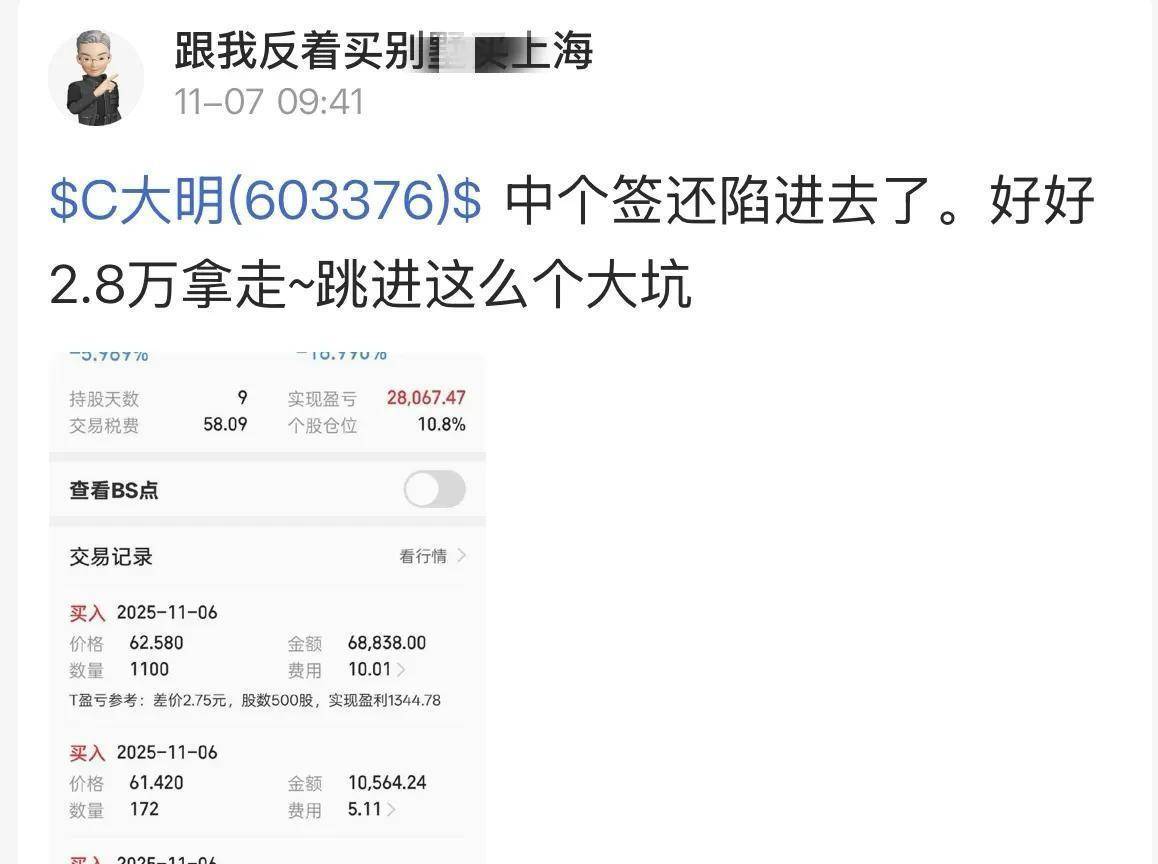
太惨了!新股上市就跌超三成,中签股民从赚3.1万变亏3.3万
Sou Hu Cai Jing· 2025-11-09 17:36
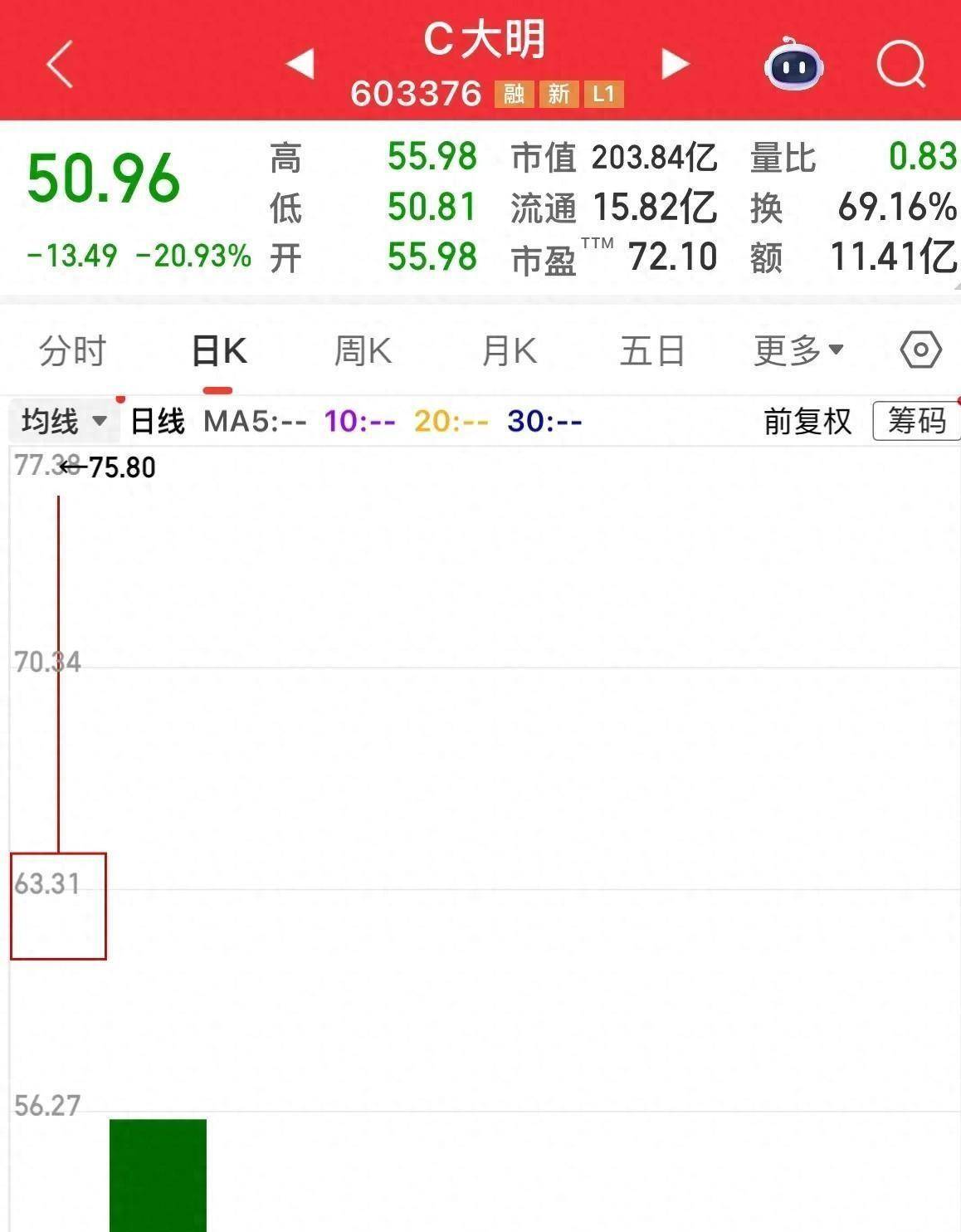
Core Insights - A new automotive parts stock debuted at an issue price of 12.55 yuan, soaring to a peak of 75.80 yuan, representing a 512% increase, but subsequently fell to 50.96 yuan, resulting in significant losses for investors who bought at high prices [1][4] Group 1: Stock Performance - The stock experienced a dramatic rise on its first day, with a peak price of 75.80 yuan, allowing investors to potentially earn 31,600 yuan if sold at the high [1] - A specific investor bought additional shares at prices of 70 yuan, 62 yuan, and 61 yuan, but ultimately sold at 68.7 yuan, leading to a loss of 33,600 yuan over two days [1] - The stock closed down 20.93% the following day, further increasing the investor's losses [1][6] Group 2: Investor Behavior - Historical data shows that 94.7% of retail investors who chase high prices on the first day of new stock listings end up losing money [2] - In 2024, a stock surged 1917% on its debut but plummeted 49.69% the next day, causing significant losses for those who bought at the peak [2] - The phenomenon of retail investors being misled by the "scarcity narrative" is prevalent, as seen in the case of "长联科技," which rose 1700% before dropping 66% [6] Group 3: Market Dynamics - The absence of price limits on new stocks for the first five days creates a speculative environment, with retail investors making up over 83.8% of purchases during price surges [4][6] - High turnover rates on debut days, such as 91.68% for "红四方," indicate a volatile trading environment where many retail investors fail to capitalize on rebounds [4] - Professional institutions typically avoid trading on the first day, preferring to wait for prices to stabilize before assessing value [8] Group 4: Valuation Concerns - The newly listed automotive parts stock had a price-to-earnings ratio of 72, significantly higher than the industry average [5] - Historical trends show that over 70% of new stocks return to reasonable valuations within three months of listing, suggesting a high-risk environment for early investors [8] - Many newly listed stocks have reported losses in their first financial statements, indicating potential overvaluation and performance issues [5]
炒新性价比并不高
Bei Jing Shang Bao· 2025-09-11 16:32
Group 1 - The core viewpoint is that the initial trading of new stocks often leads to significant losses for investors due to irrational price surges and market volatility, highlighting the risks associated with speculative trading in new issues [1][2] - The slowdown in new stock issuance affects market supply and demand, resulting in exaggerated price increases that do not reflect the company's actual value or long-term growth potential [1][2] - Investors are advised to wait for stock prices to stabilize before considering purchases, as this approach reduces investment risk and increases the likelihood of profit [2] Group 2 - The speculative nature of new stock trading creates a high psychological cost for investors, who often enter the market with a short-term profit mindset despite the inherent volatility [2][3] - The success rate of profiting from new stock speculation is lower than expected, and the potential returns do not justify the associated risks, suggesting that investors should avoid such strategies [3]
艾芬达:上市首日跌4.36%,炒新风险大
Sou Hu Cai Jing· 2025-09-11 15:54
Core Insights - The article discusses the poor performance of Aifenda on its first trading day, where it opened high but closed down 4.36% at 71.51 yuan, resulting in significant losses for investors who speculated on the new stock [1] - The slowdown in new stock issuance has led to increased speculation and volatility, with new stocks often experiencing exaggerated price increases on their debut, which poses substantial investment risks [1] Group 1: Market Dynamics - The speed of new stock issuance affects market supply and demand; when issuance slows, new stocks become scarce, leading to potential speculative bubbles on their first day [1] - The article highlights that the inflated price increases are driven by short-term market sentiment and blind capital chasing, which can lead to significant risks for investors who buy at high prices [1] Group 2: Investment Strategy - From a value investment perspective, new stocks lack historical data and market validation, making it difficult to assess their true value [1] - The article suggests that investors should wait for stock prices to stabilize before investing, as this allows for a more accurate alignment of price and value, thereby reducing investment risks and increasing profit potential [1] Group 3: Psychological Factors - The article points out that speculative trading in new stocks incurs significant psychological costs for investors, who often seek quick profits and may end up buying high and selling low due to price volatility [1] - It emphasizes that excessive speculation relies heavily on market sentiment and capital; when these factors wane, stock prices tend to revert to their intrinsic values, making speculative trading less favorable [1]
侃股:炒新性价比并不高
Bei Jing Shang Bao· 2025-09-11 13:05
Core Insights - The initial public offering (IPO) of Aifenda experienced a decline of 4.36% on its first day, closing at 71.51 yuan despite a general market rally, indicating significant losses for speculative investors [1] - The slowdown in new stock issuance has led to increased scarcity, resulting in exaggerated price surges on debut days, which do not reflect the true value or long-term growth potential of the companies [1][2] - Investors are advised to wait for stock prices to stabilize before considering investments, as this approach reduces risk and aligns prices more closely with intrinsic value [2] Market Dynamics - The rapid issuance of new stocks affects market supply and demand, leading to speculative bubbles that are driven by short-term market sentiment rather than fundamental company performance [1] - The volatility of newly listed stocks poses a significant risk, as prices can quickly revert to more realistic levels once market enthusiasm wanes [1][2] Investment Strategy - A rational investment strategy involves focusing on the fundamentals and long-term potential of companies rather than engaging in speculative trading of new stocks [2] - The psychological costs associated with participating in new stock speculation are high, as investors often buy at inflated prices and sell at losses due to market fluctuations [2][3] - The likelihood of success in new stock speculation is low, and the potential profits do not adequately compensate for the associated risks, suggesting that investors should avoid such strategies [3]