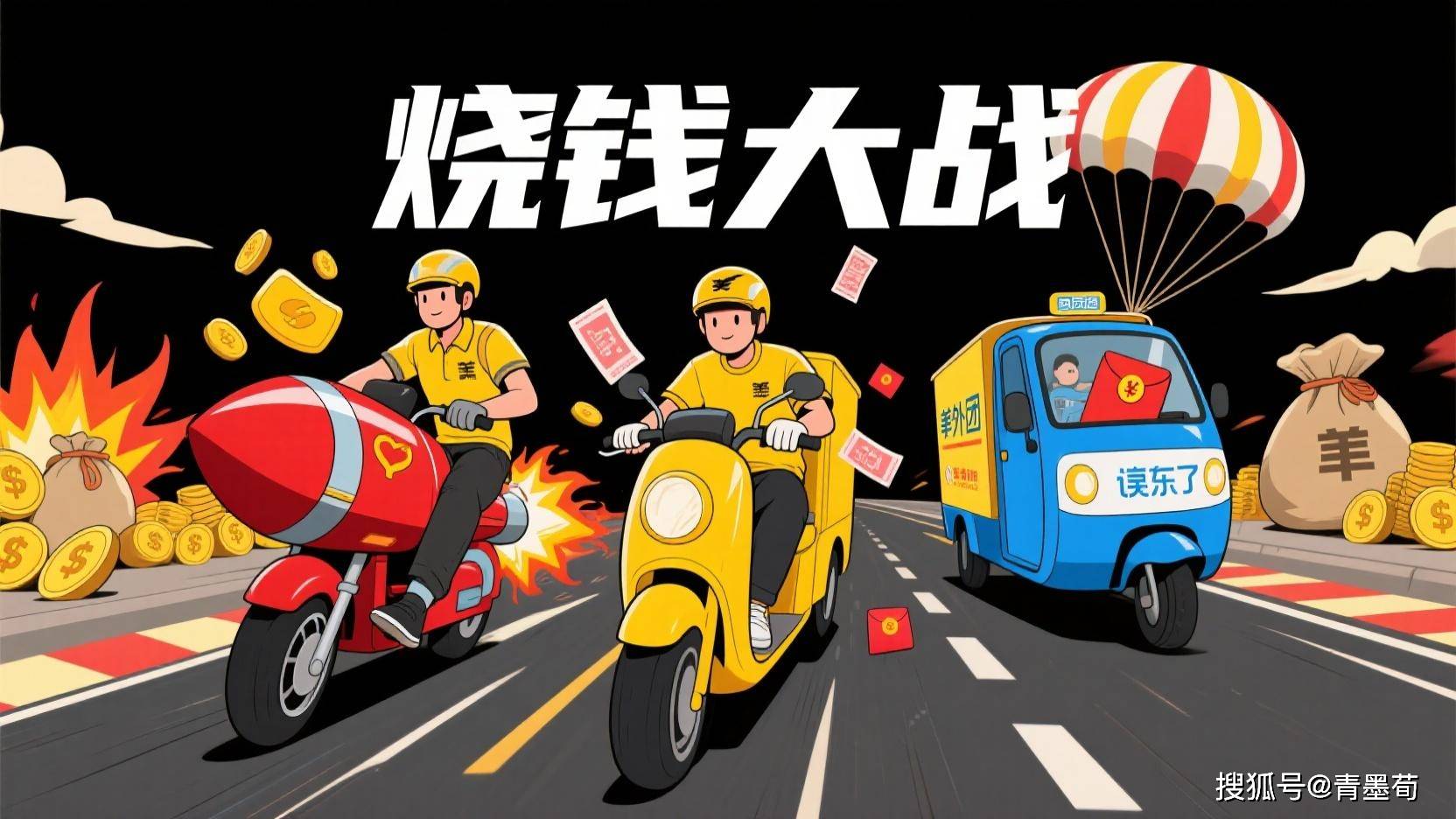
烧钱模式

Search documents
外卖大战收尾:烧光千亿,没有赢家
商业洞察· 2025-12-03 10:10
Core Viewpoint - The fierce competition in the food delivery sector among Meituan, Alibaba, and JD has shown signs of winding down as they face significant financial pressures and begin to reassess their strategies [4][12][21]. Group 1: What the Companies Gained - Alibaba's investment in instant retail has led to substantial growth, with daily order peaks reaching 120 million in Q2 and 300 million monthly active buyers [6][7]. - The collaboration between instant retail and Alibaba's ecosystem has resulted in a 20% increase in daily active users (DAU) for Taobao, enhancing commission and advertising revenues [7]. - Meituan has solidified its market position, with record high daily active users and increased transaction frequency, indicating strong consumer loyalty despite the competitive environment [8][9]. - JD has found a new narrative for its e-commerce business through its food delivery efforts, which have shown synergy with its core retail operations [9][11]. Group 2: What the Companies Paid - Alibaba's Q3 operating profit plummeted 85% to 5.4 billion yuan, with a net profit drop of 72% to 10.4 billion yuan, primarily due to high spending on food delivery subsidies [16][17]. - Meituan reported a revenue of 95.5 billion yuan in Q3, with a net loss of 16 billion yuan, marking a significant decline from a profit of 12.8 billion yuan in the previous year [17][18]. - JD's revenue grew 15% to 299.1 billion yuan in Q3, but its adjusted net profit fell by 74 million yuan, reflecting the costs associated with its food delivery operations [19][20]. Group 3: Market Dynamics and Future Outlook - The competitive landscape has stabilized, with Meituan holding a 50% market share in food delivery, while Alibaba and JD have 42% and 8% respectively [25][26]. - The diminishing returns from subsidy strategies have prompted companies to reconsider their growth narratives, as evidenced by a shift in Alibaba's investment strategy [27][28]. - Experts suggest that while the immediate competition may have cooled, the focus will shift towards non-food instant retail and enhancing in-store service capabilities as the next battleground [28][29].



外卖市场崩溃?美团利润跌破底线,竟因这一原因!
Sou Hu Cai Jing· 2025-08-27 16:55
Core Viewpoint - Meituan's recent financial report reveals a shocking 89% year-on-year decline in profit for Q1 2025, significantly exceeding market expectations, indicating severe profitability challenges for the company [3][6][12] Group 1: Business Challenges - The intense competition in the food delivery sector has led to a "subsidy war," where Meituan, Ele.me, and Didi frequently offer discounts to attract users, resulting in significant profit erosion for Meituan [5][9] - Despite efforts to diversify into new business areas such as hotel bookings, movie tickets, and bike-sharing, these expansions have not effectively contributed to overall profit growth, complicating management and resource allocation [6][10][11] - High marketing expenses and operational costs, particularly in providing quality service, have exacerbated the contradiction between high costs and low profitability, leading to substantial financial pressure on Meituan [7][12] Group 2: Market Dynamics - The food delivery market is becoming saturated, with slowing user growth making profitability increasingly difficult, as competition between Meituan and Ele.me has resulted in a detrimental price war [9][14] - New business ventures, particularly in the hospitality sector, have faced challenges due to slow recovery from the pandemic and intensified competition, further compressing profits [10][14] Group 3: Future Considerations - Meituan must reassess the long-term potential of its diversified businesses to avoid overcommitting resources to uncertain profit projects [11] - The company needs to innovate its profit model, focusing on reducing unnecessary expenses, improving operational efficiency, and enhancing user experience in core businesses to reverse its current predicament [12][14]