
焦土战略

Search documents
2025 AI战争回忆录:为什么说最可怕的 AI 狠人是扎克伯格?
3 6 Ke· 2026-02-04 01:43
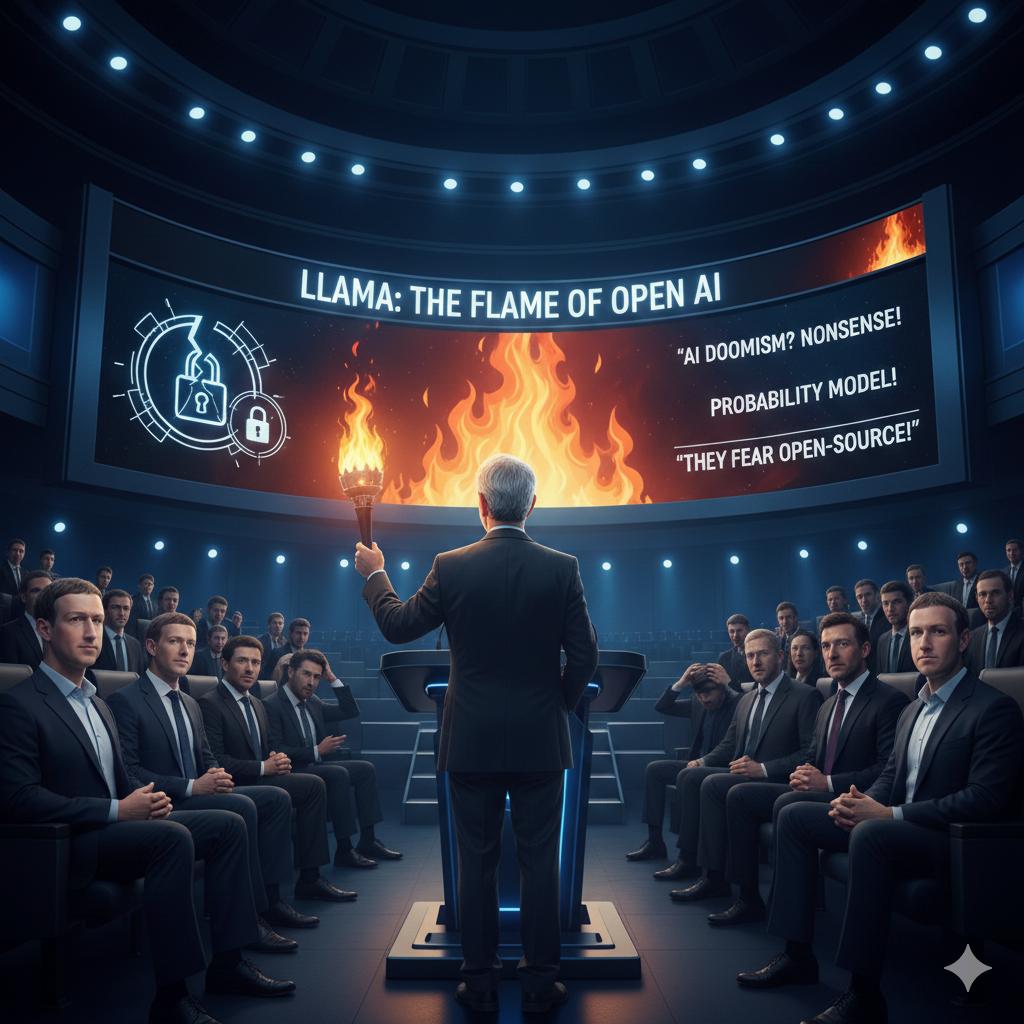
Core Viewpoint - The article discusses the competitive landscape in the AI industry, focusing on Meta's Mark Zuckerberg and his strategic shift towards an aggressive "scorched earth" approach to disrupt competitors like OpenAI and Google, particularly in the context of AI development and monetization. Group 1: Background and Context - Zuckerberg has historically felt constrained by Apple's dominance, as Meta's applications rely on Apple's iOS, making him vulnerable to changes in Apple's policies [10][11]. - The introduction of Apple's "App Tracking Transparency" in 2021 significantly impacted Meta's advertising revenue, leading to a loss of $10 billion in a single year [12][13]. - This experience instilled a desire in Zuckerberg to establish his own ecosystem, free from reliance on external platforms [15]. Group 2: Strategic Shift - In 2025, Zuckerberg identified AI as a potential disruptor to Apple's control, prompting him to adopt a "scorched earth" strategy against competitors [17][19]. - Meta's release of the Llama 4 model, with 400 billion parameters and an open-source, free commercial use model, aimed to undermine the business models of OpenAI and Google [30][31]. - This strategy effectively commoditized AI technology, leading to a collapse in the SaaS industry and forcing competitors to reassess their value propositions [35][36]. Group 3: Implementation and Impact - The launch of Llama 4 allowed developers to access advanced AI capabilities without the associated costs, significantly lowering the barriers to entry for new applications [32][34]. - Meta's integration of AI into platforms like Instagram and Facebook through features like "AI Studio" increased user engagement and transformed social interactions, ultimately driving advertising revenue [41][47]. - Zuckerberg's approach not only disrupted the software industry but also aimed to establish Meta as a dominant player in the AI landscape, positioning it for future growth [37][40].


美国人民反了!揭竿而起的日期已定,美军高官承认,美国可能要输
Sou Hu Cai Jing· 2025-09-12 06:55
Group 1: Military Readiness - The Pentagon's internal assessment reveals that the U.S. military's readiness is at its lowest since the end of the Cold War, with only 43% of active F-35 aircraft being operational and a 37% parts shortage for main battle tanks [3][4] - The U.S. has deployed three aircraft carrier strike groups to the waters off Venezuela, despite 12 vessels in these fleets having serious mechanical issues, indicating a façade of deterrence rather than actual military readiness [4] - The National Guard reports that 31% of its operational units face severe personnel shortages, which hampers the ability to respond to potential multi-city unrest [8] Group 2: Economic Disparities - The purchasing power of middle-class households has decreased by 14.7% since 2019, while the wealth of the top 1% has increased by 48.3%, highlighting a growing economic divide [3] - Retail giants like Walmart are employing shrinkflation strategies, leading to a 19% increase in the actual price of household goods despite stable shelf prices [8] - A recent Federal Reserve stress test indicates that 23% of small businesses could face bankruptcy by Q1 2024 if current inflation trends continue [8] Group 3: Social Unrest and Political Climate - Nationwide protests scheduled for October 18 are expected to be significantly larger than previous events, with organizers openly targeting the Trump administration and accusing it of leading the country towards dictatorship [1] - The judicial system is under severe strain, with 14 out of 17 recent cases against presidential overreach resulting in judges receiving death threats, reflecting a deteriorating political climate [6] - Intelligence reports suggest that extremist groups are planning to exploit the upcoming protests, potentially leading to violent confrontations [8]
