牛熊证

Search documents
12月16日【中銀做客】恆指、小米、阿里、阿里、騰訊、華潤啤酒
Ge Long Hui· 2025-12-18 04:34
Market Overview - The Hang Seng Index experienced a significant drop, falling from 25,628 points to a low of 25,086 points, a decline of nearly 600 points [1] - The distribution of Hang Seng Index bull certificates indicates that a substantial amount of capital has been concentrated in the range of 25,100 to 25,200 points, with around 1,400 contracts held [1][2] Investment Strategies - Investors are advised to regularly check the distribution chart of Hang Seng Index bull and bear certificates to understand market sentiment and potential support levels [2] - Following the recent market drop, investors are encouraged to adjust their strategies, opting for bull certificates with a recovery price of at least 24,800 points, reflecting a more cautious approach due to increased volatility [3][4] Stock Analysis - Xiaomi's stock has stabilized around 40 HKD, with recent inflows into bullish positions, indicating investor confidence despite market fluctuations [6] - Alibaba has seen significant inflows into bullish positions, with over 800 million HKD in the last trading day, suggesting continued investor optimism despite recent price declines [7] - Tencent has also attracted substantial capital inflows, with investors advised to adopt a phased investment strategy to mitigate risks during market adjustments [8] Product Recommendations - For Xiaomi, a recommended bull certificate is 15276 with a strike price of 57.88 HKD and a leverage of approximately 8 times [6] - For Alibaba, the recommended bull certificate is 23258 with a strike price of 160.1 HKD and a leverage of about 6 times [7] - For Tencent, the bull certificate 15532 with a strike price of 610 HKD and a leverage of around 6 times is suggested [8] Consumer Sector Insights - China Resources Beer has shown resilience in the market, with a slight increase in stock price despite overall market declines, indicating potential investment opportunities in consumer stocks [9] - The company has related bull certificates available, such as 23124 with a strike price of approximately 39 HKD and a leverage of about 5 times [10]
小米強力買入信號現!窩輪牛熊揀邊隻博反彈?
Ge Long Hui· 2025-10-27 11:56
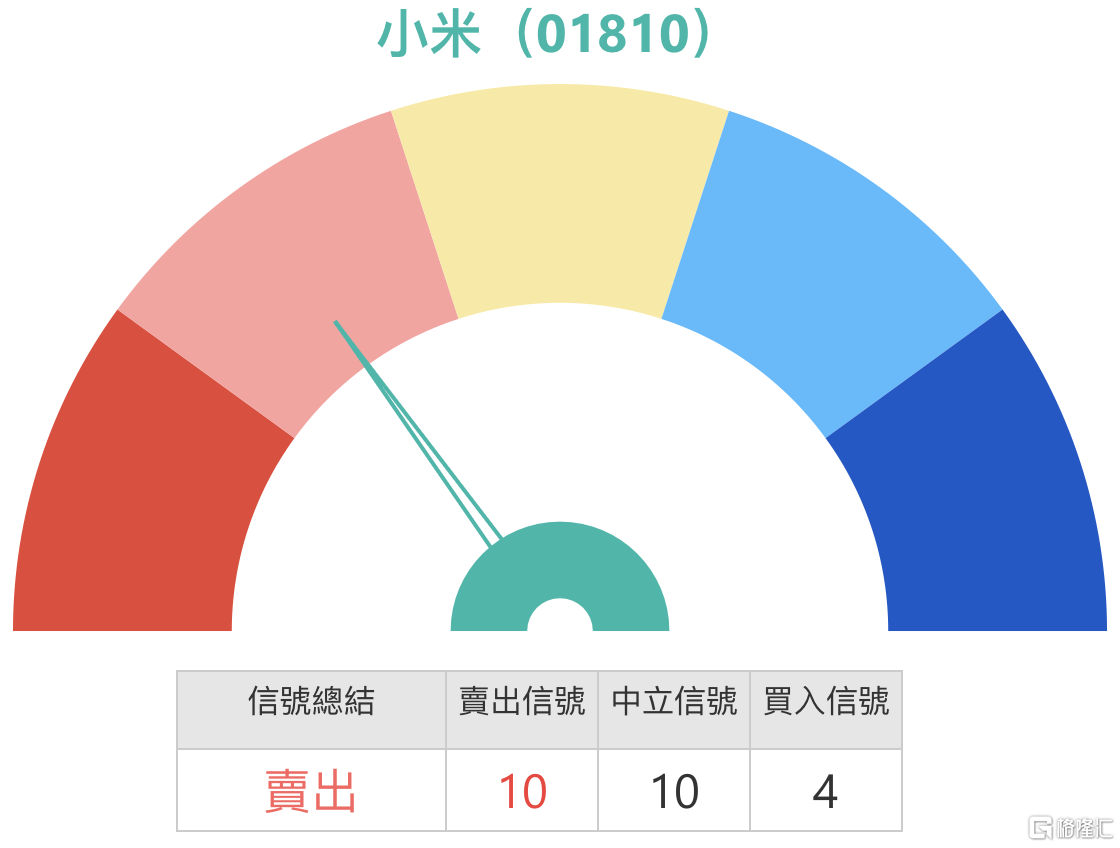
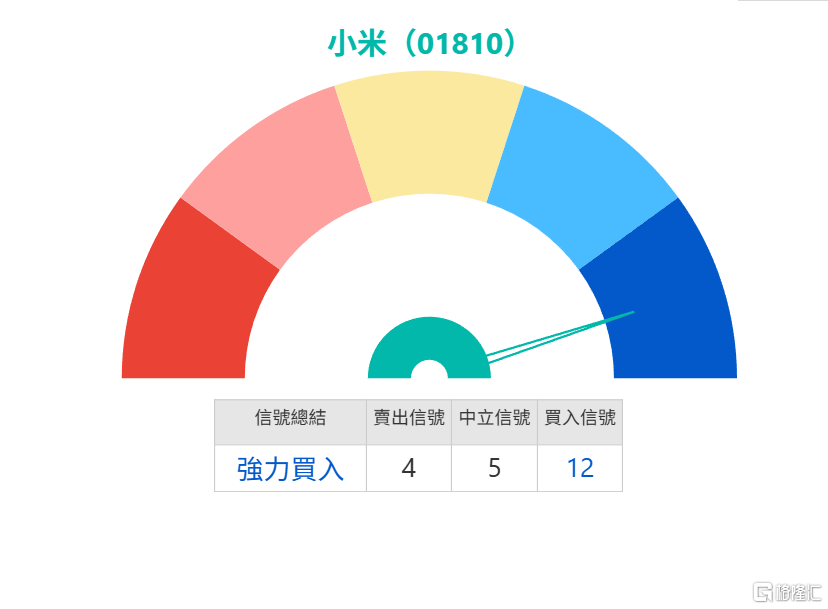
Core Viewpoint - Xiaomi has recently launched the Redmi K 90 series smartphones and announced a new subsidy for electric vehicle purchases, indicating a strategic push to enhance product offerings and customer incentives amidst a challenging stock performance [1][3]. Product Launch and Pricing Strategy - The Redmi K 90 series smartphones were released on October 23, with prices ranging from 2,599 to 5,499 yuan, accompanied by promotional discounts and extended warranty offers [1]. - The company is expected to invest over 2 billion yuan in subsidies for electric vehicle purchases, targeting customers who place orders by the end of November and face delays due to manufacturer issues [1]. Stock Performance Analysis - Xiaomi's stock price closed at 45.92 yuan on October 24, down 1.75%, continuing a period of consolidation after a decline from nearly 60 yuan [1]. - The short-term support level is around 44.5 yuan, with potential downside to 40 yuan if this level is breached, while resistance is identified at 49.7 yuan, with a breakthrough potentially leading to a challenge of the 56 yuan high [1]. Technical Analysis - Technical indicators show a divergence, with a strong buy signal at a strength of 12, while moving averages also indicate buy signals; however, MACD and Bollinger Bands maintain sell signals, reflecting ongoing market volatility [3]. - The 5-day volatility is at 5.3%, indicating a tug-of-war between bullish and bearish sentiments [3]. Derivative Products - For bullish investors, HSBC call options (product code 16370) and UBS call options (product code 13630) are recommended, with leverage ratios of 3.4 and 3.1 respectively, offering controlled costs and low premiums [5][6]. - For bearish strategies, Bank of China put options (product code 14387) and Societe Generale put options (product code 14178) are highlighted, with leverage ratios of 3 and 3.3 respectively, suitable for those anticipating a price correction [5][6]. Market Sentiment and Discussion - The article invites readers to discuss whether the new product launches and tax subsidies can help Xiaomi's stock price break through the 49.7 yuan resistance, and whether to opt for high-leverage products or more stable options [7].


小米RSI63多頭健康;高盛看65元目標價
Ge Long Hui· 2025-09-17 11:37
Group 1 - Xiaomi Group (01810) is showing a strong technical trend, with the stock price reaching a high of 57 HKD and currently at 56.6 HKD, reflecting an increase of 0.8% [1] - The stock has broken through the upper Bollinger Band at 56.8 HKD, indicating bullish momentum [1] - Technical indicators such as RSI at 63 suggest a healthy bullish zone, while moving averages (MA10 at 55.02 HKD, MA30 at 53.57 HKD, MA60 at 55.29 HKD) are converging, indicating a search for a clear direction in the short term [1][3] Group 2 - Goldman Sachs maintains a "Buy" rating on Xiaomi, with a target price set at 65 HKD [1] - Despite the stochastic indicator showing overbought conditions, MACD and Bollinger Bands are signaling buy opportunities, supporting a bullish outlook [3] - Recent support levels are identified at 54.7 HKD and 53.1 HKD, with resistance at 57.2 HKD; a breakout above this level could target 59.7 HKD [3] Group 3 - Derivative products related to Xiaomi have performed well, with notable gains observed on September 11 when the stock rose by 2.84% [3] - Specific derivatives such as Morgan Stanley's bull certificates (53165) and UBS's bull certificates (57477) recorded increases of 21% and 23% respectively, indicating significant excess returns in a clear upward trend [3] - Investors optimistic about Xiaomi's future can consider specific call options like the Morgan Stanley call (16984) with a strike price of 60.65 HKD and a leverage of 7.8 times, or the UBS call (14816) with a strike price of 61.05 HKD and a leverage of 7.7 times [6] Group 4 - For bearish investors, options such as the Bank of China put (17904) or the Societe Generale put (17868) with strike prices around 54 HKD are recommended for short-term trading strategies [6] - In terms of bull and bear certificates, UBS's bull certificate (55351) with a redemption price of 53.5 HKD and a leverage of 15.6 times is highlighted for bullish strategies, while HSBC's bear certificate (59572) is suggested for bearish positions [8]
小米蓄勢待發!關鍵技術位突破在即?
Ge Long Hui· 2025-08-28 11:21
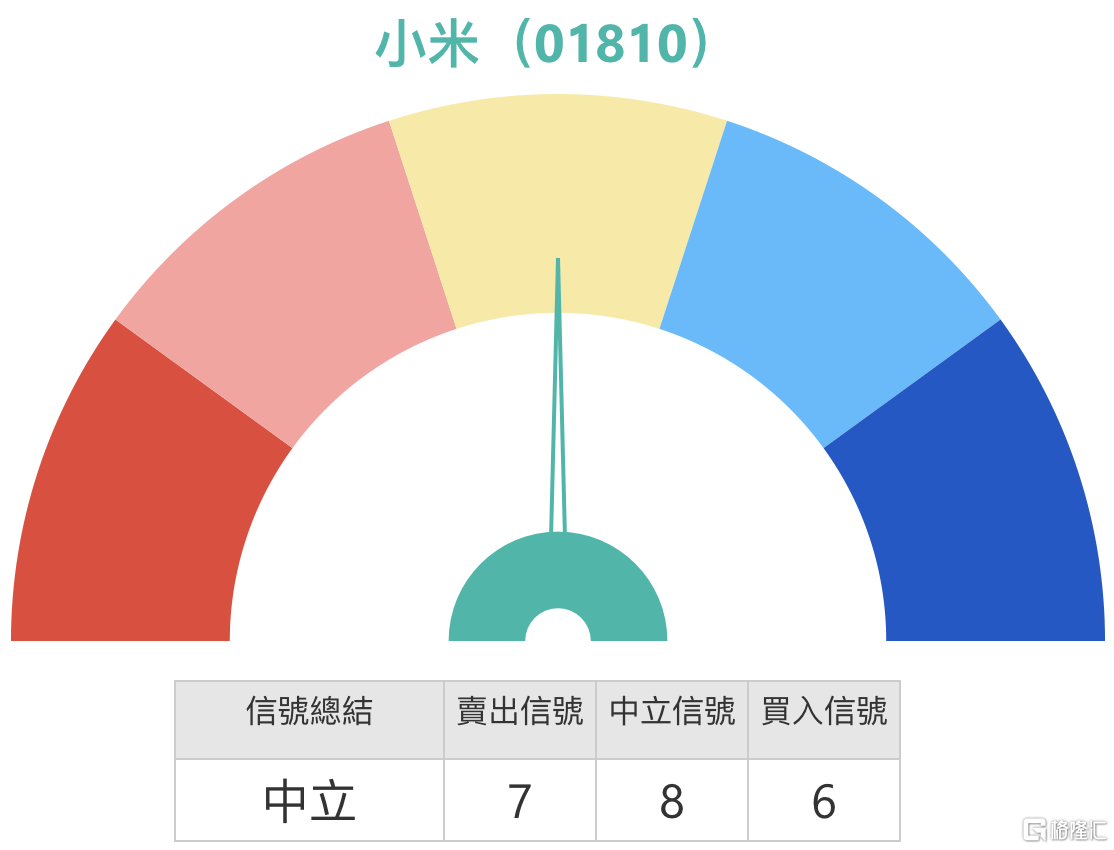
Core Viewpoint - Xiaomi has seen significant inflows in the warrant market, ranking third in capital inflow with approximately 12 million HKD, indicating investor interest despite a recent lack of news [1] Group 1: Stock Performance - As of 13:32, Xiaomi's stock price was reported at 53.95 HKD, with a daily increase of 1.31% and a trading volume of 2.783 billion HKD [1] - The stock is currently in a consolidation phase, with key technical indicators showing a neutral to slightly bullish signal [1] - The Relative Strength Index (RSI) is at 53, indicating a balanced market between buyers and sellers [1] Group 2: Support and Resistance Levels - Initial support is identified at 52.3 HKD, with stronger support at 51 HKD [2] - The key resistance level is at 56.2 HKD, and if this is surpassed, the next target would be 57.4 HKD [2] - The stock is trading above the 10-day moving average (52.92 HKD) but near the 30-day and 60-day moving averages, indicating an unclear medium-term trend [2] Group 3: Derivative Instruments - Two notable call warrants are highlighted: UBS call warrant (14816) with a strike price of 61.05 HKD and a leverage of 7.2 times, and Morgan Stanley call warrant (18099) with a strike price of 60.65 HKD and a leverage of 6.9 times [7] - For bearish investors, HSBC put warrant (14333) offers a leverage of 3.9 times with a strike price of 46.45 HKD, while Bank of China put warrant (14387) provides a leverage of 3.3 times with the same strike price [9] Group 4: Technical Analysis - Xiaomi is at a critical decision point, with both bulls and bears contesting the current price level [12] - Investors should monitor whether the stock can maintain support at 52.3 HKD or break through resistance at 56.2 HKD, as this will dictate short-term price direction [12] - The momentum oscillators indicate potential buying signals, suggesting accumulating upward momentum [1]
阿里巴巴(09988)午盤激戰!多空對決關鍵點位全解析
Ge Long Hui· 2025-08-05 11:11
Core Viewpoint - Alibaba's stock price is currently at a critical juncture, with intense competition between bulls and bears around the 115.7 HKD mark, reflecting a potential turning point in market sentiment [1]. Technical Analysis - The stock price is showing mixed signals, with the RSI at 52 indicating a neutral zone, while MACD and Bollinger Bands suggest a buy signal. However, the Williams indicator indicates a sell signal, highlighting a potential major shift in market direction [3]. - The 10-day moving average (MA10) is at 118.43 HKD and the 30-day moving average (MA30) is at 112.71 HKD, indicating a golden cross and a positive medium-term trend, but a short-term breakout above 118 HKD is needed to confirm an upward trend [3]. Support and Resistance Levels - Strong support is identified at 111.2 HKD, with a potential drop to 107.3 HKD if this level is breached. Resistance is noted at 120.1 HKD, with a breakthrough potentially leading to a challenge of 124.2 HKD [4]. - The stock price is approaching the middle band of the Bollinger Bands, suggesting a short-term consolidation phase. Notably, trading volume has increased by 12% compared to the average of the previous five days, indicating a potential warning sign for investors [4]. Derivative Products - For bullish investors, Société Générale's call option (16079) offers a leverage of 6.5 times with a strike price of 132.1 HKD, while HSBC's call option (16089) provides 6.8 times leverage with the same strike price [7]. - For bearish investors, Bank of China’s put option (17704) offers 4.1 times leverage with a strike price of 96.95 HKD, and Morgan Stanley's put option (14371) provides 5.3 times leverage with a strike price of 117.18 HKD [10].

小米關鍵價位解析:支撐與阻力位該如何應對?
Ge Long Hui· 2025-07-29 10:58
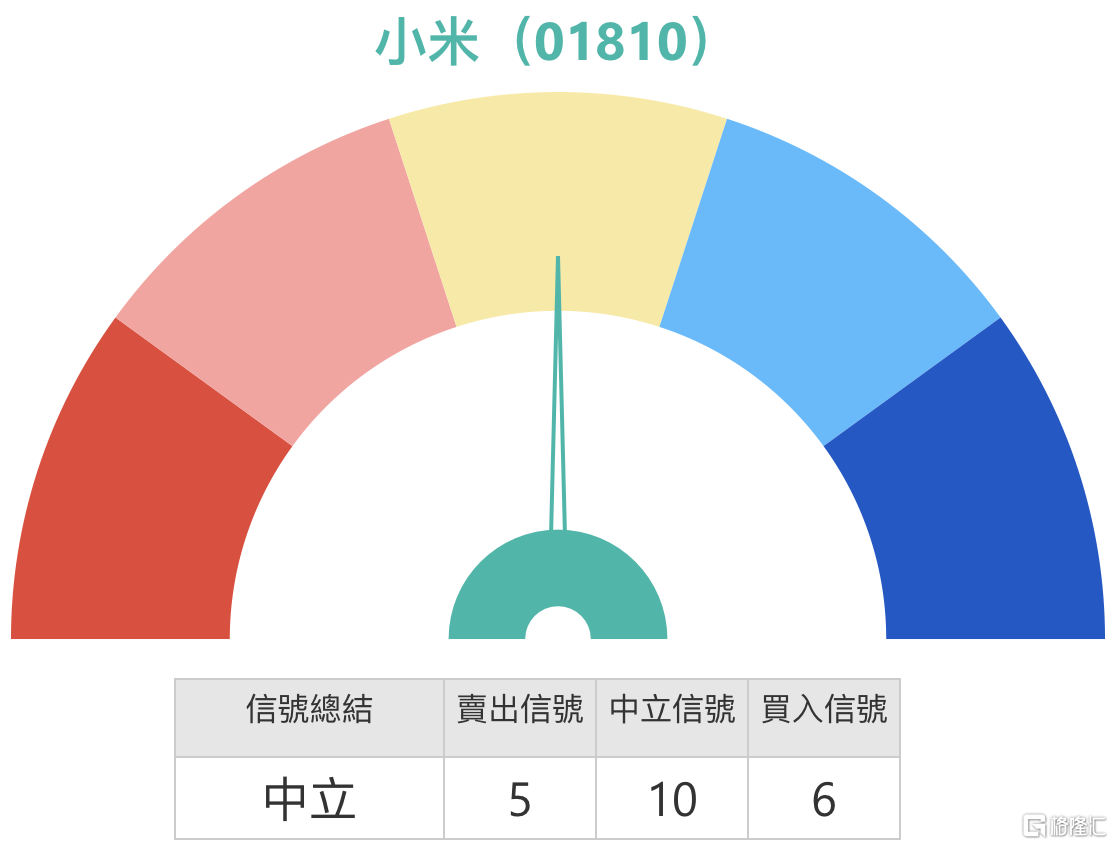
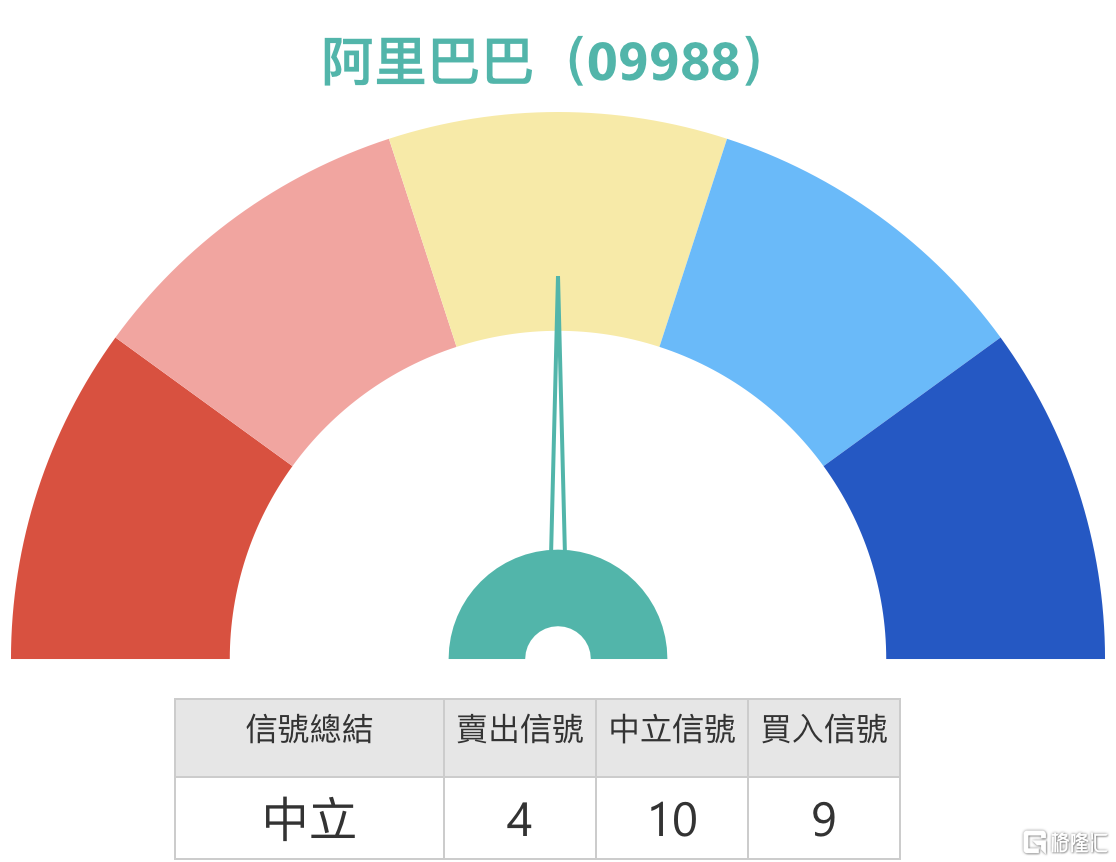
Group 1 - Xiaomi Group's stock price is currently experiencing a volatile consolidation pattern, trading at 56.65 HKD, down 1.31% as of 13:46 [1] - The stock is below the 10-day moving average (57.49 HKD) but above the 30-day (56.96 HKD) and 60-day (54.55 HKD) moving averages, indicating short-term adjustment pressure while the medium-term trend remains intact [1] - Technical indicators show divergence, with multiple moving averages signaling "sell," while MACD and Bollinger Bands also indicate selling pressure; however, RSI at 54 is in a neutral zone, suggesting a lack of consensus in market direction [1] Group 2 - Key support levels for Xiaomi are at 55.2 HKD (Support 1) and 53.6 HKD (Support 2), while resistance levels are at 58.4 HKD (Resistance 1) and 60.3 HKD (Resistance 2) [1] - If the stock can regain 57.5 HKD, it may challenge the 58.4 HKD resistance; conversely, a drop below 55.2 HKD could lead to a decline towards 53.6 HKD [1] Group 3 - On July 24, when Xiaomi's stock fell by 2.82%, related derivative products performed well, with Societe Generale's bear certificate (57008) rising by 16% and JPMorgan's bear certificate (56964) soaring by 30% [3] - Put options from JPMorgan (16863) and UBS (17706) recorded gains of 10% and 11%, respectively, showcasing the leverage effect of derivative instruments in trending markets [3] Group 4 - Various derivative options are available for bullish investors, including HSBC's call options (14677) with a strike price of 61.05 HKD, offering 5.9x leverage and the lowest implied volatility, or another call option (18005) with a strike price of 60.65 HKD and the lowest premium [6] - For bearish investors, JPMorgan's put option (16863) has a strike price of 53.99 HKD and 4.8x leverage, while other options like UBS's put (17904) and Societe Generale's bear certificate (54560) offer varying leverage and strike prices [10]