
技术分析

Search documents
3月26日【港股Podcast】Part1-恆指、匯豐、中海油、友邦、快手、京東
Ge Long Hui· 2026-03-28 05:12
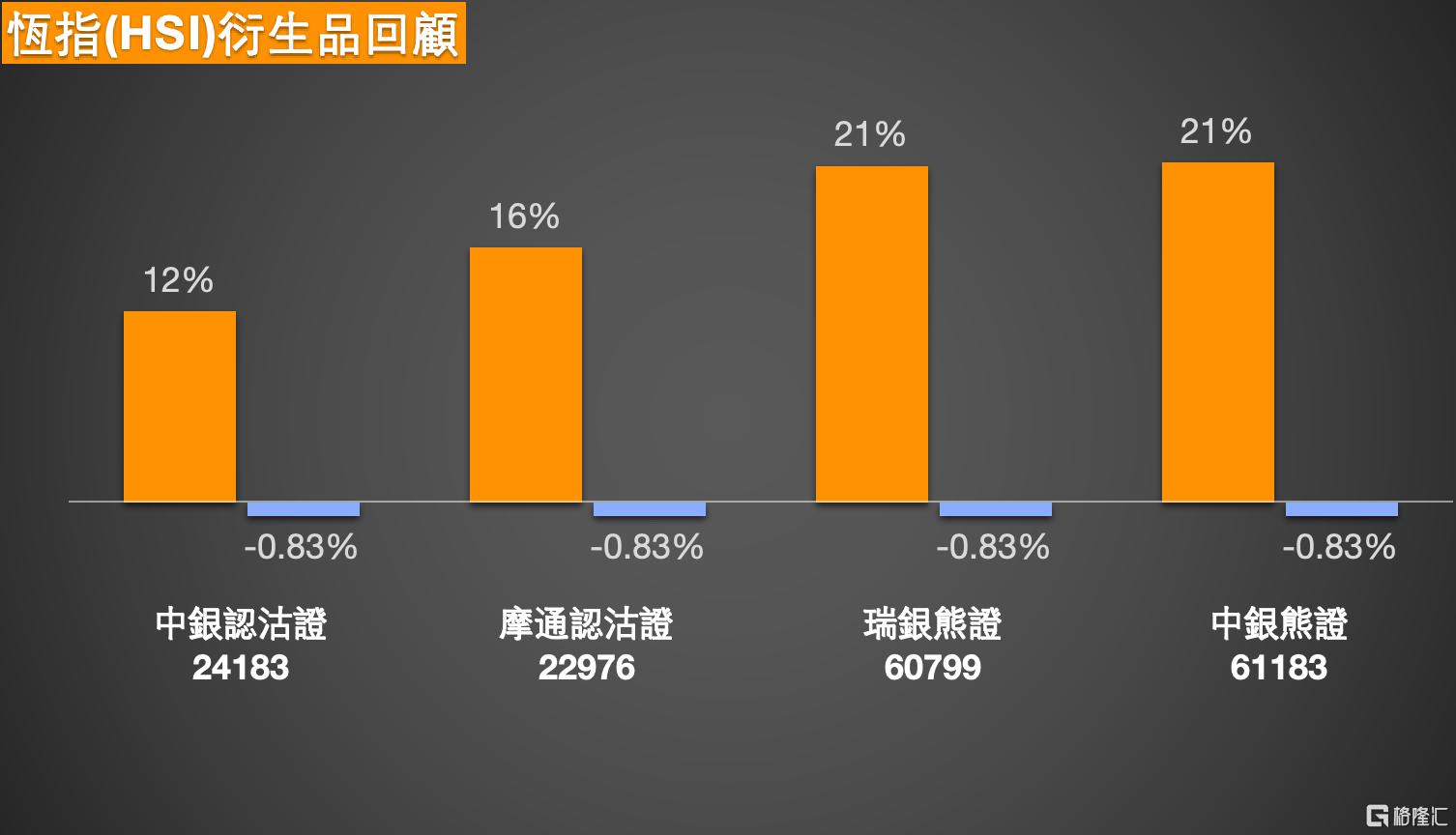
Group 1 - The Hang Seng Index (HSI) is currently trading at 24,856.43 points, within a clear range of 24,203.54 to 27,325.98 points, indicating a volatility of approximately 12.9% [1][2] - Short-term support is observed at around 24,200 points, which is close to recent lows, while resistance is seen between 25,000 and 25,200 points [1][2] - The market sentiment remains weak, with technical indicators showing downward trends, suggesting that any rebounds are merely technical recoveries within a bearish context [1][4] Group 2 - Bullish investors noted an increase of 600 million in bull certificates and a decrease of 400 million in bear certificates, indicating attempts to capitalize on a potential rebound [3][4] - Bearish investors believe the index will continue to decline, with a focus on the 24,200 support level, which is critical for determining market direction [2][4] - The distribution of certificates shows a concentration of bull certificates around the 24,000 to 24,199 range and bear certificates between 25,400 and 25,799, reflecting a market engaged in range-bound trading rather than a clear directional bias [3][4] Group 3 - The technical state of the market indicates that moving averages are still trending downwards, and the relative strength index (RSI) is weak, suggesting insufficient buying power [1][4] - The Bollinger Bands are narrowing, indicating that while the index is approaching a weak area, there is no clear signal of a trend reversal yet [1][4] - The market is characterized by a lack of consensus direction, with both bullish and bearish perspectives having valid arguments, but neither side showing a strong advantage at this time [4][4]






农夫山泉(09633)短線分析:技術指標現買入信號,42.2元支持位成關鍵
Ge Long Hui· 2026-03-21 13:52
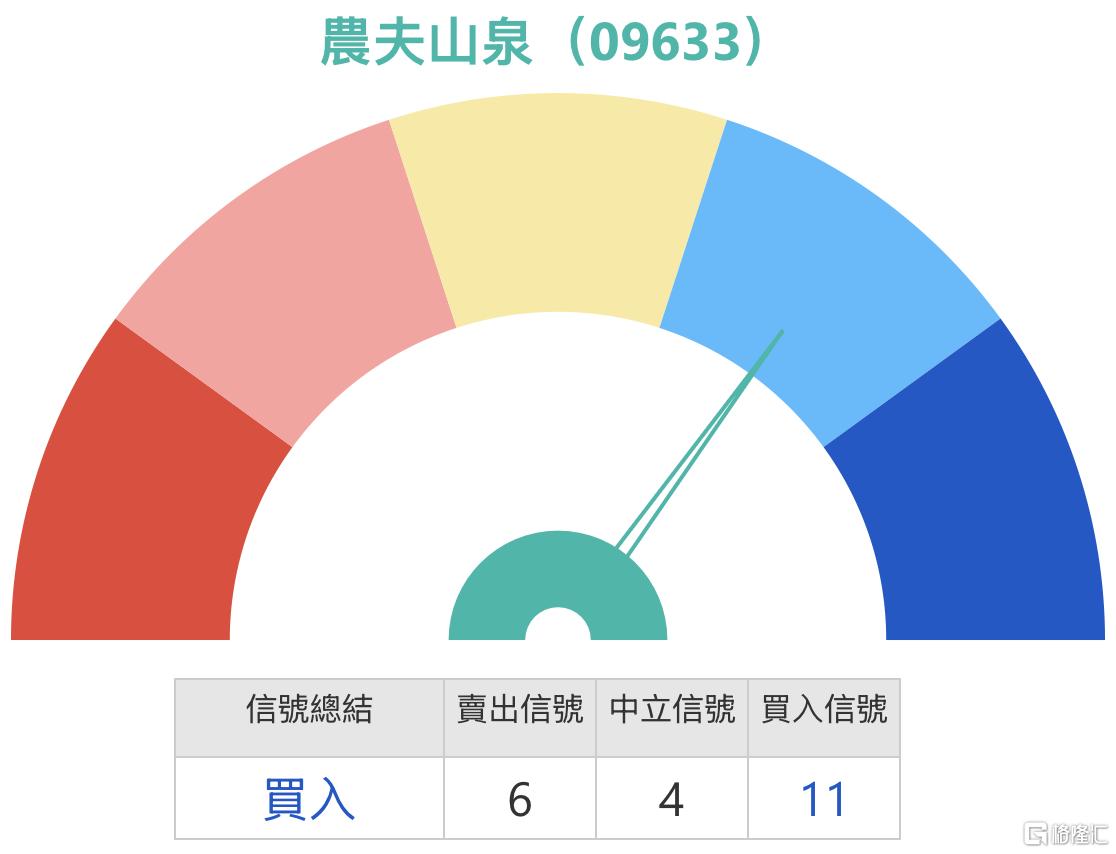
Core Viewpoint - Nongfu Spring (09633) shows a short-term buy signal with a critical support level at 42.2 HKD, indicating potential for upward movement in stock price [1][2]. Group 1: Stock Performance and Analyst Ratings - As of March 20, 2026, Nongfu Spring's stock price is 43.12 HKD, reflecting a slight increase of 0.37% with a trading volume of approximately 67.95 million HKD [1]. - Citi upgraded Nongfu Spring's rating from "Outperform" to "Highly Confident Outperform" and raised the target price from 35 HKD to 45.4 HKD, citing strong growth in the water business as a key catalyst for the next three months [1]. - The water business is expected to see a year-on-year revenue growth of 10% in March due to a low base effect [1]. Group 2: Technical Analysis - Technical indicators suggest that Nongfu Spring is forming a bottom, with the first support level at 42.2 HKD and a second support level at 40.9 HKD [2]. - The first resistance level is at 44.6 HKD, with a significant technical barrier at the 20-day moving average of approximately 45.2 HKD; a successful breakout could target 47.0 HKD [2]. - Overall technical indicators show a strong buy signal, with a signal strength of 11 and a relative strength index (RSI) of 35, indicating a relatively low position [2]. Group 3: Market Sentiment and Trading Strategies - Despite a reduction of 573,000 shares by southbound funds on March 19, there has been a net increase of 3.066 million shares over the past five trading days, indicating sustained interest from investors [1]. - The podcast analysis on March 19 noted that the stock price had been on a downward trend since reaching a high of 51.85 HKD, with initial support forming around 42.6 HKD [5]. - The current price of 43.16 HKD is above the support level of 42.2 HKD, suggesting improved short-term buying strength [5]. Group 4: Warrant Market Analysis - The warrant market is heavily concentrated with all call options, primarily with exercise prices ranging from 44 to 50 HKD, indicating that market products are designed with the assumption of a significant price increase [6]. - Three recommended call warrant products are available for investors, each with different leverage and premium rates, suitable for varying investment strategies [7][8].

深圳商品投资策略会
2026-03-12 09:08
Summary of Key Points from Conference Call Records Industry or Company Involved - The conference call discusses the global geopolitical landscape, particularly focusing on the U.S. strategic priorities and their implications for various markets, including commodities, energy, and financial assets. Core Insights and Arguments 1. **U.S. Strategic Focus for 2026**: The U.S. will prioritize the Western Hemisphere, followed by the Indo-Pacific and the Middle East, aiming to prevent adversarial control over energy routes, particularly the Strait of Hormuz, which is seen as a key indicator of victory in conflicts [1][2][3]. 2. **Market Trading Logic**: The core logic for 2026 trading is driven by "de-dollarization" and increased volatility. De-dollarization involves countries reducing their holdings of U.S. Treasury bonds rather than a unilateral bearish outlook on the dollar, which retains its safe-haven status [1][3]. 3. **U.S. Treasury Yield Impact**: A significant policy shift may occur if the 30-year U.S. Treasury yield exceeds 4.8%, potentially leading to a more accommodative monetary policy from the Federal Reserve in 2026, especially as it is a midterm election year [1][4]. 4. **China's Policy Focus**: China aims to strengthen its internal capabilities and long-term planning, with a focus on achieving a GDP growth rate of 4%-4.5% and maintaining a stable CPI around 2% to meet its 2035 goals [1][5]. 5. **Commodity Market Analysis**: The Wenhua Commodity Index is expected to reach a long-term target of 940 points, with gold projected to hit between $6,400 and $7,200. Oil is currently in a corrective phase with a support level at $82, expected to rebound into a fifth wave of growth [1][10][25][24]. 6. **Chemical Sector Valuation**: The chemical sector is currently undervalued compared to historical levels, with a shift in pricing anchors from gold to energy and chemicals, indicating potential investment opportunities [1][29]. 7. **Monetary Policy Adjustments**: The People's Bank of China is maintaining a moderately accommodative stance, with recent measures to stabilize the yuan and support liquidity through bond purchases [1][8][6]. 8. **Inflation and Market Dynamics**: Current inflationary pressures are influenced by external factors, but domestic demand and employment levels remain weak, limiting the likelihood of a shift in monetary policy [1][7][6]. Other Important but Possibly Overlooked Content 1. **Geopolitical Strategy**: The U.S. aims to maintain a fragmented Eurasian landscape to prevent the emergence of rival powers, with Russia and Iran playing critical roles in this strategy [2][3]. 2. **Historical Context for Investment Strategies**: Historical investment strategies, such as those proposed by Menger, suggest that investors should seek assets with stable characteristics amid geopolitical tensions, highlighting the relative strength of Chinese assets in the current context [9]. 3. **Technical Analysis in Volatile Markets**: In the current high-volatility environment, technical analysis is emphasized as a crucial tool for decision-making, as it reflects real-time market behavior and can guide trading strategies effectively [10][11][22]. 4. **Commodity Price Trends**: The analysis of commodity prices, particularly oil and agricultural products, indicates a complex interplay of supply and demand dynamics, with potential for significant price movements based on geopolitical developments and market sentiment [22][23][30]. This summary encapsulates the key insights and arguments presented in the conference call, providing a comprehensive overview of the current market landscape and strategic considerations for investors.
玻璃期货周报-20260311
Guo Jin Qi Huo· 2026-03-11 02:26
1. Report Industry Investment Rating - Not mentioned in the report 2. Core Viewpoint of the Report - The glass futures main contract FG2605 showed a "first decline then rise" trend this week. The spot price remained stable, and the basis narrowed from 84 yuan/ton at the beginning of the week to 47 yuan/ton at the weekend, indicating the repair of the futures discount to the spot. There is still a contradiction between high inventory and slow demand recovery in the industrial end, but the policy expectation and technical analysis jointly drive a short - term rebound. It is expected to continue the volatile and strong pattern next week [8] 3. Summary According to Relevant Catalogs 3.1 Futures Market - This week, the glass main contract FG2605 opened at 1067 yuan/ton, with the lowest reaching 1027 yuan/ton. Driven by macro - policy expectations and the sentiment of demand recovery on Friday, it reached a maximum of 1093 yuan/ton and closed at 1087 yuan/ton, with a weekly increase of 1.87%. The average daily trading volume was 1.287 million lots, a 15% increase from last week, and the position increased slightly by 2% [2] 3.2 Spot Market 3.2.1 Basis Data - This week, the basis fluctuated in the range of 47 - 91 yuan/ton. At the beginning of the week, affected by the futures correction, the basis expanded to 91 yuan/ton. On Friday, as the futures rose sharply, the basis narrowed to 47 yuan/ton, and the basis rate dropped from 8.7% to 4.4%, with an obvious repair of the futures - spot discount [3] 3.2.2 Spot Data - The national average glass spot price remained stable at 1070.4 yuan/ton, with regional price differentiation. The large - plate price in North China was 1050 yuan/ton, in Central China was 1090 yuan/ton, and in East China was 1080 - 1100 yuan/ton. The operating rate of downstream deep - processing enterprises rebounded to 45% (a 10 - percentage - point increase from the previous period), but the order days were still only 6.5 days, and the procurement was mainly for small - order replenishment, with light trading [4] 3.3 Influencing Factors 3.3.1 Industry Information - As of March 6, the total inventory of national sample enterprises was 53.56 million heavy boxes (a 0.5 - million - heavy - box increase from the previous period), and the inventory days were 23.5 days, at a high level in the same period of the past three years. Inventory accumulation was obvious in North China and East China [6] 3.3.2 Technical Analysis - The weekly K - line closed with a long lower shadow positive line. The green column of the MACD indicator shortened, and the DIFF and DEA formed a golden cross below the zero axis. The RSI rebounded to 55, getting out of the oversold range. The K - line of the KDJ indicator broke through the D - line, forming a golden cross. The short - term technical side is strong [7]
【策略】交易面新思考:均线有效性视角下的三类行业——行业比较研究系列之七(张宇生/王国兴)
光大证券研究· 2026-03-07 00:03
Core Viewpoint - Moving averages are fundamental technical analysis indicators in financial markets, providing clear investment logic and aiding investment decisions. The effectiveness of moving averages varies with the duration of market trends and price volatility [4][5]. Group 1: Effectiveness of Moving Averages - Moving averages enhance investment performance, with daily moving averages being more effective than weekly and monthly ones. Historical data supports that shorter periods yield better results [4][5]. - The effectiveness of moving averages is influenced by the duration of market trends and the amplitude of price fluctuations. Longer-lasting and more volatile trends increase the reliability of moving averages [5][6]. Group 2: Industry Classification Based on Moving Average Suitability - Industries suitable for long-term moving averages exhibit high price volatility and prolonged trends, primarily in growth sectors. Long-term moving averages filter out false signals effectively in these industries [7]. - Industries suitable for short-term moving averages have moderate price volatility and trend duration, or high volatility with short trends. Short-term moving averages help capture gains and avoid significant drawdowns in these sectors [7][8]. - Industries unsuitable for moving averages have low price volatility and short trend durations, mainly in value and high-dividend sectors. In these cases, moving averages may generate misleading signals and provide little guidance [8].

投资大佬德鲁肯米勒:我的优势不是智商,而是果断扣动扳机,卖飞英伟达“肠子都悔青了”
美股IPO· 2026-02-28 23:16
Core Insights - The core viewpoint of the article emphasizes the investment philosophy of Stanley Druckenmiller, highlighting his belief that decisive action and timing are more critical than being right or wrong in investments [1][3][7]. Investment Philosophy - Druckenmiller reflects on the effectiveness of traditional technical analysis, stating that its relevance has diminished to about 20% due to the influx of quantitative and intelligent investors [7][29]. - He argues that "contrarian investing is overrated," asserting that the crowd is correct 80% of the time, and the key is to avoid the 20% of moments that can lead to significant losses [8][22]. Current Market Outlook - Druckenmiller believes the U.S. economy is strong and will become stronger due to substantial stimulus measures, with the Federal Reserve unlikely to raise interest rates and possibly considering cuts [3][20]. - He has constructed a mixed investment matrix based on expectations of "massive disruption and change" over the next three to four years [3][20]. Investment Positions - The company is bearish on the U.S. dollar, citing its purchasing power at historical highs and foreign investors' overexposure to the dollar, predicting a decline due to trade balance adjustments [3][20]. - Druckenmiller is bullish on copper and gold, driven by anticipated supply chain constraints and geopolitical considerations, respectively [4][20]. - In the bond market, he is shorting U.S. Treasuries, believing that if economic growth leads to inflation, it could yield significant profits [5][20]. Stock Market Strategy - Druckenmiller has shifted focus from AI-driven stocks to undervalued sectors, particularly in biotechnology and pharmaceuticals, identifying Teva Pharmaceuticals as a key investment due to its transformation from generics to innovative drugs [12][16]. - The company has seen Teva's stock price rise from $16 to $32, reflecting a revaluation as the market recognizes its growth potential [12][16]. Personal Insights and Experiences - Druckenmiller candidly shares his trading experiences, including a notable regret over selling Nvidia too early, illustrating the emotional challenges faced by investors [11][28]. - He emphasizes the importance of having a strong team and trusting their expertise, particularly in specialized fields like biotechnology [18][20].



像一本书一样
猛兽派选股· 2026-02-28 02:27
Group 1 - The article outlines a plan for future content focusing on practical applications in stock research, aiming to produce around 200 articles in the "Beast Stock Research" category [1] - It reflects on the evolution of thought over three years, transitioning from technical analysis to quantitative applications and fundamental stock selection [1] Group 2 - The article emphasizes the importance of systematic thinking in stock trading, highlighting the challenges faced by individuals who seek quick profits without investing time and effort [6]

2月27日纽约期金日内小幅下跌 最新报5198.80美元/盎司
Jin Tou Wang· 2026-02-27 09:37
Core Viewpoint - COMEX gold prices experienced a slight decline, with the latest price reported at $5198.80 per ounce, reflecting a daily change of -0.05% from the previous closing price of $5201.50 per ounce [1] Price Movement - The opening price for today was $5201.40 per ounce, with a daily high of $5217.50 per ounce and a low of $5182.90 per ounce [1] - The trading volume recorded was 29,180 contracts [1] Technical Analysis - The MACD indicator is signaling a bearish trend, while the KDJ indicator also indicates a bearish signal [1] - Conversely, the RSI indicator is showing a bullish signal [1]
2月25日金价拐点信号拉响!接下来,金价有可能会重演历史
Sou Hu Cai Jing· 2026-02-26 14:55
Core Viewpoint - The recent decline in gold prices, following a failed attempt to break through a significant resistance level, indicates a potential adjustment phase in the market, driven by technical signals, profit-taking by investors, and changing macroeconomic expectations [2][3][5]. Market Data - On February 25, 2026, London gold closed at $5142.7 per ounce, after reaching a high of $5237.71 and a low of $5093.17, reflecting a volatility of over $140 [2]. - The domestic gold futures in China reported a price of 1144.96 yuan per gram, down by 6.58 yuan, a decrease of 0.57% [2]. Technical Analysis - The recent price action shows that the bullish momentum failed to sustain at the resistance zone of $5230 to $5250, leading to a significant drop in price accompanied by increased trading volume, indicating a strong exit of profit-taking funds [3][5]. - The formation of a long upper shadow and a bearish candlestick pattern suggests a potential short-term top, commonly referred to as a "shooting star" in technical analysis [5]. Fund Flows - Recent data from the CFTC indicates a reduction in non-commercial net long positions in COMEX gold futures, while major gold ETFs have experienced net outflows, signaling a shift from inflow to outflow in the funds supporting gold prices [5][6]. Macroeconomic Context - Stronger-than-expected U.S. economic data has diminished market expectations for rapid interest rate cuts by the Federal Reserve, leading to a rebound in the U.S. dollar index and an increase in U.S. Treasury yields, which negatively impacts gold prices [6][8]. Historical Patterns - Historical trends suggest that gold prices often undergo a cycle of rapid increases followed by adjustments when approaching strong technical resistance, with typical corrections ranging from $100 to $200 over one to three weeks [8][10]. - The current market conditions exhibit similarities to past patterns, including rapid price increases, reaching key resistance levels, and signs of profit-taking, raising the likelihood of a historical correction scenario [10]. Future Scenarios - The more likely scenario involves a historical high-level correction triggered by a sustained drop below the $5140 mark, with potential support levels at $5100 and $5050 [10][11]. - A less probable scenario would require significant external catalysts to break through the resistance levels, such as geopolitical tensions or unexpected dovish signals from the Federal Reserve [11]. Investor Strategy - Investors are advised to adjust their expectations regarding immediate price rebounds and to adopt a cautious approach, avoiding chasing prices at highs or attempting to bottom-fish during initial downtrends [13]. - Establishing clear risk management strategies, such as stop-loss orders, is crucial, especially if gold prices confirm a drop below the $5140 threshold [13].
AllianceDAO 联创:BTC 熊市主要受大众心理驱动,趋势反转不一定需要催化剂
Xin Lang Cai Jing· 2026-02-26 11:28
Core Viewpoint - The primary driver of Bitcoin's price movements is technical analysis (TA), which is fundamentally rooted in psychology, rather than external factors or scapegoats [1] Group 1: Market Sentiment - Investors have spent months searching for scapegoats for the Bitcoin bear market, such as Jane Street, Quantum, and software sell-offs [1] - The belief in a four-year cycle is more prevalent than that in a five-year cycle, indicating a collective psychological bias among investors [1] Group 2: Price Trends - Once the trend is broken, investors tend to take profits or stop losses, suggesting a reactive market behavior [1] - The current market may be at a point where public sentiment has capitulated, which could lead to a trend reversal without the need for a specific catalyst [1]