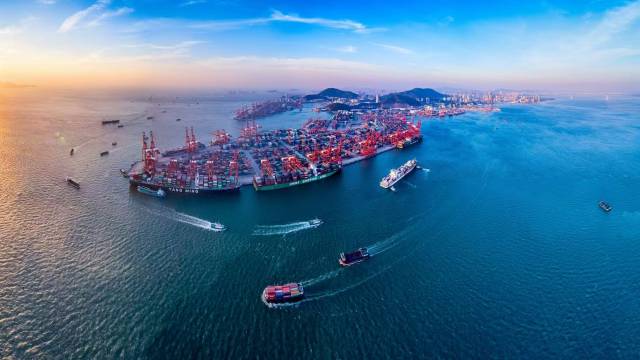
物流中心

Search documents
剑指全球影响力,深圳“十五五”将建五大中心
2 1 Shi Ji Jing Ji Bao Dao· 2025-12-30 06:19
Core Insights - Shenzhen's "14th Five-Year Plan" emphasizes the establishment of five key centers: advanced manufacturing, industrial technology innovation, financial services, consumption, and logistics, aiming to enhance its global competitiveness [1][2] Group 1: Advanced Manufacturing - Shenzhen aims to become a global leader in advanced manufacturing by expanding emerging industries such as information technology, new energy, and smart home systems, while also upgrading traditional sectors like clothing and jewelry [1][5] - The city has achieved significant industrial performance, with the added value of advanced manufacturing and high-tech manufacturing accounting for 68.2% and 58.2% of the total industrial output value, respectively [5] - The focus on future industries includes the development of 6G technology, biomanufacturing, and quantum technology, which are expected to drive economic growth [6][7] Group 2: Financial Services - Shenzhen's financial sector has become the largest service industry, with an average annual growth rate of 6.9% during the "14th Five-Year Plan," contributing approximately 14% to the GDP [13] - The city is enhancing its financial services to support technological innovation and the real economy, with a significant increase in technology loans reaching 2.28 trillion yuan, a 14.24% growth from the beginning of the year [13][14] - Collaboration with Hong Kong is seen as a key strategy to boost Shenzhen's financial influence globally, leveraging both regions' strengths [14] Group 3: Consumption - Shenzhen has entered the "trillion-dollar club" for consumption, with plans to enhance its role as a global consumption center by developing international trade, exhibitions, and tourism [16] - The city aims to improve consumer conditions and innovate consumption scenarios to align with global supply and demand [16] Group 4: Logistics - Shenzhen Airport has become a major logistics hub, achieving over one million tons in annual cargo throughput, with 63 cargo routes, including 43 international destinations [18] - The city plans to enhance its logistics capabilities by building an international aviation hub and improving multi-modal transport networks to serve national and regional markets [18]

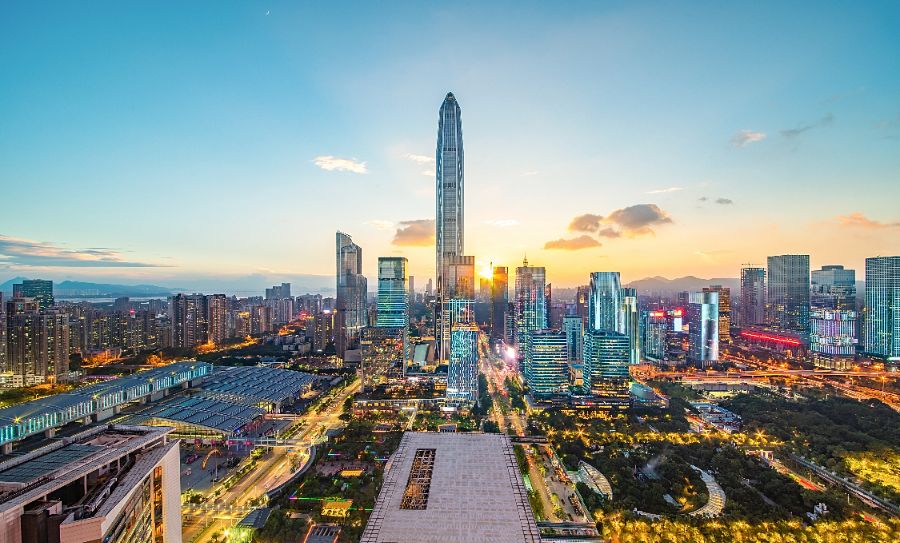
深圳:“海陆空铁”一体化的超级流量端口
2 1 Shi Ji Jing Ji Bao Dao· 2025-11-28 04:51
Core Viewpoint - Shenzhen aims to establish itself as a global comprehensive transportation hub by 2030, enhancing its logistics capabilities and becoming a modern international metropolis [1][11]. Transportation Infrastructure Development - Shenzhen has made significant advancements in transportation, achieving over ten domestic firsts and industry-leading accomplishments, including 100% electrification of public transport and the establishment of the first smart connected vehicle regulations in China [3][12]. - The city has developed a robust transportation network, integrating air, sea, land, and rail systems into a seamless operational framework [9][12]. Airport Development - Shenzhen Airport is evolving into a major international air hub, with plans to enhance its capacity to handle 100 million passengers and 500,000 tons of cargo annually by expanding its facilities [4][12]. - The airport has achieved record passenger and cargo throughput, with 61.47 million passengers and 1.88 million tons of cargo in 2024, marking a year-on-year increase [12][13]. Port Development - Shenzhen Port is recognized as a leading container hub globally, with a total of 144 operational berths and a focus on smart and green port initiatives [5][12]. - The port's container throughput reached 33.39 million TEUs in 2024, maintaining its position among the top four globally and third domestically [13]. Rail and Road Network Expansion - The railway system in Shenzhen is expanding, with a projected capacity to handle 120 million passengers annually, supported by a comprehensive network of high-speed rail and urban transit [7][12]. - Future plans include the construction of three logistics hubs to enhance road connectivity and efficiency in resource utilization [9][11]. Global Connectivity - Shenzhen's transportation network connects to 55 international and regional passenger destinations and 43 cargo destinations, facilitating trade and travel [9][11]. - The city aims to improve its global connectivity, increasing the 12-hour travel reach to major cities from 40% to over 90% by 2035 [11]. Technological Innovations - Shenzhen is at the forefront of low-altitude economy development, with significant advancements in drone logistics and smart transportation regulations [14]. - The city has implemented the first national regulations for smart connected vehicles, promoting innovation in the automotive sector [3][14].