
特殊需要信托制度

Search documents
特殊需要信托:从“财富工具”到“民生守护”的制度破局
2 1 Shi Ji Jing Ji Bao Dao· 2026-02-04 05:32
Core Viewpoint - The increasing aging population and changing family structures in China have highlighted the need for long-term care and financial security for special needs groups, such as mentally disabled individuals and elderly people without children or living alone. The trust industry is shifting from serving high-net-worth individuals to broader social welfare, with the introduction of "special needs trusts" as a new regulatory category in 2023 [1][6]. Group 1: Special Needs Trusts - Special needs groups include minors, mentally disabled individuals, and elderly people who are unable to care for themselves. As of November 2024, there are approximately 35 million disabled elderly individuals in China, accounting for 11.6% of the total elderly population, with projections suggesting this number could reach 46 million by 2035 [3][4]. - The "special needs trust" concept was formally introduced in 2023, categorized under wealth management services, marking a shift in trust functions from value enhancement to protection [6][7]. Group 2: Practical Implementation - A recent case in Beijing's sub-center combined "special needs trust" with "intended guardianship" to provide a new model for elderly care. A 72-year-old retired doctor established a trust with China Foreign Trade Trust Co., ensuring her assets are managed independently and securely for her long-term care [5]. - The trust acts as a "financial firewall," ensuring that funds are used solely for the intended purpose of elderly care, thus preventing misuse [5]. Group 3: Challenges and Recommendations - Despite the demand for special needs trusts, the sector faces challenges such as tax burdens and governance risks. For instance, a case in Tongzhou highlighted that the tax rate for trust property transfer can be higher than direct ownership, which adds financial strain on families [8][9]. - Governance risks arise from the potential for conflicts in responsibilities among trustees and guardians, necessitating clear delineation of roles and oversight mechanisms to protect beneficiaries [9]. - The development of special needs trusts requires improved top-level design in areas such as taxation and caregiving, drawing lessons from more developed systems in other countries [10].


守护万家灯火!专家呼吁:加速构建特殊需要信托制度,促进完善残疾人社会保障体系
Hua Xia Shi Bao· 2025-06-25 09:32
Core Viewpoint - The establishment of a special needs trust system in China is crucial for improving the social security framework for disabled individuals and other special groups, aligning with national modernization goals and enhancing the quality of life for these populations [2][5][10]. Group 1: Importance of Special Needs Trust - Special needs trusts are designed to meet the living security needs of special groups, including the disabled and elderly with cognitive impairments [3]. - The trust system offers long-term care, asset protection, efficient management, and flexible mechanisms that align with the needs of vulnerable populations [4]. - The introduction of a special needs trust mechanism provides a new solution for the living security of millions of disabled individuals in China [4][6]. Group 2: Legal and Institutional Framework - The development of a special needs trust system is a significant step towards enhancing China's social security system and legal framework [5]. - It is essential to establish a legal structure that supports the special needs trust, ensuring it is not merely a financial product but a comprehensive legal mechanism [4][5]. - The system aims to integrate government, family, and social resources to provide dignified living conditions for disabled individuals [6][10]. Group 3: Challenges and Recommendations - The special needs trust sector faces challenges due to a disconnect between demand and supply, with families needing support while services remain uncoordinated [6][8]. - To enhance the effectiveness of the trust system, it is recommended to prioritize basic needs before addressing personalized requirements, ensuring a solid foundation for the system [8][10]. - Collaboration among policymakers, beneficiaries, and scholars is necessary to align the supply side with actual needs, fostering a more responsive and effective trust system [10][11].
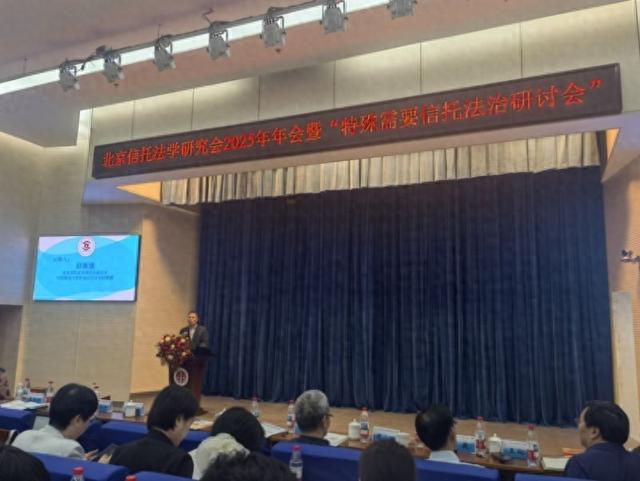
“特殊需要信托”仍存短板,业内呼吁顶层制度协同
Sou Hu Cai Jing· 2025-06-24 07:06
Core Viewpoint - The introduction of the "special needs trust" concept in China aims to provide a structured solution for the care of vulnerable groups, including disabled individuals and the elderly, through a legal and financial framework [1][2][3]. Group 1: Special Needs Trust Overview - The "special needs trust" is defined as a trust established to meet the specific living needs of designated beneficiaries, primarily focusing on individuals with disabilities or elderly individuals requiring care [1][2]. - As of November 2024, there are approximately 35 million disabled elderly individuals in China, projected to rise to 46 million by 2035, highlighting the urgent need for sustainable care solutions [2]. - The trust mechanism allows families to institutionalize care responsibilities, ensuring long-term support for special needs individuals, thereby enhancing their quality of life and dignity [2][3]. Group 2: Legal and Institutional Framework - The establishment of the special needs trust is aligned with various legal frameworks, including the Civil Code and Trust Law, emphasizing the need for a legal basis to ensure sustainable support for special needs individuals [3][4]. - There is a call for collaborative efforts among various stakeholders to enhance the legal and institutional framework surrounding special needs trusts, ensuring effective governance and oversight [4][5]. Group 3: Challenges and Recommendations - Despite the promising outlook for special needs trusts, challenges remain, including high tax burdens and the need for improved regulatory frameworks [4][6]. - Recommendations include adopting tax incentives for special needs trusts, similar to practices in other countries, to alleviate financial burdens on families [6][7]. - The importance of governance and supervision in the establishment and management of special needs trusts is emphasized to prevent potential conflicts and ensure the protection of beneficiaries' interests [5][6].