
现代化首都都市圈空间协同规划

Search documents
研究现代化首都都市圈空间协同规划有关工作等事项
Xin Lang Cai Jing· 2026-02-13 00:47
Group 1 - The meeting conveyed the approval of the "Modern Capital Urban Circle Spatial Collaborative Planning (2023-2035)" by the Central Committee of the Communist Party of China and the State Council, emphasizing the strategic positioning of the capital urban circle and the need to systematically relieve non-capital functions [1] - The meeting highlighted the importance of advancing cross-strait exchanges and cooperation, implementing policies that benefit Taiwan, and ensuring high-quality development of foreign affairs work in the city [2] - The meeting underscored the need to implement the curriculum plan for ideological and political courses in higher education, aligning it with the Party's innovative theories and effectively integrating it with social education [2] Group 2 - The meeting discussed the importance of learning and implementing the significant discussions by General Secretary Xi Jinping regarding inspection work, emphasizing the need for precise measures and institutional results to consolidate rectification outcomes [2] - The meeting called for a focus on addressing corruption and improper conduct in communities, linking it with the rectification of central inspection feedback and enhancing overall effectiveness [2]
视频|事关现代化首都都市圈空间协同规划 重磅发布会10点举行
Yang Shi Xin Wen Ke Hu Duan· 2026-02-12 09:27
Core Points - The State Council Information Office will hold a press conference to discuss the "Modern Capital Urban Circle Spatial Coordination Plan (2023-2035)" [1] - Key officials from the National Development and Reform Commission, Ministry of Natural Resources, and relevant representatives from Beijing, Tianjin, and Hebei will provide insights and answer questions [1] Group 1: Media Concerns - The media is interested in how the commuting circle, functional circle, and industrial coordination circle are defined and their future roles [3] - There is a focus on how to effectively write the "Twin Cities Chronicle" between Beijing and Tianjin, emphasizing the increasing personnel exchanges and the realization of urban integration [3] - Questions are raised about how Hebei will further develop a livable and attractive space in line with the implementation of the plan [4] Group 2: Regional Development - The role of Tianjin Port and the Binhai New Area is highlighted, with inquiries about how Tianjin plans to leverage these assets [4] - The press conference aims to address these concerns and provide clarity on the implementation of the plan [5]
聚焦首都都市圈!国新办发布会重点汇总
Bei Jing Ri Bao Ke Hu Duan· 2026-02-12 06:21
Core Viewpoint - The "Modern Capital Metropolitan Area Spatial Coordination Plan (2023-2035)" has been officially approved, marking the first metropolitan area plan approved by the Central Committee and the State Council, aimed at enhancing the development dynamics of the capital metropolitan area [4]. Group 1: Implementation and Strategic Goals - Beijing will implement the plan with a strong commitment, focusing on key reforms and major projects to enhance the new dynamics of the capital metropolitan area [4]. - The plan aims to better serve and guarantee the functions of the capital, clarifying the strategic positioning and spatial layout of the capital metropolitan area [4]. - The approval of the plan further improves the capital planning system, expanding the spatial hinterland to support the functions of the capital [4]. Group 2: Transportation and Infrastructure Development - Tianjin will enhance the connectivity between Beijing and Tianjin by improving the intercity railway capacity and upgrading key train stations [6]. - The city aims to build a comprehensive transportation network and strengthen transportation links in cross-border areas [6]. - Tianjin will leverage its advantages to support the implementation of the plan, focusing on enhancing its capacity to support the capital metropolitan area [6]. Group 3: Collaborative Innovation and Ecological Development - Hebei will work with Beijing and Tianjin to establish a collaborative innovation community and build an internationally influential center for technological innovation [8]. - The province aims to accelerate the construction of a modern industrial system and promote the systematic protection and utilization of cultural and natural heritage [8]. - Key tasks include creating a concentrated area for the relocation of non-capital functions from Beijing and developing a modern city and innovation hub [8]. Group 4: Support from Natural Resources and Policy Coordination - The Ministry of Natural Resources will support the implementation of the plan through four key measures, including establishing efficient land management systems [11]. - The plan is seen as an important demonstration of "governance-type" planning, emphasizing the integration of various regulations and optimizing land use [11]. - The National Development and Reform Commission highlights the importance of coordinated development goals, functional layouts, and policy measures among the three regions [13].

天津南站、武清站将迎来提质扩容改造
Xin Jing Bao· 2026-02-12 03:16
Core Viewpoint - The State Council's press conference introduced the "Modern Capital Urban Circle Spatial Coordination Plan (2023-2035)", highlighting the enhancement of transportation between Beijing and Tianjin, with a focus on improving the convenience of intercity travel [1] Transportation Development - The plan aims to upgrade and expand the Tianjin South Station and Wuqing Station to improve transportation efficiency between Beijing and Tianjin [1] - The daily average travel volume between the two cities is projected to reach 225,000 trips by 2025, indicating a steady increase in cross-city travel [1] Integration of Regions - The plan incorporates the entire Beijing-Tianjin area into a functional zone, with Wuqing District included in the commuting circle, fostering closer personnel exchanges and economic integration [1] - Existing transportation infrastructure includes four high-speed rail lines (Beijing-Tianjin, Tianjin-Xing, Beijing-Bin, and Beijing-Shanghai) and six expressways directly connecting to Beijing, with a unified transportation card system covering all subways and buses [1] Future Enhancements - The Tianjin government plans to accelerate the development of a three-dimensional transportation network connecting Beijing and Tianjin, enhance intercity railway capacity, and increase investment in public transport and customized bus services [1] - There will be a focus on improving transportation links in cross-border areas such as Tongwu, Langfang, and Pingji, aiming for a high-quality and efficient "Beijing-Tianjin Twin City" experience [1]
自然资源部:四方面举措支持现代化首都都市圈空间协同规划
Jing Ji Guan Cha Wang· 2026-02-12 03:06
Group 1 - The State Council's news office introduced the "Modern Capital Urban Circle Spatial Coordination Plan (2023-2035)" and outlined four key areas to achieve planning goals [1] - The first area focuses on supporting the three provinces and cities to dynamically maintain and optimize spatial layout while adhering to the "three zones and three lines" control requirements, addressing issues like unreasonable park layouts and the integration of production and urban areas [1] - The second area emphasizes the establishment of a land management system that efficiently connects macro policies and regional development, allowing for greater local regulatory flexibility and optimizing land use according to spatial planning [1] - The third area involves exploring a land access system that simplifies land approval processes for key projects that align with spatial planning and land use control requirements, ensuring the implementation of major construction projects in the capital urban circle [1] Group 2 - The plan also aims to support the three provinces and cities in optimizing and refining functional zoning based on their resource endowments and development conditions, fostering new growth points and advantages for the capital urban circle [2] - Recent policies have been introduced to support the high-standard and high-quality construction of the Xiong'an New Area, with plans to promote innovative reforms in the natural resources sector on a broader scale [2]
天津将提质扩容改造火车站等 提升京津间交通便捷度
Jin Rong Jie· 2026-02-12 02:56
Core Viewpoint - The "Modern Capital Urban Circle Spatial Coordination Plan (2023-2035)" aims to enhance the integration and connectivity between Beijing and Tianjin, facilitating smoother daily commuting and economic interactions between the two cities [1] Group 1: Transportation Development - The daily average commuting volume between Beijing and Tianjin is projected to reach 225,000 trips by 2025, indicating a steady increase in cross-city travel [1] - The plan includes the integration of the entire Beijing-Tianjin region into a functional circle, with Tianjin's Wuqing District included in the commuting circle, promoting closer personnel exchanges and economic integration [1] - A comprehensive transportation network will be developed, including enhancements to intercity rail capacity and upgrades to key stations such as Tianjin South Station and Wuqing Station [1] Group 2: Infrastructure Improvements - The existing transportation infrastructure includes four high-speed rail lines (Beijing-Tianjin, Tianjin-Xing, Beijing-Bin, and Beijing-Shanghai) and six expressways directly connecting to Beijing [1] - The initiative will also focus on increasing public transport capacity and improving customized bus services to enhance the convenience of travel between the main urban areas of Beijing and Tianjin [1] - There will be an emphasis on strengthening transportation links in cross-border areas such as Tongwu and Pingji, further facilitating efficient connectivity in the region [1]
首都都市圈空间协同规划划重点 雄安新区从三方面发力
Xin Lang Cai Jing· 2026-02-12 02:43
Core Viewpoint - The press conference introduced the "Modern Capital Urban Circle Spatial Coordination Plan (2023-2035)" and outlined key tasks for the development of Xiong'an New Area, focusing on innovation, urban modernization, and creating a vibrant city [1] Group 1: Key Tasks for Xiong'an Development - The plan emphasizes the creation of a concentrated area for the relocation of non-capital functions from Beijing, promoting industrial innovation collaboration between Beijing and Xiong'an [1] - There is a commitment to accelerate the construction of a modern city by improving planning systems, enhancing urban infrastructure, and promoting low-carbon development while preserving cultural heritage [1] - The initiative aims to establish Xiong'an as a hub for innovation and entrepreneurship, integrating it into the Beijing-Tianjin-Hebei international technology innovation center and fostering high-quality industrial collaboration [1]
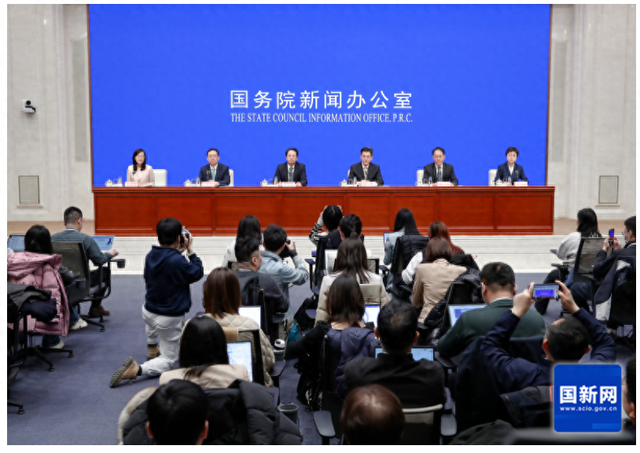
国新办发布会:介绍《现代化首都都市圈空间协同规划(2023—2035年)》有关情况
2 1 Shi Ji Jing Ji Bao Dao· 2026-02-12 02:17
Core Viewpoint - The State Council Information Office held a press conference on February 12, 2026, to introduce the "Modern Capital Urban Circle Spatial Coordination Plan (2023-2035)" and answer questions from reporters [1] Group 1 - The conference featured key officials including Wang Changlin, Deputy Director of the National Development and Reform Commission, and other local government representatives [1] - The plan aims to enhance spatial coordination within the capital urban area, focusing on sustainable development and urban integration [1] - The initiative is part of broader efforts to improve urban planning and resource allocation in the Beijing-Tianjin-Hebei region [1]
国新办发布会:介绍现代化首都都市圈空间协同规划有关情况
Xin Jing Bao· 2026-02-12 02:10
Core Insights - The State Council Information Office held a press conference on February 12, 2026, to introduce the "Modern Capital Metropolitan Area Spatial Coordination Plan (2023-2035)" and answer questions from reporters [1] Group 1 - The plan aims to enhance spatial coordination within the capital metropolitan area, focusing on sustainable development and urban integration [1] - It outlines strategies for infrastructure development, economic growth, and environmental protection over the next decade [1] - The initiative is expected to improve the quality of life for residents and promote regional economic cooperation [1]
预告 | 国新办2月12日就《现代化首都都市圈空间协同规划(2023—2035年)》有关情况举行新闻发布会
Xin Lang Cai Jing· 2026-02-11 05:21
Core Viewpoint - The State Council Information Office will hold a press conference on February 12, 2026, to discuss the "Modern Capital Metropolitan Area Spatial Coordination Plan (2023-2035)" [1] Group 1 - The press conference will feature key officials including Wang Changlin, Deputy Director of the National Development and Reform Commission, and other local government representatives [1] - The event aims to provide insights and answer questions regarding the spatial coordination plan for the capital metropolitan area [1]