雄安新区发展规划

Search documents
河北省副省长:保障疏解到雄安人员福利待遇不低于在北京时的水平
Xin Lang Cai Jing· 2026-02-12 11:17
Core Viewpoint - The Hebei provincial government is committed to ensuring that the entrepreneurial conditions, living conditions, and welfare benefits for relocated personnel to Xiong'an New Area are not lower than those in Beijing [1] Group 1: Development Plans - The recently published "Modern Capital Metropolitan Area Spatial Coordination Plan (2023-2035)" outlines the future development direction for Xiong'an New Area, with a total development area of nearly 215 square kilometers and a total construction area of 58.52 million square meters [1] - By 2035, the goal is to basically establish a high-level socialist modern city, and by 2050, to fully build a high-quality, high-level socialist modern city [1] Group 2: Key Tasks - The government will focus on three main areas to support the development of Xiong'an New Area, including the concentration of non-capital functions from Beijing and promoting industrial innovation cooperation [1] - The establishment of the Hebei Xiong'an New Area Zhongguancun Science and Technology Park will support the gathering and efficient transformation of innovative resources that align with the functional positioning of the new area [1] - There will be a continuous improvement of the supporting policy system to ensure that the entrepreneurial conditions, living conditions, and welfare benefits for relocated personnel are maintained at levels comparable to those in Beijing [1] Group 3: Urban Construction - The plan emphasizes high-standard and high-quality construction of a modern city, enhancing the planning system and implementation mechanisms, and promoting the synchronous planning and construction of digital and real cities [2] - The focus will be on creating a balanced urban space in terms of scale and residential work, while continuously improving municipal infrastructure and public service facilities [2] Group 4: Innovation and Industry - The initiative aims to actively integrate into the Beijing-Xiong'an corridor and the Beijing-Tianjin-Hebei International Science and Technology Innovation Center, creating an innovation triangle in the region [2] - There will be ongoing promotion of industrial innovation cooperation between Beijing, Xiong'an, and Tianjin, with high-quality events like the Xiong'an Future City Scenario Fair to establish a high ground for emerging industries and a leading area for future industries [2]
首都都市圈空间协同规划划重点 雄安新区从三方面发力
Xin Lang Cai Jing· 2026-02-12 02:43
Core Viewpoint - The press conference introduced the "Modern Capital Urban Circle Spatial Coordination Plan (2023-2035)" and outlined key tasks for the development of Xiong'an New Area, focusing on innovation, urban modernization, and creating a vibrant city [1] Group 1: Key Tasks for Xiong'an Development - The plan emphasizes the creation of a concentrated area for the relocation of non-capital functions from Beijing, promoting industrial innovation collaboration between Beijing and Xiong'an [1] - There is a commitment to accelerate the construction of a modern city by improving planning systems, enhancing urban infrastructure, and promoting low-carbon development while preserving cultural heritage [1] - The initiative aims to establish Xiong'an as a hub for innovation and entrepreneurship, integrating it into the Beijing-Tianjin-Hebei international technology innovation center and fostering high-quality industrial collaboration [1]
央企,撑不起雄安的天!
Sou Hu Cai Jing· 2025-10-16 22:51
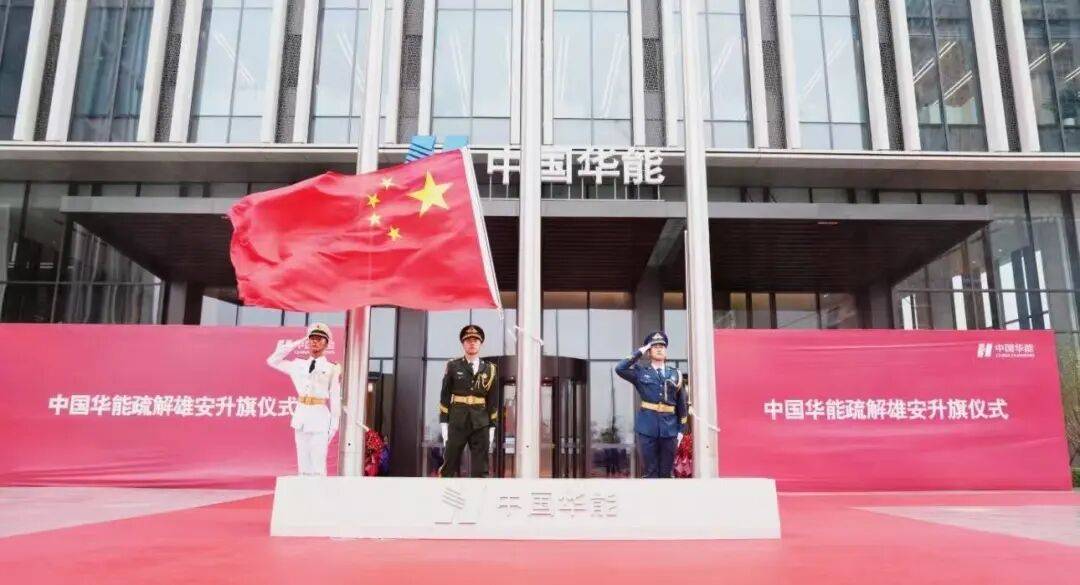
Core Insights - The relocation of central enterprises (SOEs) to Xiong'an New Area is expected to boost local development, with three SOEs having officially settled and over 300 branches established, indicating a significant influx of corporate presence [3] - However, the direct impact on local employment and economic growth is limited, as the number of jobs created by these SOEs is insufficient to meet the area's population target of 5 million [4] - The experience from across the country suggests that private and small enterprises are more effective in driving regional economic development compared to SOEs, highlighting the need for supportive policies for these businesses [5] Group 1: SOE Relocation and Impact - China Huaneng and China Sinochem have established their headquarters in Xiong'an, contributing to the formation of an innovation ecosystem in the aerospace information sector [3] - The "headquarters + industrial chain" model is anticipated to reconstruct the industrial ecosystem in Xiong'an, promoting the implementation of development plans [3] - The initial focus of SOEs on stable operations may delay their economic contributions to the local area, necessitating significant investment in infrastructure to support these enterprises [4] Group 2: Employment and Economic Contribution - The three SOEs have brought approximately 3,000 employees, which is far from sufficient to support the projected population growth in Xiong'an [4] - The stable nature of SOEs means they are unlikely to create immediate economic benefits, requiring a long-term approach to foster local economic growth [4] Group 3: Role of Private and Small Enterprises - Private and small enterprises contribute significantly to tax revenue, GDP, innovation, employment, and the number of businesses, underscoring their importance in economic development [5] - The presence of private tech companies in the Xiong'an internet industrial park is crucial for developing the aerospace information and AI sectors, creating a symbiotic relationship with SOEs [5] - To enhance the vitality of private and small enterprises, Xiong'an needs to implement more targeted support policies, ensuring equitable treatment compared to SOEs [6] Group 4: Recommendations for Policy Support - Suggestions include optimizing the business environment for small enterprises, creating platforms for collaboration between SOEs and private firms, and expanding support in financing and public services [6] - The successful integration of SOEs and private enterprises is essential for Xiong'an to transition from merely accommodating SOEs to achieving autonomous development and high-quality growth [6]