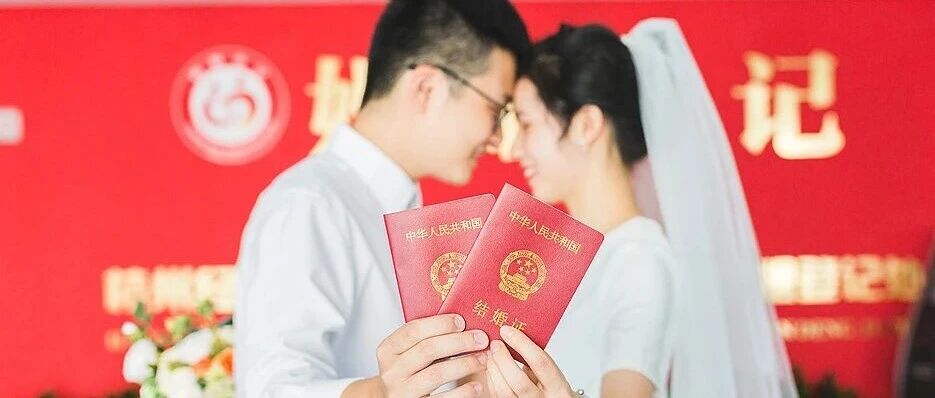
甜蜜经济

Search documents
去年全国结婚登记增长10.76%
第一财经· 2026-03-26 11:15
Core Viewpoint - The article highlights a significant increase in marriage registrations across various provinces in China for the year 2025, driven by policy changes and demographic trends, indicating a potential boost in the "sweet economy" related to weddings and marriage services [3][4]. Summary by Sections Marriage Registration Data - In 2025, the total number of marriage registrations in China reached 6.763 million pairs, an increase of 657,000 pairs or 10.76% compared to 2024 [3]. - Guangdong province saw a notable increase, with 614,000 registrations, up by 102,000 pairs or 19.92% from the previous year [3]. - Shanghai reported a total of 175,092 marriage registrations, with a growth of approximately 38.7% compared to 2024 [3]. - Other cities in Jiangsu province also experienced significant growth, such as Nanjing with an 18.27% increase and Suzhou with a 33.51% increase in marriage registrations [4]. Policy Changes Impacting Registrations - The new Marriage Registration Regulations, effective from May 10, 2025, eliminated regional restrictions, allowing nationwide marriage registrations without the need for a household registration book [5]. - The "cross-province handling" of marriage registrations has led to a notable increase in registrations in cities with high migrant populations, such as Changsha, which saw a 56% increase in registrations [5]. Innovative Registration Locations - Cities and scenic spots are developing "new landmarks" for marriage registration, integrating tourism with the registration process. For example, Shanghai's "Sweet Station" offers a modern and romantic setting for couples [6]. - In Suzhou, three unique registration points were established, each with cultural significance, enhancing the marriage registration experience beyond a mere administrative procedure [6]. - Chengdu is set to launch a comprehensive service system that combines marriage guidance, registration, and tourism, aiming to boost the local wedding economy [7].

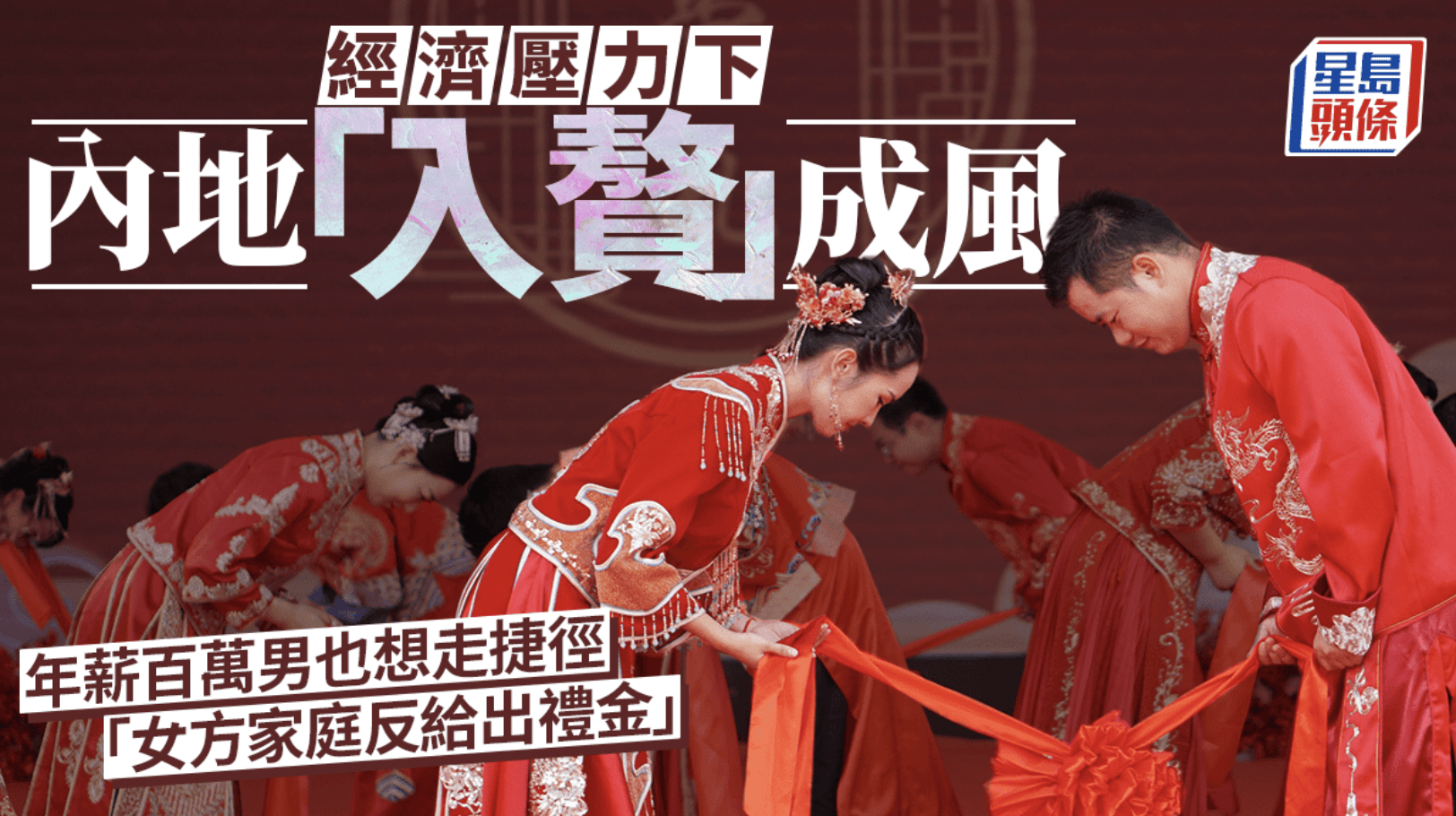
宋清辉:“入赘”成风,已形成一个稳定的、半公开的婚姻细分市场
Sou Hu Cai Jing· 2026-02-16 22:29
Core Insights - The rise of the "bridegroom" market in mainland China reflects the increasing economic pressures and changing social norms, with more young people considering this option as a pragmatic choice in the face of high marriage costs and housing challenges [3][6][10] Group 1: Economic Context - The high cost of marriage in mainland China has led local governments to issue wedding consumption vouchers to stimulate the "sweet economy" [3] - In the Hangzhou Xiaoshan area, the "bridegroom" model has developed into a scalable market, with daily inquiries about this option ranging from 20 to 30 calls [8] - Economic disparities and high living costs in urban areas are driving the emergence of the "bridegroom market," reflecting a practical choice for some individuals under economic pressure [3][6] Group 2: Social Dynamics - Young people, particularly from the Z generation and beyond, are increasingly valuing personal quality of life and spiritual freedom, leading to a greater acceptance of the "bridegroom" concept, which was traditionally viewed negatively [10][11] - The changing marriage views may impact the local housing market, as the obsession with "marriage houses" is diminishing, potentially leading to unsold inventory in properties that emphasize this concept [13] Group 3: Market Characteristics - The "bridegroom" model contrasts with traditional marriage customs where the male side bears the financial burden of dowries and housing; instead, the female family may provide a gift of around 100,000 yuan to the male [4] - The local marriage agency has facilitated over a thousand matches, indicating a significant demand for this service, particularly among well-educated individuals with high incomes [5][4] - The phenomenon is also linked to local policies, such as those related to compensation for demolition, which incentivize the inclusion of "bridegrooms" in families for additional housing benefits [6]
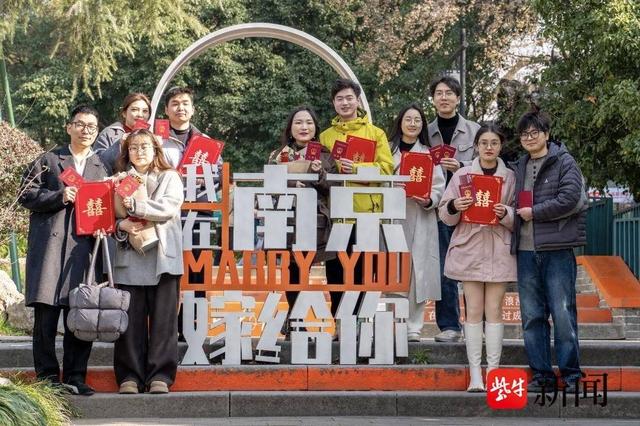
来南京玄武领证,让你“马上”甜蜜出圈!
Xin Lang Cai Jing· 2026-02-14 15:34
Core Viewpoint - The marriage registration services in Xuanwu District are innovatively combining romantic experiences with consumer offerings, creating a unique and engaging environment for newlyweds during the Spring Festival [2][4][10]. Group 1: Special Events and Offerings - The Xuanwu District Civil Affairs Bureau organized a themed certificate presentation event titled "Welcoming the Year of the Horse," featuring a poetic ceremony that emphasizes the beauty of nature and love [4]. - Newlyweds participated in a symbolic act of tying their marriage wishes to a "Blessing Tree," representing their hopes for a happy future [4]. - Couples completing their registration received wedding banquet vouchers and could engage in interactive activities, including receiving lottery tickets and coffee drinks [4][8]. Group 2: Consumer Integration - The Jinling STYLE Romantic Center has integrated marriage registration services with various consumer offerings, creating a "sweet consumption pathway" for newlyweds [6]. - Couples can enjoy romantic dinners, themed floral arrangements, and commemorative wedding-related products by presenting their marriage certificates [6]. Group 3: Promotional Activities - The East Suburban Marriage Registration Point launched a "Lucky Draw" event, allowing newlyweds to win prizes such as free hotel stays and buffet dinners, enhancing the festive atmosphere [8]. - This initiative aims to extend the celebratory experience into the tourism sector, promoting a "mini honeymoon" for newlyweds [8]. Group 4: Overall Experience and Economic Impact - The Xuanwu District is creating a comprehensive "registration-celebration-memory" experience by linking government services, commercial consumption, and tourism [10]. - This approach not only reflects a new trend in marriage customs but also serves as an innovative exploration for regional development, contributing to the "sweet economy" [10].
发力“甜蜜经济” 多地精准施策激发消费新活力
Zheng Quan Ri Bao· 2026-02-13 15:44
Group 1 - The "sweet economy" encompasses a full industry chain integrating romance, shopping, film, gifts, banquets, accommodation, travel, and entertainment, with recent initiatives aimed at boosting consumption during the upcoming Spring Festival [1] - Local governments, such as Hunan and Changsha, are implementing promotional activities and long-term strategies to tap into the consumption potential of the "sweet economy," including issuing movie vouchers for couples and families [1][2] - Changsha's government work report includes the "sweet economy" as a key focus, aiming to create a comprehensive marriage and family service matrix to support young people's development and happiness in the city [1][2] Group 2 - Experts highlight that pre-Spring Festival consumption policies are effective in stimulating consumer activity and driving domestic demand, with initiatives like Hunan's movie vouchers lowering consumption barriers [2] - The "sweet economy" is evolving beyond seasonal events into a multi-faceted ecosystem that meets young people's emotional needs while contributing to urban development [2] - Recommendations for further development of the "sweet economy" include creating landmark locations at marriage registration sites and connecting various services like matchmaking and wedding planning to enhance consumer experiences [2] Group 3 - Developing the "sweet economy" requires innovation in consumption scenarios, industry integration, and brand building, focusing on creating diverse experiences and leveraging local characteristics [3] - The integration of the entire industry chain is essential, combining marriage services, cultural tourism, and retail to drive collaborative growth [3] - Strengthening brand identity and cultural elements, along with implementing targeted policies and services, will support the sustainable development of the "sweet economy" [3]
陈博彰出席长沙甜蜜经济启航仪式
Chang Sha Wan Bao· 2026-02-13 01:51
Group 1 - The "Sweet Economy" initiative has officially launched in Changsha, integrating various sectors such as romance, shopping, entertainment, and tourism [2][3] - The initiative aims to create a comprehensive service matrix for marriage and family support, enhancing policies for housing, employment, and entrepreneurship to attract and retain young people in Changsha [3] - The first batch of supporting enterprises for the Sweet Economy has been announced, focusing on providing a full range of services from emotional connections to living arrangements for young individuals [3] Group 2 - The event was co-hosted by the Changsha Municipal Government and Hunan Broadcasting and Television Group, with support from the Civil Affairs Bureau and the Commerce Bureau of Changsha [4]

甜蜜经济,爱在长沙 | 山水洲城记
Sou Hu Cai Jing· 2026-02-11 04:58
Core Viewpoint - The "Sweet Economy" in Changsha, which encompasses all consumption related to love and marriage, is highlighted in the government work report for the first time, indicating its growing importance in the local economy [1][3]. Group 1: Definition and Scope of "Sweet Economy" - The "Sweet Economy" includes a wide range of expenditures related to romantic relationships, from small gifts like roses to significant expenses such as wedding ceremonies and honeymoon trips [3]. - The wedding sector is a major component of the "Sweet Economy," with projected spending of nearly 1.4 trillion yuan on wedding banquets alone in 2024, equivalent to the annual GDP of Changsha [4]. Group 2: Market Trends and Challenges - The market for wedding-related services has shrunk from 3.74 trillion yuan in 2019 to an estimated 2.84 trillion yuan in 2024, reflecting a decline in marriage registrations and changing attitudes among younger generations towards traditional weddings [4][6]. - A report indicates that only 51.9% of the "00s" generation view weddings as essential, and this number drops to 42.62% when including unmarried "90s" individuals [4]. Group 3: Opportunities for Innovation - The shift away from traditional wedding customs presents opportunities for personalized wedding planning, with over 68% of the "00s" supporting innovative wedding formats that incorporate cultural heritage [6]. - Changsha's unique cultural offerings, such as the "Dahan Wedding Ceremony," cater to the desires of younger couples for creative and meaningful wedding experiences [7][8]. Group 4: Broader Implications and Future Directions - The "Sweet Economy" is not limited to young couples; it also includes the "Silver Sweet Economy," focusing on services for older couples celebrating anniversaries, which is a growing market with a 23% annual increase in demand [16]. - Government initiatives, such as the reform of marriage registration processes, are expected to enhance the vibrancy of the "Sweet Economy" by making it easier for couples to marry, even if they are from outside the region [18].

完成200个民生服务综合体功能提升 加速“甜蜜经济杭州中心”建设落地
Mei Ri Shang Bao· 2026-02-09 23:21
Core Insights - The 2026 Hangzhou Civil Affairs Work Conference highlighted achievements in the "14th Five-Year Plan" and set key tasks for the current year, focusing on elderly care and economic development initiatives [1][2] Group 1: Elderly Care Initiatives - In 2025, 720,000 elderly individuals will have access to the "Love Card" service, with a ratio of 28.12 certified elderly care workers per 10,000 elderly people [1] - The city has established 2,418 elderly dining facilities (meal assistance points) to support senior citizens [1] - A new policy for urban and rural elderly meal assistance has been introduced, aiming to enhance service quality [2] Group 2: Economic Development - Hangzhou has launched the Silver Economy Industrial Park and completed 15,100 home modifications for elderly-friendly living, with subsidies totaling 105 million yuan, stimulating consumption of 370 million yuan [1] - The "Sweet Economy" initiative includes the establishment of three Sweet Industry Parks and eight themed streets, along with the issuance of 5 million yuan in sweet economy consumption vouchers [1] - Plans for 2026 include the establishment of the "Hangzhou Sweet Economy Research Institute" and the organization of the second Sweet Economy Expo to promote international wedding culture [2] Group 3: Social Welfare and Charity - The city will implement a new five-year action plan for charity, focusing on strategic philanthropy and the development of a charity trust incentive policy [2] - New community-based charity initiatives will be encouraged, including sustainable operating mechanisms in urban areas and neighborly assistance in rural regions [2]
沈河区民生服务“升级包”来了!
Xin Lang Cai Jing· 2026-02-05 23:23
Group 1 - The core focus of the civil affairs work in Shenhe District for 2026 will be on enhancing services related to elderly care, assistance, and community services to benefit more households [1] - The initiative aims to build an age-friendly society by gradually advancing basic pension insurance and long-term care insurance [1] - The establishment of the "Silver Economy Industry Alliance" will explore new integration models of "elderly care + finance + healthcare + cultural tourism" [1] Group 2 - The government will continue to provide purchasing services for special difficulties and elderly individuals over 80 years old who meet policy criteria [1] - For families of elderly individuals assessed as having moderate to severe disabilities, "fire emergency service packages" will be distributed for targeted assistance [1] - There will be a revitalization of idle properties and facilities to transform them into elderly care service points, allowing seniors to access quality meal and integrated medical care services close to home [1] Group 3 - Social assistance will shift towards "proactive discovery" using a "big data + foot patrol" model to identify and assist vulnerable populations in a timely manner [1] - The "policy finds people" mechanism will expand its coverage, implementing dynamic monitoring for disadvantaged groups [1] Group 4 - Civil affairs services will place greater emphasis on branding and experience, with plans to create a "sweet economy" marriage IP [1] - The "Shengjing Seeking Fate" Qixi Festival will be held in the first half of the year, followed by a military and police-themed collective wedding in the second half, promoting new customs in marriage [1]
广东去年结婚登记超60万对
Di Yi Cai Jing· 2026-01-29 11:28
Group 1 - In 2025, Guangdong province reported a total of 614,000 marriage registrations, an increase of 102,000 from the previous year, representing a growth rate of 19.92% [1] - Shenzhen, Guangzhou, and Dongguan were the top three cities in Guangdong for marriage registrations, with 118,147, 109,647, and 48,306 registrations respectively [1] - The demographic structure in Guangdong is characterized by a high proportion of young people of marriageable age, particularly due to significant inflows of young graduates from other provinces [1] Group 2 - In Jiangxi province, a total of 265,952 marriage registrations were recorded in 2025, with 186,528 being marriage registrations and 79,424 being divorce registrations, marking a growth of approximately 3.46% compared to 2024 [2] - Fujian province saw a total of 169,756 marriage registrations in 2025, reflecting a year-on-year increase of 12%, with the capital city Fuzhou experiencing a 20.37% increase [2] Group 3 - Sichuan province recorded 399,300 marriage registrations in 2025, with Chengdu accounting for over 130,000 of these registrations [3] - The implementation of the revised Marriage Registration Regulations on May 10, 2025, eliminated regional restrictions and allowed for nationwide marriage registration, significantly increasing convenience for individuals working away from their registered residence [3] - The rise in "cross-province" marriage registrations has been notable, particularly in cities with high populations of mobile workers, and many cities are promoting marriage registration tourism [3] Group 4 - In Suzhou, various creative marriage registration points have been established, enhancing the romantic atmosphere for couples, including unique decorations and special events [4] - Suzhou has developed 16 distinctive marriage registration points, which host activities to celebrate and enhance the happiness of newlyweds [4]
广东去年结婚登记超60万对
第一财经· 2026-01-29 11:26
Core Insights - The article discusses the significant increase in marriage registrations across various provinces in China for the year 2025, highlighting a trend towards higher marriage rates and the impact of policy changes on this trend [3][4][5]. Summary by Sections Marriage Registration Data - Guangdong Province reported 614,000 marriage registrations in 2025, an increase of 102,000 from the previous year, marking a growth rate of 19.92% [3]. - In Shanghai, a total of 175,092 marriage registrations were recorded, with 125,102 being new marriages, reflecting a growth of approximately 38.7% compared to 2024 [4]. - Jiangxi Province saw 265,952 marriage registrations, with 186,528 being new marriages, which is a growth of about 3.46% from 2024 [4]. - Fujian Province recorded 169,756 new marriages, a year-on-year increase of 12%, with the capital city Fuzhou seeing a 20.37% increase [4]. Factors Influencing Marriage Trends - The increase in marriage registrations is attributed to a national push for suitable marriage and childbearing, along with improved accessibility to marriage registration services [5]. - The implementation of the revised Marriage Registration Regulations on May 10, 2025, eliminated regional restrictions and allowed for nationwide marriage registration, making it easier for individuals working away from their registered domicile to marry [5]. - The rise in "cross-province" marriage registrations has been notable, particularly in cities with high migrant populations, where such registrations constitute a significant portion of total registrations [5]. Innovative Registration Locations - Cities like Suzhou have created unique marriage registration points that enhance the experience for couples, such as themed decorations and special events to celebrate love [6]. - Suzhou has established 16 distinctive marriage registration locations, which include romantic settings and activities aimed at making the registration process more memorable for couples [6].