生产力型AI

Search documents
2025中国科技新风向:大厂千亿重注AI
2 1 Shi Ji Jing Ji Bao Dao· 2025-12-29 23:15
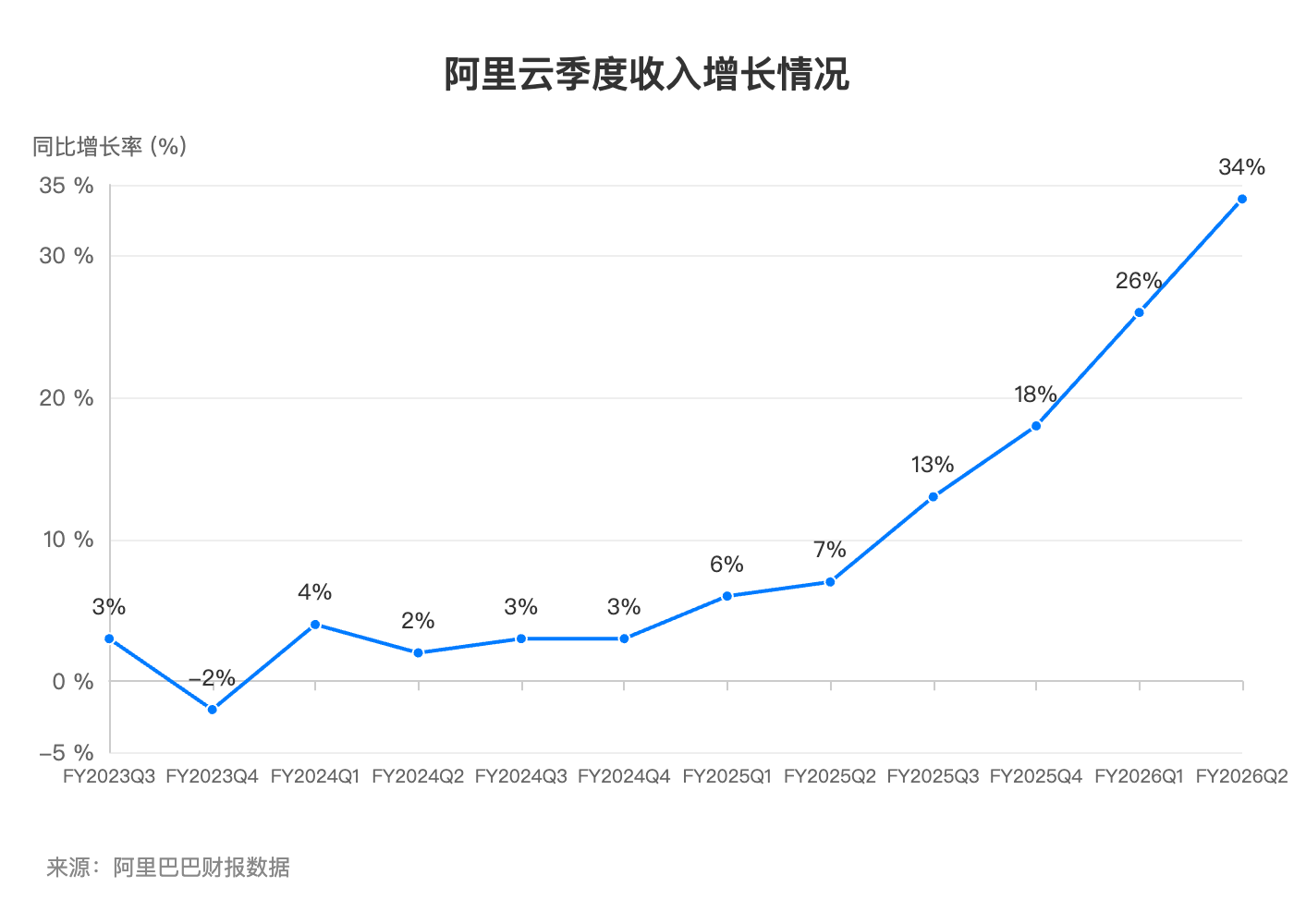
Core Insights - AI has become the central theme in China's technology industry throughout 2025, viewed as a key driver for the next productivity revolution and business model iteration [1] - Major internet companies like Tencent, Alibaba, and ByteDance are intensifying their focus on AI, with significant investments and strategic moves to secure their positions in the market [1][2] Investment and Financials - Alibaba announced a three-year investment plan of 380 billion yuan for cloud and AI hardware infrastructure, which is more than its total investment over the past decade [2] - ByteDance plans to invest 150 billion yuan in 2025, marking an 88% year-on-year increase, with expectations to further increase spending to 160 billion yuan in 2026 [2] - Tencent's capital expenditure surged by 386% year-on-year to 36.58 billion yuan in Q4 2024, with projections for 2025 spending to reach around 100 billion yuan [3] - Baidu has invested over 100 billion yuan in AI since the generative AI wave began in March 2023, with plans for continued R&D investment [3] Revenue Growth and Early Signals - Alibaba Cloud's revenue grew by 34% year-on-year in Q3 2025, with AI-related product revenue maintaining triple-digit growth for nine consecutive quarters [3] - Tencent's marketing services revenue increased by 21% year-on-year, driven by AI improvements in its advertising platform [3] - Baidu's AI business revenue grew over 50% year-on-year, becoming a core growth engine despite a decline in total revenue [3] AI Integration in Business - Major companies are integrating AI into their core business lines to enhance operational efficiency and create new growth engines [6][7] - Alibaba's AI tools improved operational efficiency for 500,000 merchants by an average of 1.5 times during the 2025 "Double 11" shopping festival [7] - Tencent's marketing revenue growth is attributed to AI-driven advertising, which enhances targeting and revenue per thousand impressions [8] New Market Opportunities - The competition for AI-native applications is emerging as a new growth area, with companies vying to establish the next "super entrance" in the AI era [9] - The market has formed a competitive landscape with ByteDance's Doubao and Tencent's Yuanbao leading in user engagement [10] - Hardware innovations, such as AI smart glasses and AI-integrated smartphones, are seen as potential new interaction points for users [11] Future Outlook - The AI market is still in its early stages, with ongoing competition among companies to establish user loyalty and commercial viability [12]



阿里押注C端AI入口背后
2 1 Shi Ji Jing Ji Bao Dao· 2025-11-28 03:08
Core Insights - Alibaba's CEO, Wu Yongming, emphasizes the necessity for an AI-native consumer-facing super entrance, leading to the launch of the "Qianwen" app, which achieved over 10 million downloads within a week of public testing, making it the fastest-growing AI application to date [2][4] - The AI-to-consumer market is still open for latecomers, particularly for productivity-oriented AI, despite earlier entrants like ByteDance's Doubao and DeepSeek establishing significant user bases [2][5] - Alibaba's strategic investment in AI and cloud infrastructure reached 120 billion yuan over the past four quarters, indicating a strong commitment to AI development despite short-term profit pressures [2][10] Group 1: Market Dynamics - The AI market is becoming increasingly competitive, with major players like Alibaba, Ant Group, and others launching new AI applications to capture consumer interest [4][5] - Current market leaders include ByteDance's Doubao with 172 million monthly active users, DeepSeek with 145 million, and Tencent's Yuanbao with 32.86 million, while Alibaba's previous app had only 3.06 million [4] - Wu Yongming's AGI three-stage theory outlines the evolution of AI capabilities, indicating that the market is transitioning from basic language imitation to more complex task execution [4][5] Group 2: Product Features and User Engagement - Both "Qianwen" and Ant Group's "Lingguang" emphasize usability, with features designed to simplify complex tasks, such as generating applications from natural language in 30 seconds [5][6] - The future vision for "Qianwen" includes integration with various life scenarios like maps, food delivery, ticket booking, and shopping, aiming to create a comprehensive AI life entrance [6][9] Group 3: Infrastructure and Ecosystem - The competition for consumer entry points is not just about products but also about underlying infrastructure and ecosystem capabilities, with Alibaba's full-stack AI strategy being a significant advantage [8][9] - Alibaba has open-sourced over 300 AI models, with total downloads exceeding 600 million, establishing a strong presence in the global AI landscape [8][9] - The company plans to invest over 380 billion yuan in cloud and AI hardware infrastructure over the next three years, indicating a long-term commitment to enhancing its capabilities [9][10] Group 4: Financial Implications - Alibaba's recent financial reports show a significant decline in profits, with a 85% year-on-year drop in operating profit, attributed to heavy investments in AI and cloud infrastructure [10][11] - The CFO noted that while core business revenues are strong, the focus on AI commercialization will lead to fluctuations in short-term profitability [10][11] - Wu Yongming expressed confidence that an AI bubble is unlikely in the next three years, as demand for AI resources is expected to exceed supply [10][11]

阿里押注C端AI入口背后
21世纪经济报道· 2025-11-28 03:02
Core Insights - Alibaba's CEO Wu Yongming emphasizes the necessity of an AI-native consumer-facing super entrance, leading to the launch of the "Qianwen" app, which achieved over 10 million downloads within a week, surpassing the growth rates of competitors like ChatGPT and DeepSeek [1][3] - The AI-to-C market is still open for latecomers, particularly for productivity-oriented AI, despite Alibaba's late entry compared to ByteDance and Tencent [1][3] Market Dynamics - The AI market is heating up with major players like Alibaba and Ant Group launching competitive products, including the "Qianwen" app and the "Lingguang" AI assistant, which quickly gained significant user engagement [3][5] - Current market leaders include ByteDance's Doubao with 172 million monthly active users, DeepSeek with 145 million, and Tencent's Yuanbao with 32.86 million, while Alibaba's previous app had only 3.06 million [3] Strategic Framework - Wu Yongming's AGI three-stage theory categorizes the development of general artificial intelligence into "learning human," "assisting human," and "surpassing human," with the current focus on "assisting human" capabilities [5] - The emphasis is on productivity-oriented AI rather than entertainment-focused applications, with both "Qianwen" and "Lingguang" highlighting their practical usability [5] Infrastructure and Ecosystem - The competition for AI entry points is not just about products but also involves a comprehensive battle for infrastructure and ecosystem support, with Alibaba's full-stack AI layout being a significant advantage [8][9] - Alibaba has open-sourced over 300 AI models, with downloads exceeding 600 million, establishing itself as a leading provider of open-source AI technology [9] Investment and Financials - Alibaba plans to invest over 380 billion RMB in cloud and AI hardware infrastructure over the next three years, with recent quarterly capital expenditures reaching 120 billion RMB [9][10] - Despite significant investments impacting short-term profits, Alibaba's core business remains strong, with a 10% year-on-year increase in customer management revenue [10] Future Outlook - The success of the "Qianwen" app could lead to increased demand for AI computing power and infrastructure, further driving Alibaba's investments in this area [9][10] - The ability of Alibaba to integrate its computational advantages, open-source influence, and extensive data into a seamless and intelligent consumer entrance will be crucial for its future success [11]

阿里,解构AI技术霸权
2 1 Shi Ji Jing Ji Bao Dao· 2025-11-27 11:00
Core Insights - Alibaba's CEO, Wu Yongming, emphasizes the necessity for an AI-native consumer-facing super entry point, leading to the launch of the "Qianwen" app [1][2] - The app achieved over 10 million downloads within a week of public testing, surpassing the growth rates of competitors like ChatGPT and DeepSeek, marking it as the fastest-growing AI application to date [3][5] - Despite facing short-term challenges such as profit pressure and technology integration, Alibaba's strategic focus on AI indicates a commitment to not miss out on the AI ecosystem reshaping [3][18] Market Dynamics - The AI market is becoming increasingly competitive, with major players like ByteDance, Tencent, and Baidu already establishing a strong presence in the consumer AI sector [6][8] - According to QuestMobile, the current market is dominated by three major players: ByteDance's Doubao with 172 million monthly active users, DeepSeek with 145 million, and Tencent's Yuanbao with 32.86 million [6] Strategic Positioning - Wu Yongming's AGI three-stage theory underpins Alibaba's push into the consumer AI market, identifying the current phase as "assisting humans" [7][8] - The focus is shifting from entertainment-based AI to productivity-oriented AI, which is seen as the true growth area for consumer applications [8] Future Vision - The "Qianwen" app aims to integrate various life scenarios such as maps, food delivery, ticket booking, and shopping, positioning itself as a future AI life entry point [11][18] - The competition for consumer entry points is viewed as a battle for future traffic distribution rights, with successful AI applications expected to directly understand user needs and deliver services [11][12] Infrastructure and Ecosystem - Alibaba's comprehensive AI strategy includes significant investments in AI and cloud infrastructure, with a reported capital expenditure of 120 billion yuan over the past four quarters [3][15][19] - The company has open-sourced over 300 AI models, achieving over 600 million downloads, which positions it as a leading player in the global open-source AI landscape [14][15] Financial Implications - Alibaba's aggressive investment in AI has led to a significant decline in profits, with a reported 85% year-on-year drop in operating profit for Q2 of fiscal year 2026 [18][19] - The CFO noted that while core business revenues are strong, the focus remains on long-term growth through AI investments, despite short-term profitability fluctuations [19]