生产力跃迁

Search documents
愉悦资本刘二海:智能经济和网络经济有所不同,最核心的还是生产力跃迁
Xin Lang Cai Jing· 2026-01-15 10:58
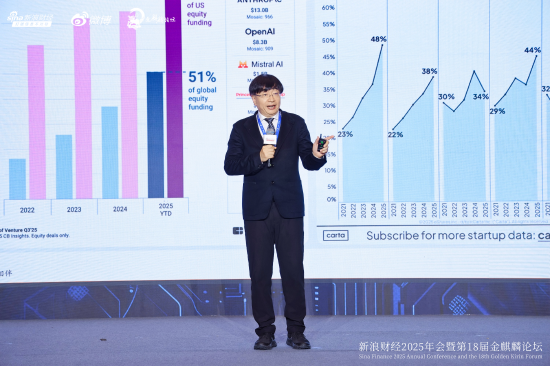
Core Insights - The "2025 Technology Wind List" annual event was held in Beijing, featuring a keynote speech by Liu Erhai, founder and managing partner of Joy Capital, discussing the paradigm shift from automation to autonomy [1][4]. Group 1: Economic Transition - The intelligent economy differs from the previous internet economy, with the core being a leap in productivity [1][4]. - The transition is characterized by a shift from automation to autonomy, and business models are evolving from platforms to bilateral structures, along with the integration of software and hardware [1][4]. Group 2: Development Stages - Liu emphasized that previous advice against focusing on models in favor of applications was incorrect, highlighting the importance of understanding the development stages [1][4]. - The initial phase of development involves creating chips, models, and autonomous driving technologies, which will eventually lead to the native AI and industry penetration, following its own rules [1][4].

马斯克预测未来工作或不是必需品
Xin Lang Cai Jing· 2025-12-11 06:45
Group 1 - Core viewpoint: In the next 10 to 20 years, work will transition from a necessity to an option, driven by the formation of a production closed loop, allowing humanity to break free from the historical structure of working for survival [1] - Investment focus: The company emphasizes three key areas: products, services, and genuine contributions to sustainable development [1] - Future of currency: While currency will not disappear suddenly, the concept of "money" may no longer be central [1] Group 2 - Company vision: The company is not merely operating a business but is building a foundational infrastructure for a "next-generation civilization" [1] - Productivity leap: Technological advancements, particularly AI and robotics, are expected to be the true drivers of growth and act as "social stabilizers" in the future [1] - Meaning of human existence: The ultimate goal of technology is not to replace humans but to expand the boundaries of human consciousness, with civilization needing to uphold truth, beauty, and curiosity [1]
超100只科技主题基金申报
中国基金报· 2025-09-07 12:44
Core Viewpoint - The article highlights the significant increase in the number of technology-themed funds being registered in China, reflecting a strong focus on the technology innovation sector by public funds this year [2][3]. Group 1: Surge in Technology-Themed Fund Applications - As of September 5, 2023, 106 funds with "technology" in their names have been registered this year, a 4.6-fold increase from 19 funds in the same period last year [4]. - Among these, 44 funds specifically include "technology innovation" in their names, indicating a clear focus on core technology innovation areas [4]. - The majority of these products are stock index funds, with 64 funds (44 of which are ETFs), accounting for over 60% of the total [5]. Group 2: Diverse Product Offerings - In addition to stock index funds, there are 22 actively managed equity products aimed at capturing excess returns in the technology sector, 15 bond index funds for different risk preferences, 4 QDII funds, and 1 REIT [5]. - A total of 50 fund management companies are involved in this surge, with notable contributions from Huatai-PineBridge, Fuguo, and others, creating a "leading and blooming" pattern in the market [5]. Group 3: Factors Driving Increased Interest - The rise in technology-themed fund applications is attributed to a combination of policy benefits, market conditions, and sector performance, making the technology sector a core area with both long-term value and short-term flexibility [6]. - The ongoing national innovation-driven development strategy provides long-term policy support and growth space for technology companies, reinforcing institutional confidence in long-term investments in technology-related assets [6]. Group 4: Investment Strategies and Focus - Several fund companies are enhancing their investment research capabilities and product offerings in the technology sector, aiming to build a "technology investment army" [7]. - For instance, Bosera Fund has established a research team focused on technology sectors since before the establishment of the Sci-Tech Innovation Board, with over 75 funds directed towards technology innovation, totaling over 50 billion yuan [7]. - Other companies like Penghua Fund and Huaxin Fund are also developing comprehensive investment strategies that cover both hard and soft technology sectors, providing a wide range of investment tools for investors [8].