投资理念

Search documents
[3月20日]指数估值数据(大盘下跌,回到4.1星;主动和指数组合何时会打开申购;抽奖福利)
银行螺丝钉· 2026-03-20 14:08
Core Viewpoint - The overall market has experienced a decline, with the CSI All Share Index dropping by 1.2%, returning to a rating of 4.1 stars, indicating a potential investment opportunity as the market adjusts [1][25]. Market Performance - Large, medium, and small-cap stocks have all seen declines, with small-cap stocks, particularly the CSI 2000, dropping over 2% [2][3]. - Last year was characterized by a bull market led by small-cap stocks, which are now experiencing significant corrections [4][5]. - Value-oriented stocks have shown relative stability amidst market fluctuations, while dividend indices have remained less volatile [6][7]. Investment Strategy - The company has paused subscriptions for actively managed and index-enhanced funds during periods of high market enthusiasm to prevent investors from chasing prices [11][17]. - In early January, when the market sentiment was particularly high, the company decided to halt subscriptions to protect investor interests, resulting in most investors remaining profitable despite recent market corrections [20][21]. - Active selection and index-enhanced strategies have outperformed the index this year, with the active selection strategy beating the CSI 300 by approximately 3-4% over the past two months [22][24]. Future Actions - The company plans to reopen subscriptions for actively managed and index-enhanced funds when the market rating returns to 4.1 stars, and will close subscriptions again if the rating rises to the 3.x star range [26][27]. - The investment philosophy emphasizes the combination of good products, good prices, and long-term holding for favorable returns, while also addressing the emotional challenges investors face during market volatility [28][29]. Hong Kong Market Insights - The company has compiled valuation data for Hong Kong indices, which can be accessed through their mini-program for daily updates [10][37]. - Currently, the Hong Kong market is rated at 3.x stars, reflecting its valuation status [34].

【笔记20260311— 霍尔木兹 · 扫雷】
债券笔记· 2026-03-11 10:19
Group 1 - The article emphasizes the importance of cutting losses and letting profits run, contrasting with the common behavior of traders who tend to cut profits and let losses accumulate [1] Group 2 - The market is currently observing geopolitical situations, with stock markets showing slight fluctuations and bond market rates experiencing a minor increase [5] - The issuance of 300 billion savings bonds was successful, with yields of 1.63% for 3-year bonds and 1.7% for 5-year bonds, attracting significant sales [6] - A report from Goldman Sachs indicates that a small number of vessels are navigating the Strait of Hormuz, with the current traffic being less than one-fifth of pre-conflict levels [8]

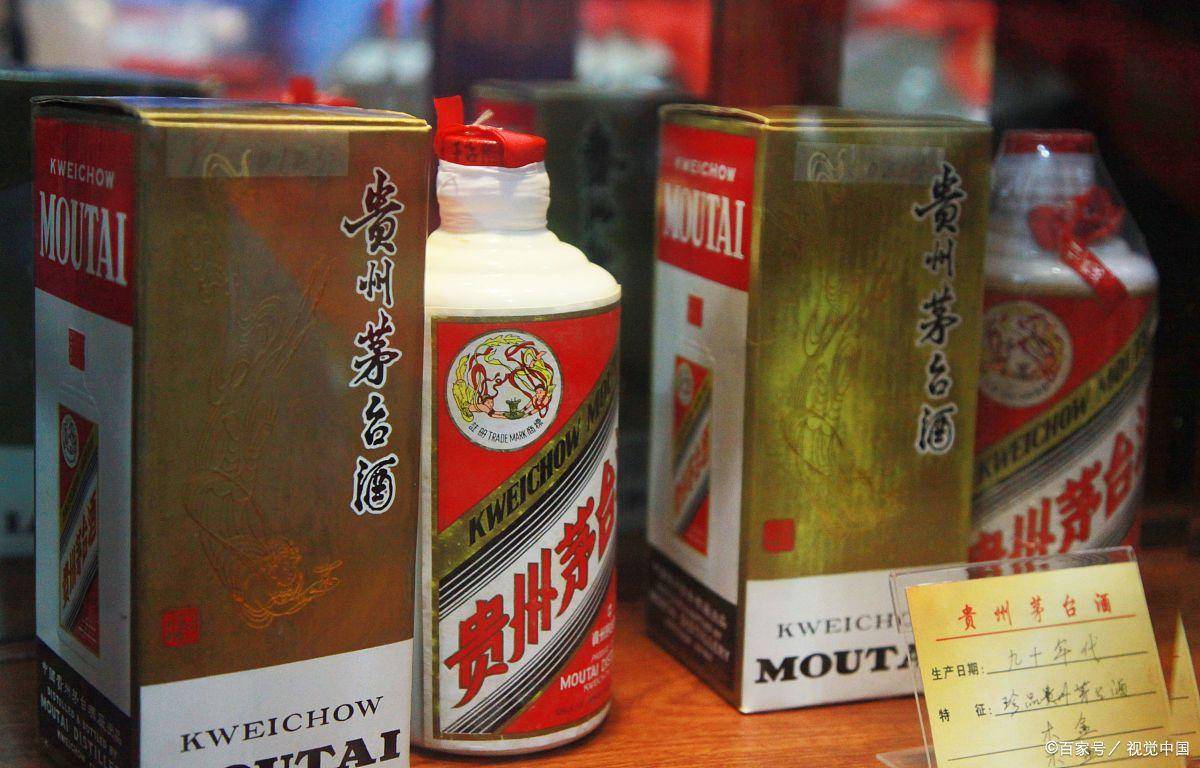
段永平卖出神华重仓茅台,1亿抄底浮盈千万!茅台股价重回1500元
Sou Hu Cai Jing· 2026-02-07 08:17
Core Viewpoint - The article highlights the strategic stock adjustment by Duan Yongping, who sold shares of China Shenhua and invested in Kweichow Moutai, resulting in significant gains shortly after the purchase [1][3]. Group 1: Stock Adjustment - Duan Yongping sold 1.5 million shares of China Shenhua H-shares on January 27 and bought 77,194 shares of Kweichow Moutai for approximately 1 billion RMB [1][3]. - The stock price of Kweichow Moutai rose from around 1,330 RMB to 1,525 RMB within five trading days, yielding a profit exceeding 10 million RMB for Duan [1][3]. Group 2: Stock Performance - Following the adjustment, Kweichow Moutai's stock price saw a notable increase, reaching a peak of 1,533 RMB per share, marking its first return above 1,500 RMB since September 2025 [5]. - The overall confidence in the liquor sector is recovering, with the food and beverage sector's valuation at historical lows, and the food index's price-to-earnings ratio at 20.37 times [5]. Group 3: Core Logic - Duan Yongping's confidence in Kweichow Moutai is supported by the iMoutai platform, which he believes addresses issues of counterfeit products and enhances consumer access [7]. - The iMoutai platform reportedly intercepted 540 million abnormal activities monthly, indicating a strong demand for genuine products [7]. Group 4: Market Trends - The demand for Kweichow Moutai remains robust, with reports of strong sales across various product lines, particularly as the Chinese New Year approaches [9]. - Duan Yongping suggested that Kweichow Moutai should consider moderate annual price increases to maintain brand value and market stability [9]. Group 5: Institutional Views - Analysts from CICC and Guosen Securities share a positive outlook on Kweichow Moutai, indicating that the price of Feitian Moutai is stabilizing around 1,500 RMB per bottle, which is becoming a consensus among manufacturers, channels, and consumers [11][12]. - CICC maintains a target price of 1,860 RMB for Kweichow Moutai, suggesting a potential upside of 30.34% based on current stock prices [12].

一位中国交易员靠黄金赚了30亿美元,如今又重仓做空白银,账面浮盈超20亿!
Sou Hu Cai Jing· 2026-02-06 08:18
Core Insights - A Chinese billionaire trader, Bian Ximing, has shifted focus from gold to silver, holding a short position valued at nearly $300 million as silver prices soar [1][3] - Bian has made approximately $3 billion in profits from long positions in gold since early 2022, and he now holds the largest net short position in silver on the Shanghai Futures Exchange [1][3] - Despite facing losses in a volatile silver market, Bian's current short position of about 450 tons has yielded a paper profit of approximately $2.88 million due to a recent drop in silver prices [3][4] Trading Strategy - Bian began increasing his silver short positions through his brokerage, Zhongcai Futures, starting from the last week of January [4][7] - The short position surged to around 18,000 contracts by January 28 and further increased to approximately 28,000 contracts by January 30 as silver prices reached historical highs [7] - Bian's strategy involved diversifying risk across longer-dated contracts while maintaining his short positions during price rebounds, which has proven successful amid recent price declines [9] Market Context - Bian's actions come during a period of significant volatility in the precious metals market, prompting a reevaluation of traditional views on gold and silver [8] - Institutional investors continue to view gold as a hedge against interest rate changes and global uncertainties, while the recent rise in silver is increasingly seen as driven by speculative positions rather than economic fundamentals [8] Background on Bian Ximing - Bian Ximing, 61, is the chairman of Zhongcai Futures and has gained fame for his accurate predictions in commodities like gold and copper, earning him the nickname "Invisible King of Futures" [10] - He has a reputation for being low-profile, spending most of his time in Gibraltar, and has a loyal following due to his investment philosophy shared online [8][10]

财富观 | “初遇”4100点,新锐基金经理如何应对经验空白?
Sou Hu Cai Jing· 2026-01-23 11:40
Core Insights - The A-share market has returned to the 4100-point level after ten years, with over 80% of fund managers having never experienced this level before [2][3] - The current market dynamics are shaped by a new generation of fund managers who are navigating a "structural bull market" rather than a traditional bull market driven by leverage [3][4] Group 1: Market Dynamics - The Shanghai Composite Index first crossed the 4000-point mark on October 28, 2025, and reached 4100 points on January 9, 2026, marking a significant recovery since July 2015 [3] - Over 83% of fund managers, approximately 3429 out of 4108, have started their careers after 2016, indicating a generational shift in the investment landscape [3] - The current bull market is characterized by a focus on industry policies and technological innovation rather than the leverage-driven dynamics of previous bull markets [4][5] Group 2: Investment Strategies - New fund managers are adopting a balanced and disciplined approach, emphasizing the importance of maintaining their investment philosophy and avoiding impulsive trading behaviors [6][7] - Experienced fund managers stress the need for a return to fundamental research and a focus on valuation and performance matching, moving away from mere point comparisons [4][9] - The current market is seen as more resilient, driven by household savings and ETF allocations, contrasting with the leverage-driven market of 2015 [4][5] Group 3: Challenges and Opportunities - New fund managers face challenges such as a lack of historical market experience, which may lead to over-reliance on short-term data and insufficient risk management [8] - However, their lack of historical baggage allows them to embrace new technologies and adapt to current market demands more readily [8] - Experienced managers highlight the evolving role of experience, which now focuses more on risk management and emotional resilience rather than solely on stock selection [9][10] Group 4: Institutional Responses - Fund companies are addressing the experience gap through structured training and mentorship programs, pairing seasoned managers with newer ones to facilitate knowledge transfer [11] - The ideal fund manager team should combine different levels of experience to balance growth, value, and quantitative strategies [11] - Companies are adapting their strategies based on their risk appetite, with more aggressive firms favoring new talent while conservative firms prefer experienced managers [11]

投资,如取经!
雪球· 2026-01-16 08:34
Core Viewpoint - The article emphasizes the importance of understanding human nature in investing, highlighting that greed and fear are the main obstacles investors face. It advocates for a mindset of correct knowledge, vision, and action to navigate the stock market effectively [5][6]. Investment Philosophy - Investment is likened to a journey of learning, where the stock market serves as a platform for acquiring valuable life lessons [4]. - Correct investment philosophy can help avoid many pitfalls, and learning from successful investors like Warren Buffett is crucial [6]. Human Nature in Investing - Greed is described as a desire for unattainable wealth, leading to unrealistic expectations and poor investment decisions [5]. - Fear is characterized as a reluctance to let go of existing assets, which can hinder investment growth [5]. Investment Strategy - Achieving a 20% to 30% annual return can lead to significant wealth accumulation over time, as demonstrated by Buffett's long-term success through compounding [6]. - The article suggests focusing on a select group of companies, specifically the top 300 or the top 100 brands, for investment opportunities [6]. Technical Analysis - A comprehensive understanding of various technical indicators and their combined use is essential for effective stock selection [6]. - Proper portfolio management and scientific position control are recommended as strategies to mitigate risks during market downturns [6]. Broader Economic Context - The stock market is portrayed as a reflection of political, economic, and social dynamics, emphasizing the need for investors to understand these broader contexts [6]. - The article concludes that true investment wisdom comes from understanding human nature and the interconnectedness of society, politics, and economics [6].

投资老将徐志敏,新动向
Zhong Guo Zheng Quan Bao· 2026-01-14 04:25
Core Viewpoint - Xu Zhimin, a well-known equity investment manager, has established Wufeng Private Fund Management (Shanghai) Co., Ltd. after leaving Zhongtai Asset Management, aiming to focus on long-term investment and trust with clients [1][2]. Group 1: Company Establishment - Wufeng Private Fund Management has been approved to commence operations, led by Xu Zhimin, who previously served as the Chief Investment Officer at Zhongtai Asset Management [1]. - Xu Zhimin's departure from Zhongtai Asset Management was marked by a public letter titled "Farewell at 80," concluding over ten years of service [1]. Group 2: Investment Philosophy - The name "Wufeng" reflects Xu's investment philosophy, emphasizing five key qualities: honesty, independence, curiosity, patience, and emotional stability [2]. - Xu aims to prioritize good decision-making over merely achieving good results, highlighting the importance of being honest with oneself and others, maintaining independence from mainstream opinions, and having a strong desire to understand business models [2]. Group 3: Previous Performance - Xu Zhimin has 19 years of experience in securities research and investment, with a track record of managing funds exceeding 10 billion yuan in 2020, projected to reach an average of 15 billion yuan by 2025 [3]. - His managed products have consistently outperformed the CSI 300 Index over the past decade, achieving a compound annual return rate of over 10% [3].
邵宇:“老登股”“小登股”反映投资者对未来不同的期待
Feng Huang Wang Cai Jing· 2026-01-07 04:32
Core Viewpoint - The discussion around "old Deng stocks" and "small Deng stocks" has gained traction following writer Zijin Chen's stock trading performance, which yielded a 31% return but left him dissatisfied due to his investment in several "old Deng stocks" [1] Group 1: Investment Categories - "Old Deng assets" refer to traditional sectors such as liquor, coal, finance, and consumer goods, which are seen as stable investments [1] - "Small Deng assets" are likened to the investment style of Elon Musk, representing emerging technology companies in China [1] Group 2: Investment Philosophy - The two categories of assets reflect different investment philosophies and expectations for future development [1] - Investors are encouraged to align their asset allocation with their risk tolerance and judgment to achieve a balance between risk and return [1]
Revisiting Thryv Holdings After A Q3 Bloodbath
Seeking Alpha· 2026-01-02 19:15
Group 1 - The article discusses Thryv Holdings, Inc. (THRY) and expresses confidence in the investment thesis presented in a previous write-up [1] - The author emphasizes a belief in the concept of "No Called Strikes" in investing, indicating a willingness to take risks on promising investment ideas [1] - The author mentions engaging in discussions about stocks and investing on Bluesky, highlighting an active interest in the investment community [1] Group 2 - The author has a beneficial long position in THRY shares, indicating a personal investment in the company [1] - The article is presented as an expression of personal opinions rather than financial advice, underscoring the subjective nature of the analysis [2] - There is a disclaimer regarding the lack of a business relationship with any company mentioned, reinforcing the independence of the analysis [1]


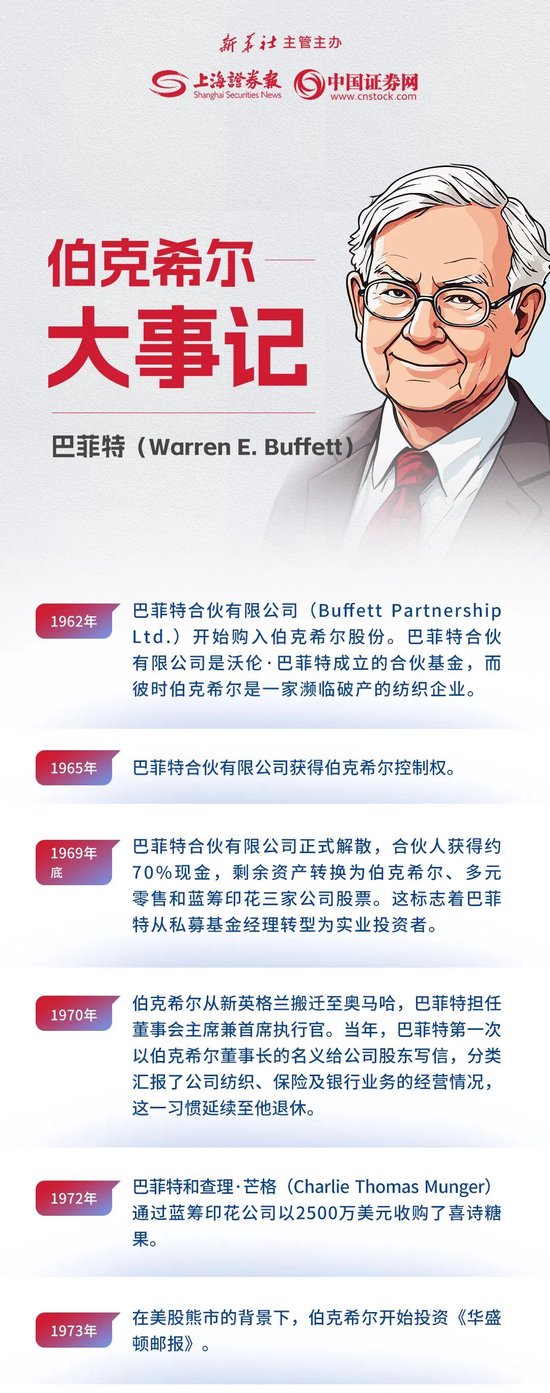
巴菲特隐退!一图速览伯克希尔传奇
Xin Lang Cai Jing· 2026-01-01 10:01
Core Viewpoint - Warren Buffett officially retires as CEO of Berkshire Hathaway on December 31, 2025, with Greg Abel set to take over on January 1, 2026. Buffett will remain as chairman of the board and retain a significant number of shares [1][20]. Group 1: Buffett's Legacy - Buffett transformed Berkshire from a near-bankrupt textile company into a conglomerate valued over $1 trillion, generating immense wealth for shareholders [1][20]. - From 1965 to 2024, Berkshire achieved a cumulative return of 55,022.84 times, with an annualized return of 19.9%, significantly outperforming the S&P 500's cumulative return of 390.54 times and annualized return of 10.4% [1][20]. - As of the end of 2025, Buffett's personal net worth is estimated at $151 billion, symbolizing not just a name but an investment philosophy [1][20]. Group 2: Transition to Greg Abel - Greg Abel faces the challenge of addressing concerns over the "Buffett premium" fading, as replicating Buffett's legendary performance in a new era is unlikely [2][21]. - Abel's primary responsibility as CEO will be to maintain Berkshire's decentralized culture, which is based on independence, integrity, and trust [2][21]. - The succession plan for Abel has been in preparation for seven years, with Buffett emphasizing that Abel does not need to be a second Buffett but should ensure the company continues to navigate smoothly [2][22]. Group 3: Historical Context - Buffett began acquiring Berkshire shares in 1962 when it was a struggling textile company [4][24]. - In 1965, Buffett's partnership gained control of Berkshire, marking his transition from a private equity manager to an industrial investor [5][6]. - The company relocated to Omaha in 1970, where Buffett became chairman and CEO, establishing a tradition of communicating with shareholders through annual letters [7][24].