
生态共同体

Search documents
硝烟过后,谁才是外卖大战赢家
Di Yi Cai Jing· 2025-11-27 12:34
Core Insights - The report reveals the troubling reality of the food delivery industry, highlighting that while order volumes have increased, actual revenue for merchants has decreased due to aggressive subsidy wars [1][3][10] - The competition among major players in the food delivery market has led to a significant decline in profits for many restaurants, as they struggle to balance between participating in subsidies and maintaining profitability [4][10] Group 1: Industry Dynamics - A study covering over 40,000 merchants indicates that during the peak of subsidy wars, daily order volumes increased by an average of 7%, but actual revenue dropped by approximately 4%, leading to an average profit decline of 8.9% [1][3] - The phenomenon of "substitution effect" is evident, where food delivery is replacing dine-in services, resulting in a decline of over 10% in both order volumes and actual revenue for dine-in services [4][10] - Merchants not participating in subsidies are also affected, as customers shift towards competitors offering subsidies, creating a dilemma for them [4][10] Group 2: Competitive Landscape - The food delivery war began in February 2025 when JD.com announced its entry into the market with a "0 commission" policy, leading to a series of aggressive subsidy initiatives from major players like Meituan and Alibaba [5][6] - By July 2025, Meituan reported a daily order volume exceeding 1.2 billion, while Alibaba's Taobao Flash Purchase reached 80 million orders, showcasing the scale of competition and the financial stakes involved [5][6] - Despite the intense competition, regulatory scrutiny has increased, with the market regulator intervening to address the ongoing subsidy wars [6][10] Group 3: Strategic Implications - The competition is not merely about food delivery but reflects a broader strategy among giants to capture higher-frequency consumer engagement and enhance user activity on their platforms [7][8] - JD.com aims to leverage its supply chain capabilities to support the entire food service industry, while Alibaba focuses on creating synergistic effects within its ecosystem to enhance user experience [13][10] - Meituan is committed to maintaining its delivery network and has initiated plans to support merchants financially, indicating a shift towards a more sustainable business model [9][10] Group 4: Future Outlook - The ongoing battle suggests a shift from zero-sum competition to a more complex ecosystem where companies must innovate beyond subsidies to create sustainable value [12][14] - The industry's future will depend on the ability of these companies to build healthier, more equitable ecosystems that balance efficiency with fairness and short-term gains with long-term value [12][14]



IP营销成风,顶级思维究竟是什么?
FBeauty未来迹· 2025-08-23 12:16
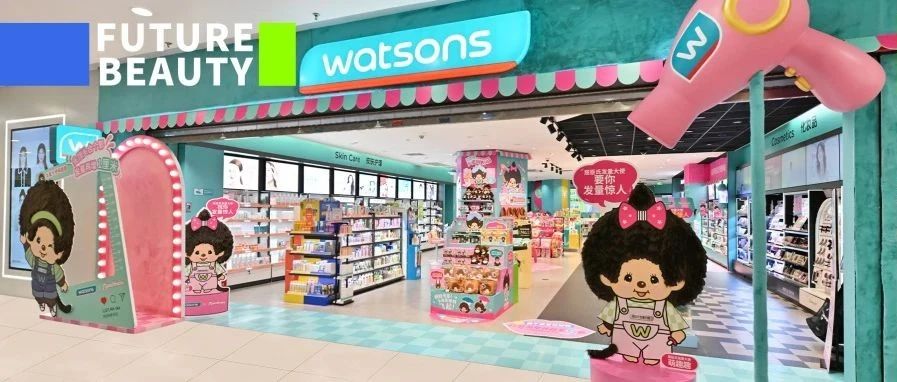
Core Viewpoint - The article discusses the evolving landscape of IP collaboration in marketing, highlighting both the opportunities and pitfalls brands face in leveraging IP for consumer engagement and emotional connection [3][4][18]. Group 1: IP Collaboration Challenges - Many brands are rushing into IP collaborations without a clear strategy, leading to a homogenization of marketing efforts and ineffective ROI [4][18]. - Some brands engage in superficial "stamp-style" collaborations that fail to resonate with consumers, ultimately diluting the value of the IP [4][18]. - A market director from a new beauty brand expressed concerns over high licensing fees without corresponding returns, indicating a lack of systematic evaluation of IP value [4][18]. Group 2: Successful IP Collaboration Strategies - A more refined approach to IP collaboration involves acting as a "bridge" to connect IP owners, suppliers, and cross-industry partners, creating a collaborative "innovation flywheel" [5][7]. - Successful collaborations require identifying emotional touchpoints and creating unique consumer experiences, as demonstrated by Watsons' partnership with the IP "Mengququ" [8][9]. - Watsons' themed pop-up stores and interactive experiences effectively engaged consumers and enhanced brand visibility [11][13]. Group 3: Cross-Industry Collaboration - The article emphasizes the importance of cross-industry collaboration as a survival strategy in a competitive market, moving away from isolated industry practices [19][28]. - Watsons' collaboration with Keep for the "Good Luck Run" event exemplifies how to integrate emotional and experiential marketing to attract target demographics [21][22]. - The focus on creating a community around shared interests and health-conscious lifestyles enhances brand loyalty and consumer engagement [21][22]. Group 4: Ecosystem and Value Creation - Watsons has developed a unique ecosystem that transforms traditional retail into a value community, emphasizing co-creation and shared growth among participants [25][26]. - The integration of data, services, and consumer experiences allows for efficient resource flow and value generation within the ecosystem [26][27]. - This approach not only enhances user engagement but also strengthens brand value and market presence, creating a sustainable competitive advantage [27][28].

榆林化工园区丝博会合作落地开花
Zhong Guo Hua Gong Bao· 2025-05-27 06:57
Core Insights - The 9th Silk Road International Expo and China East-West Cooperation and Investment Trade Fair concluded in Xi'an, showcasing significant investment opportunities in Yulin City, particularly in the chemical industry [1] Group 1: Investment and Economic Development - Yulin Economic Development Zone and Yulin High-tech Zone signed projects that account for nearly 70% of the total investment in Yulin City during the expo [1] - Yulin Economic Development Zone has established a modern coal chemical industry system, with 125 projects landed and a planned investment scale exceeding 500 billion yuan, of which over 100 billion yuan has been completed [2] - The high-tech zone signed 41 projects with a total investment of 21.778 billion yuan, covering fine chemicals, new materials, and new energy sectors [4] Group 2: Future Development Strategies - Future development strategies include enhancing existing industrial chains, attracting projects in modern plastics, construction materials, and coal-based fine chemicals [3] - The high-tech zone aims to create three communities: a development community for strategic collaboration, an ecological community for innovation sharing, and a community of shared destiny for value co-existence [4] - The focus will be on promoting projects in chemical new materials, equipment manufacturing, and energy storage, with specific emphasis on PGA, polybutylene-1 new materials, and all-vanadium flow batteries [5]