
生态开放

Search documents
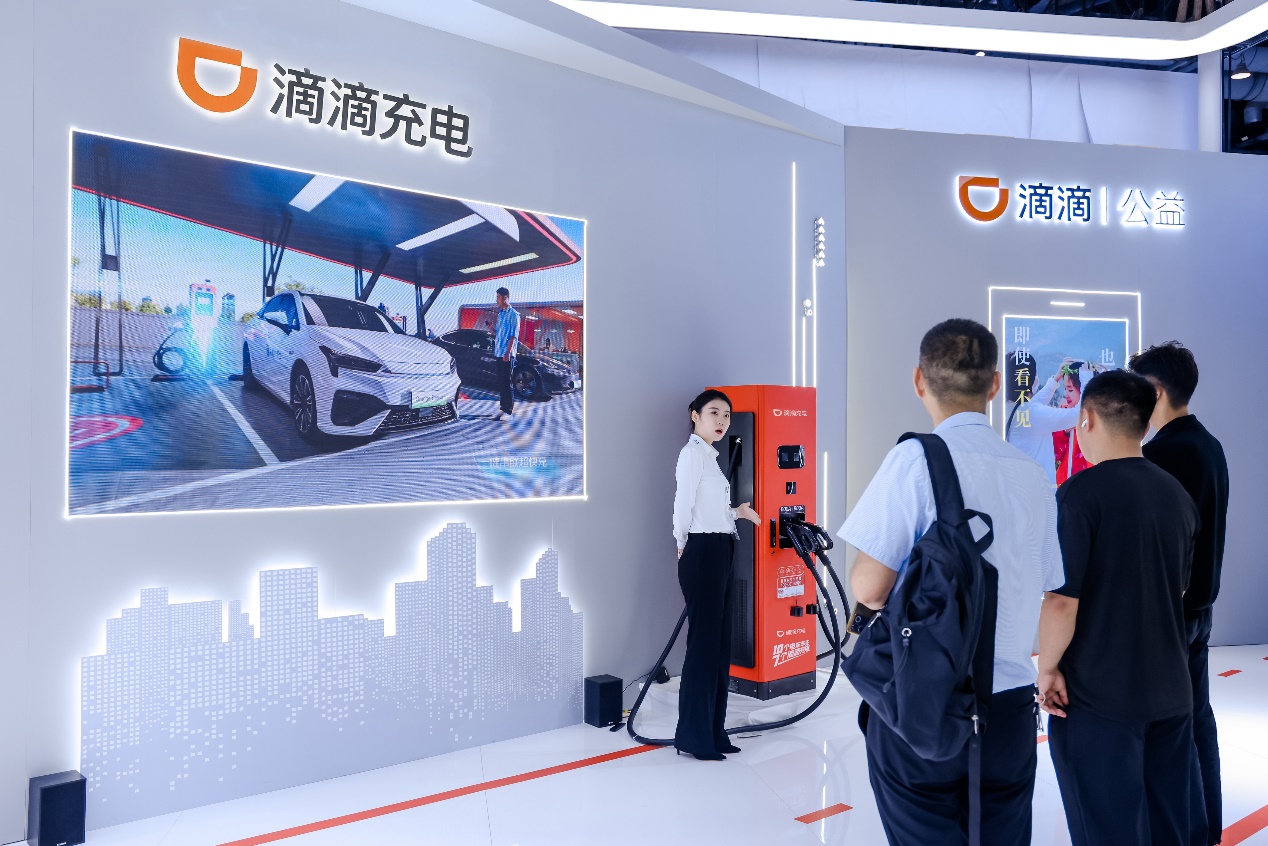
滴滴充电发布2025年度桩企伙伴运维报告 共建智能运维服务能力
Zhong Guo Neng Yuan Wang· 2026-02-26 09:56
Core Insights - Didi Charging has partnered with over 800 charging pile companies and provided more than 1.7 billion charging services by December 31, 2025, with an average equipment anomaly rate of 3.3% [1] Group 1: Industry Development - The high-quality development of the charging industry requires the establishment of an ecological service system under the guidance of national authorities [1] - Equipment manufacturers need to provide reliable, long-lasting, and easy-to-maintain devices to solidify the industry foundation [1] - Operators should focus on the layout of charging service networks, while platform companies must leverage AI and big data to empower various merchants and enhance service quality [1] Group 2: Open Ecosystem - Ecological openness is key to promoting high-quality development in charging infrastructure [1] - Didi Charging adheres to an "open" philosophy, collaborating with charging pile partners to build intelligent operation and maintenance capabilities, ensuring a user-friendly charging experience [1] Group 3: Representative Companies - The report identifies Shenzhen Shenghong Electric Co., Ltd., Green Energy Huichong (600212) Digital Technology Co., Ltd., Shenzhen Yonglian Technology Co., Ltd., Xi'an Lingchong Chuangxiang New Energy Technology Co., Ltd., and Zhejiang Anfu New Energy Technology Co., Ltd. as representative companies for the year [3] Group 4: Industry Transition - The charging industry is transitioning from "scale expansion" to a new phase that emphasizes both "experience and efficiency" [3] - Charging pile manufacturers will innovate through technology and service quality improvements, providing tailored equipment solutions for different charging scenarios [3] - Didi Charging aims to enhance the operational efficiency and stability of charging equipment while continuously optimizing user service experiences to support high-quality industry development [3]


突然听劝的苹果,让我有些不太习惯
3 6 Ke· 2025-12-08 03:09
Core Viewpoint - Apple is making significant changes to enhance cross-platform data migration between iOS and Android devices, driven by the European Union's Digital Markets Act (DMA) requirements, which may lead to a more open ecosystem for users and developers [6][8]. Group 1: Cross-Platform Data Migration - Apple is introducing the "AppMigrationKit," a framework aimed at facilitating data transfer between iOS and other platforms, particularly Android [2][3]. - The new framework allows apps to perform one-time transfers of on-device data to or from devices running non-Apple platforms, indicating a shift towards interoperability [3][4]. - This initiative is partly a response to the EU's DMA, which mandates that Apple enable third-party app data migration, reflecting a significant change in Apple's historically closed ecosystem [6][8]. Group 2: Developer Ecosystem and Swift Language - Apple is expanding its Swift programming language to support Android development, with the release of a preview version of the Swift SDK for Android [10][17]. - This move aims to make it easier for developers to create cross-platform applications, potentially increasing the adoption of Swift beyond Apple's ecosystem [19][21]. - The establishment of an Android working group within Swift indicates a strategic effort to enhance cross-platform capabilities and prevent developers from favoring other languages like Kotlin for cross-platform development [17][21]. Group 3: Industry Trends and Ecosystem Openness - The trend towards interoperability is not limited to Apple; Android manufacturers are also adapting to facilitate data sharing with Apple devices, such as through features like Quick Share [22][24]. - The evolving landscape suggests a shift from a closed ecosystem to a more open one, which could benefit both consumers and manufacturers by enhancing user experience and product competitiveness [24].

