跨平台开发

Search documents
2026 开发者必备:9 款终端 GPU 加速神器,效率直接拉满~
菜鸟教程· 2026-03-04 03:30
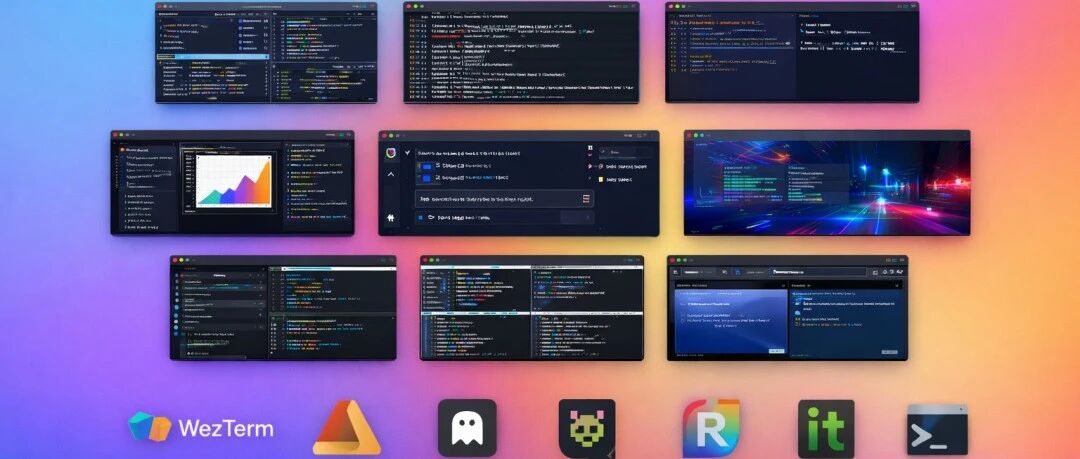
Core Insights - The article discusses the evolution of terminal applications from simple command input interfaces to essential productivity tools for developers, highlighting their role in coding, scripting, Git collaboration, remote SSH, container management, and AI development [1][3]. Group 1: Terminal Evolution - The terminal has transformed into a core productivity tool for developers, facilitating various engineering processes [1]. - The introduction of GPU rendering technology in terminal applications marks a significant upgrade in user experience, particularly for heavy terminal workflows [3]. Group 2: Recommended Modern Terminals - The article lists eight modern terminals to watch in 2026, focusing on cross-platform compatibility, performance, AI integration, and remote development capabilities [4]. Terminal 1: WezTerm - WezTerm supports multiple platforms and features GPU acceleration, true color support, image protocol, and a highly programmable configuration system [6][8]. - It is noted for its high performance and built-in multiplexer functionality, making it a potential replacement for tmux [8][10]. - Ideal for cross-platform developers and remote users [11]. Terminal 2: Alacritty - Alacritty is designed for speed, focusing solely on display without additional features like tabs or splits, making it a benchmark for GPU terminals [14][15]. - Best suited for developers who prioritize responsiveness and a pure CLI workflow [18]. Terminal 3: Ghostty - Ghostty emphasizes minimal configuration with OpenGL GPU rendering and low input latency, aiming to provide an excellent out-of-the-box experience [19][21]. - Targeted at users looking to reduce configuration overhead while enjoying modern terminal features [26]. Terminal 4: Kitty - Kitty is a feature-rich GPU-accelerated terminal favored by advanced users and DevOps engineers, supporting image display and excellent font rendering [27][31]. - Suitable for heavy terminal users and those developing automated workflows [32]. Terminal 5: Warp - Warp integrates AI deeply into the terminal experience, redefining the interaction between developers and the command line [34][35]. - Aimed at developers looking to enhance efficiency through AI [36]. Terminal 6: Rio - Rio is an experimental terminal built on WebGPU, supporting custom shader effects and true color display [37][38]. - It is designed for tech enthusiasts and those interested in visual experiences [41]. Terminal 7: Tabby - Tabby is an integrated terminal platform suitable for users frequently engaging in remote development or server management [42][45]. Terminal 8: iTerm2 - iTerm2 is a mature terminal for macOS, known for its stability and extensive ecosystem, making it ideal for developers seeking a reliable production environment [49][50]. Terminal 9: Windows Terminal - Windows Terminal has become the de facto standard for Windows development environments, featuring advanced split-screen capabilities and deep integration with tmux [52][53]. - It offers a natural upgrade path for Windows developers [55][56].

突然听劝的苹果,让我有些不太习惯
3 6 Ke· 2025-12-08 03:09
Core Viewpoint - Apple is making significant changes to enhance cross-platform data migration between iOS and Android devices, driven by the European Union's Digital Markets Act (DMA) requirements, which may lead to a more open ecosystem for users and developers [6][8]. Group 1: Cross-Platform Data Migration - Apple is introducing the "AppMigrationKit," a framework aimed at facilitating data transfer between iOS and other platforms, particularly Android [2][3]. - The new framework allows apps to perform one-time transfers of on-device data to or from devices running non-Apple platforms, indicating a shift towards interoperability [3][4]. - This initiative is partly a response to the EU's DMA, which mandates that Apple enable third-party app data migration, reflecting a significant change in Apple's historically closed ecosystem [6][8]. Group 2: Developer Ecosystem and Swift Language - Apple is expanding its Swift programming language to support Android development, with the release of a preview version of the Swift SDK for Android [10][17]. - This move aims to make it easier for developers to create cross-platform applications, potentially increasing the adoption of Swift beyond Apple's ecosystem [19][21]. - The establishment of an Android working group within Swift indicates a strategic effort to enhance cross-platform capabilities and prevent developers from favoring other languages like Kotlin for cross-platform development [17][21]. Group 3: Industry Trends and Ecosystem Openness - The trend towards interoperability is not limited to Apple; Android manufacturers are also adapting to facilitate data sharing with Apple devices, such as through features like Quick Share [22][24]. - The evolving landscape suggests a shift from a closed ecosystem to a more open one, which could benefit both consumers and manufacturers by enhancing user experience and product competitiveness [24].


卓易信息20251121
2025-11-24 01:46
Summary of Conference Call for Easy Information Company Overview - The company is involved in the software development industry, particularly focusing on integrated development environments (IDE) and AI programming tools. [2][5] Key Points and Arguments - Despite challenges from US-China relations leading to a decrease in orders, Intel's business still accounts for over 50% of the company's revenue, indicating overall business growth and a steady progress in domestic substitution. [2][4] - The acquisition of Aipuyang has provided the company with a first-mover advantage in the IDE sector, with a focus on the integration of AI programming and IDEs. Easy Developer has approximately 7,000 to 7,800 users, with over 50 paying customers, while Native APP users are around 20,000. [2][5] - The company is actively collaborating with Huawei to implement technology for the HarmonyOS, with plans to launch tool software by June 30, 2026. [2][6] - The Harmony ecosystem relies heavily on tool software support, which is expected to accelerate development over the next two years. [2][9] - The company has seen a resurgence in domestic substitution as overseas manufacturers withdraw, enhancing product availability and quality. [2][11] - The company plans to prioritize Southeast Asia and the Asia-Pacific region for overseas market expansion, while increasing R&D investment in collaboration with domestic operating systems. [2][12][13] Financial and Operational Goals - The company aims for a revenue increase of 20%-30% in 2026 compared to 2025, with monthly active users projected to reach between 50,000 and 100,000. [3][17][18] - The total workforce is not expected to increase significantly; however, there will be a focus on high-end R&D investment and automation to reduce mid- and low-end positions. [3][16] Product and Market Development - The company has released two new versions of its IDE, with Easy Developer generating approximately 200,000 yuan in revenue and securing projects worth 20-30 million yuan. [2][10] - Snap Developer has over 20,000 users, but commercial clients have yet to convert, with ongoing negotiations for projects. [2][10] - The company recognizes the scarcity of cross-platform development talent in China and has established a new company in Shanghai to attract high-end talent. [2][14] Strategic Partnerships and Ecosystem Development - The company is confident in its ability to fully develop necessary tools for the domestic market, positioning itself as a key player in the Harmony ecosystem. [2][7] - Collaboration with large clients may involve comprehensive APP solutions or ecosystem modifications, with a focus on maintaining customer loyalty through various pricing models. [2][8] Industry Outlook - The company expresses optimism about the future of China's high-tech industry, particularly in software, citing significant advancements and the potential for large-scale software companies to emerge. [2][20]

非苹果独有,Android也能玩转Swift了
3 6 Ke· 2025-10-27 11:39
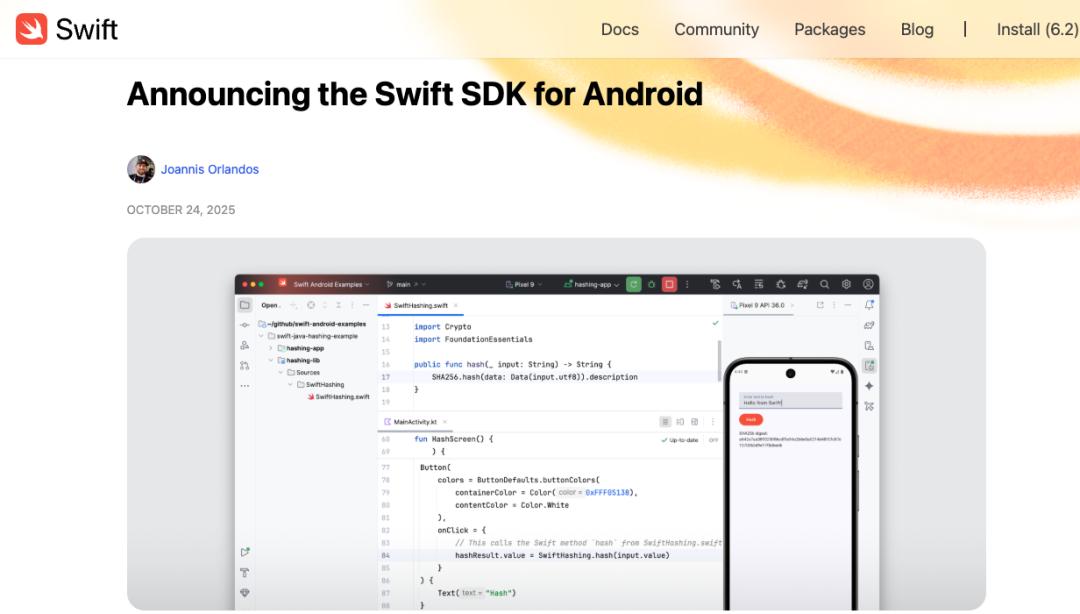
Core Insights - The introduction of the Swift SDK for Android marks a significant shift in the Swift programming language's capabilities, allowing developers to create applications for both iOS and Android platforms, thus enhancing code sharing between the two systems [1][3][10]. Group 1: Swift's Cross-Platform Ambitions - Since its launch in 2014, Swift has aimed to extend beyond iOS, gaining popularity due to its safety, performance, and modern syntax [3]. - The new Android support enables developers to use a SwiftUI-like approach for interface development, lowering the barrier for iOS developers to enter the Android ecosystem [3][10]. Group 2: Development Team and Technical Aspects - The Swift Android working group, composed of Apple engineers and open-source contributors, is responsible for porting Swift's runtime and standard library to the Android architecture [5]. - The SDK supports core functionalities such as concurrency and memory management, potentially offering advantages over Kotlin in performance-sensitive scenarios [7]. Group 3: SDK Accessibility and Resources - Developers interested in trying the SDK can access detailed download and getting started guides from the official Swift website, with installation packages available for Windows, Linux, and macOS [8]. - Over 25% of packages in the Swift Package Index are already compatible with Android, showcasing the community's support for this initiative [8]. Group 4: Market Implications and Developer Reactions - Apple's move to bring Swift to Android is seen as a strategy to prevent developer attrition, as Android holds over 70% of the global market share [10]. - While the SDK is still in preview, it is expected to significantly impact the application development landscape in the coming years [11].
跨平台与嵌入式开发痛点,一站式解决!更有技术白皮书免费领!
AI科技大本营· 2025-10-15 07:05
Core Insights - The article emphasizes the importance of cross-platform development in providing a consistent and smooth user experience across various devices, including mobile, tablets, automotive screens, and industrial equipment [1] - The Qt Global Summit 2025, celebrating the 30th anniversary of Qt, will take place on October 24, 2025, in Shanghai, focusing on "Global Vision, Local Practice" [1][3] - The summit will gather industry leaders, technical experts, and developers to discuss advancements in cross-platform development, embedded systems, and automation testing [1] Group 1: Summit Highlights - The summit will feature discussions on how Qt deeply adapts to HarmonyOS, sharing practical experiences in migrating large applications to the Hongmeng ecosystem [1] - There will be in-depth analysis of performance bottlenecks and solutions during the migration from Qt 5 to Qt 6, ensuring smooth application performance on mobile devices [1] - Modern UI/UX design techniques will be explored, including the use of Qt Quick 3D to create immersive interactive experiences that stand out among competitors [1] Group 2: Safety and Innovation - Focus on Qt Safe Renderer in critical safety areas such as automotive electronics and rail transportation, reinforcing software safety [2] - Discussions on the evolution of next-generation smart cockpit architecture and how Qt can enhance the driving experience [2] - Insights into Qt's multi-process and multi-window solutions under the Wayland architecture to meet complex embedded display requirements [2] Group 3: Quality Assurance - Learning opportunities on using tools like Squish for building comprehensive automated testing systems for embedded software, ensuring delivery quality [2] - The summit serves as a platform for learning and connecting with industry leaders and the Qt core team, facilitating exploration of mobile and embedded development possibilities [2][6]

AI辅助神器Cursor——从0到1实战《仿小红书小程序》-实战课
Sou Hu Cai Jing· 2025-08-20 02:41
Group 1: Course Overview - The course "AI Programming Assistant Cursor: Building a Mini Program Similar to Xiaohongshu from Scratch" provides a systematic learning platform for developers to master core skills in mini program development [2] - The course emphasizes a structured learning path that includes understanding the basic architecture of mini program development, effective application of AI tools, implementation of core functionalities, full-stack development capabilities, and cross-platform thinking [6] Group 2: Mini Program Development Framework - The mini program development framework consists of three main components: view layer (WXML and WXSS), logic layer (JavaScript), and configuration layer (JSON) [3] - The course utilizes a case-based teaching method with over 70 teaching cases, significantly enhancing learning efficiency [3] Group 3: AI Programming Assistant Cursor - The course highlights the integration of AI programming assistant Cursor, which represents a new direction in programming [4] - Key skills include natural language description of requirements, understanding and modifying generated code, and debugging and optimization using Cursor [5] Group 4: Core Functionalities of Xiaohongshu - The core functionalities of the Xiaohongshu mini program include content display, social interaction, and personal center modules [5][7] - Important implementation aspects include content waterfall flow display, user interaction design, and multimedia processing [7] Group 5: Full-Stack Development Skills - The course aims to cultivate full-stack development capabilities, expanding from front-end development to full-stack thinking [5] - Data shows that through 32 hours of systematic learning, developers can comprehensively master skills from basics to cloud development [5] Group 6: Cross-Platform and Commercialization - The course encourages learners to develop cross-platform thinking, understanding how to extend core business logic to other platforms [6] - Techniques for traffic conversion and understanding the Xiaohongshu open platform's entry process are also covered [7]