生态红线

Search documents
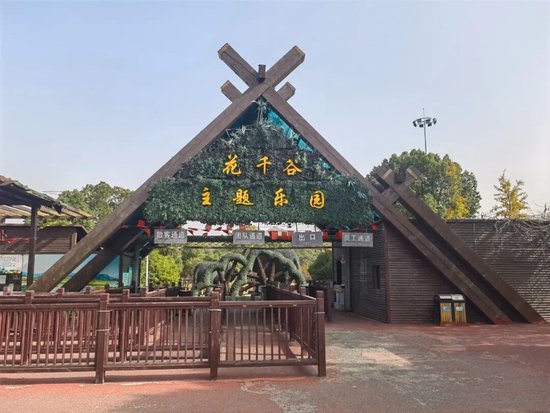
无锡“花千谷”双生困局:百亩良田十年撂荒 数千万投资深陷“泥潭”
Xin Lang Cai Jing· 2025-12-08 06:06
Core Viewpoint - The "Huaiqian Valley" projects in Wuxi, Jiangsu, are facing significant operational challenges due to structural issues in land leasing and development, leading to underutilization and legal disputes [2][20][32]. Group 1: Project Overview - The first project, managed by Wuxi Mansenhuo Agricultural Co., Ltd., aimed to create an agricultural tourism site but has been idle for nearly ten years due to land delivery delays and project direction changes, resulting in a "wasteland" [2][20]. - The second project, developed by Nanjing Feiyang Amusement Development Co., Ltd., has been built but faces operational difficulties due to land use discrepancies and missing planning permits, leading to some facilities being halted [2][20][32]. Group 2: Financial and Legal Issues - Mansenhuo has invested over 8 million yuan but has faced issues with land delivery and has been accused of failing to pay rent, leading to legal disputes [24][35]. - The court ruled that the land lease contract was terminated, and Mansenhuo must pay approximately 1.35 million yuan in overdue rent, but the return of the land and restoration of its condition remain unresolved [24][35]. Group 3: Environmental and Regulatory Concerns - The project site has been designated as a dumping ground for construction waste and sediment, raising concerns about potential ecological impacts on agricultural land [26][28]. - The local water authority confirmed that the site is used for sediment disposal, which includes unauthorized construction waste, contradicting agricultural land use regulations [26][28][30]. Group 4: Operational Challenges - The amusement park has seen low visitor numbers, with reports indicating that it struggles to attract guests due to limited attractions and ongoing land use issues [32][35]. - The amusement park's operational difficulties stem from land use restrictions that prevent the development of non-agricultural projects, leading to further land underutilization [32][35].

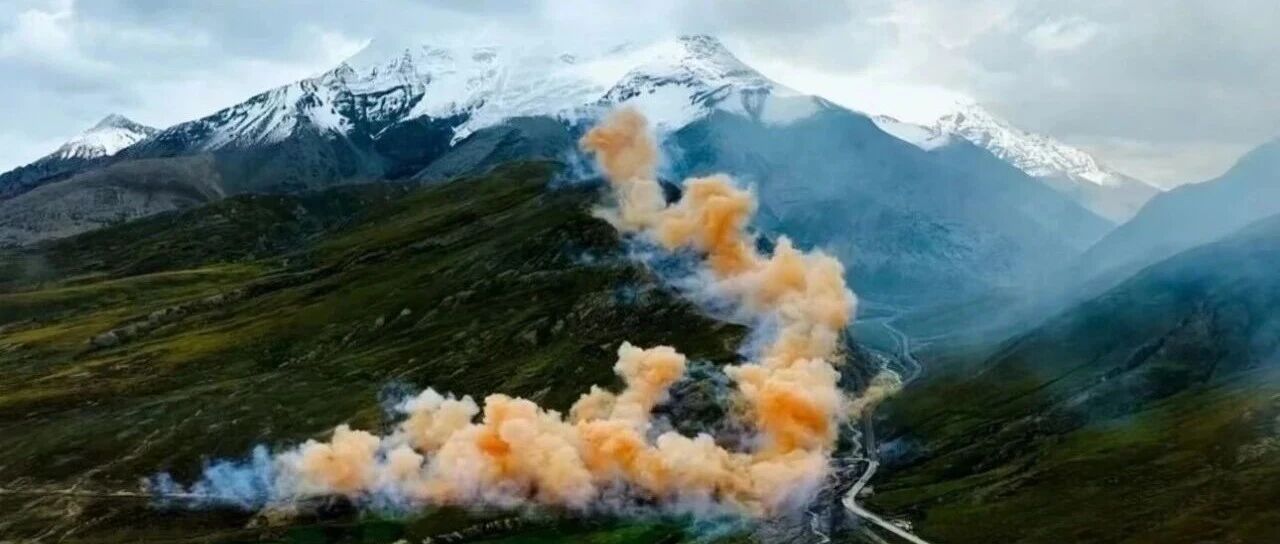
一场海拔5500米的烟花秀,“炸”出了哪些空白
和讯· 2025-09-23 09:10
Core Viewpoint - The article discusses the backlash against the outdoor brand Arc'teryx and artist Cai Guoqiang for their fireworks display in the Himalayas, highlighting the conflict between artistic expression and environmental protection [2][4]. Group 1: Event Overview - On September 19, Arc'teryx collaborated with Cai Guoqiang to host a fireworks show at an altitude of approximately 5,500 meters in the Himalayas, which featured 145 fireworks forming a 3,000-meter-long rainbow [2]. - The event was promoted as a demonstration of "respect for nature," with claims that the fireworks used biodegradable materials and were of the lowest risk level (V) [2]. Group 2: Environmental Concerns - Experts from various fields criticized the event, arguing that the use of fireworks in the Tibetan Plateau, known as the "Chinese Water Tower," contradicts the principles of ecological safety and environmental protection [4]. - The project team attempted to mitigate potential harm to local wildlife by using salt bricks to guide small animals away from the launch area and planned to restore the vegetation afterward [3]. Group 3: Legal and Policy Implications - The event occurred shortly after the implementation of the "Ecological Protection Law of the Qinghai-Tibet Plateau," which emphasizes respecting and protecting nature [5]. - The incident has raised questions about the enforcement of this new law and whether human activities need to be redefined under its regulations [6]. Group 4: Public and Expert Reactions - Following public outrage, Arc'teryx and Cai Guoqiang issued an apology, but the response did not quell the anger from environmental advocates [4]. - Experts highlighted the need for stricter definitions and enforcement of ecological red lines, especially in sensitive areas like the Tibetan Plateau [7][8].
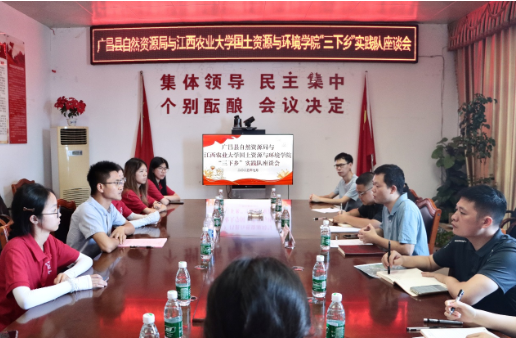
校地联动共商土地治理,青春赋能助力乡村振兴 ——江西农大“三农”实践队与广昌县自然资源局开展土地资源专题座谈会
Zhong Guo Shi Pin Wang· 2025-07-08 08:08
Core Insights - The discussion between Jiangxi Agricultural University’s youth practice team and the Guangchang County Natural Resources Bureau focused on land resource management challenges in hilly areas, emphasizing the need for innovative solutions to address land governance issues [1][2]. Current Situation Analysis: Land Governance Challenges in Hilly Areas - Guangchang County, characterized by fragmented farmland with an average of less than 3 mu per household, faces significant challenges in agricultural mechanization, with a mechanization rate below 30% and costs exceeding 40% compared to flatland areas [2]. - The youth practice team identified that land fragmentation leads to inefficient irrigation practices, with water resource utilization below 50%, which hinders agricultural productivity and the application of modern agricultural technologies [2]. Policy Focus: Balancing Farmland Protection and Ecological Red Lines - Guangchang County must adhere to the 800 million mu farmland protection line, with 774.36 square kilometers designated as ecological red line, representing 48.31% of the county's area, creating a conflict between ecological protection and agricultural development [2][3]. - The current ecological red line demarcation relies on a "dual evaluation" mechanism, which sometimes restricts agricultural infrastructure development in valuable hilly terraced areas [2]. Pathways to Resolution: Technological Empowerment and Conceptual Innovation - The discussion highlighted the need for a dynamic adjustment mechanism for ecological red lines, prioritizing the removal of flatter, contiguous farmland to facilitate agricultural development [3]. - The youth practice team proposed an "Ecological Agriculture" model to enhance land productivity while protecting ecosystems, such as planting nitrogen-fixing plants around lotus fields to reduce fertilizer use and support beneficial insects [3]. Collaborative Framework: Building a "Theory-Practice-Transformation" Loop - The Natural Resources Bureau expressed a desire for the youth practice team to utilize local case studies for projects, integrating data on farmland quality, transfer needs, and ecological red lines for dynamic monitoring and precise allocation of land resources [5]. - The emphasis was placed on the necessity for academic research to align closely with grassroots needs, encouraging students to engage with real-world agricultural challenges to develop practical solutions [7].