生物仿生学

Search documents
从“水疗数据中心”到“太空服务器”:能源危机正在重构云计算产业
Hua Er Jie Jian Wen· 2025-12-29 10:18
Core Insights - The explosive growth of AI workloads is challenging traditional digital infrastructure, necessitating a rethinking of data center designs to address energy and physical limits [1] - The industry is approaching a "critical point" where existing data center architectures will no longer suffice, prompting tech giants and infrastructure developers to seek "plug-and-play" solutions to alleviate grid pressure and meet sustainability goals [1][2] Ground Infrastructure Reconstruction - Traditional data centers are failing to effectively support AI workloads and meet sustainability requirements, with only 46% of IT decision-makers believing their current designs can achieve sustainability goals [3] - Lenovo, in collaboration with architectural firm Mamou-Mani and engineering company AKT II, proposed radical design concepts such as "data villages" and "data center spas" to utilize excess heat for community benefits [3][4] - Existing practices of heat reuse have been implemented, such as Equinix using waste heat for the Paris Olympics swimming pool and Microsoft deploying underwater data centers for cooling [4] Space-Based Initiatives - The competition to deploy servers in orbit is intensifying, with projects like Google's "Suncatcher," Alibaba's "Three-Body Computing Constellation," and Nvidia-supported Starcloud exploring the potential of space environments [5] - Starcloud has already sent a chip into space, achieving performance 100 times greater than previous on-orbit GPU capabilities, highlighting the appeal of vacuum cooling and continuous solar energy in space data centers [5] Challenges and Barriers - The commercial viability of near-Earth data center deployment remains uncertain due to high launch costs, radiation protection requirements, and maintenance difficulties [6] - Regulatory barriers and cost considerations are significant challenges for both ground innovations and space initiatives, with the U.S. having a more favorable regulatory environment compared to Europe [7] - The need for regulatory adjustments to keep pace with technological innovations is critical, as simply renovating old facilities may not be effective [7]

00后黄彦钧再出圈!央视报道“手搓”真·钢铁侠!网友:军迷减速带!
机器人大讲堂· 2025-10-07 04:05
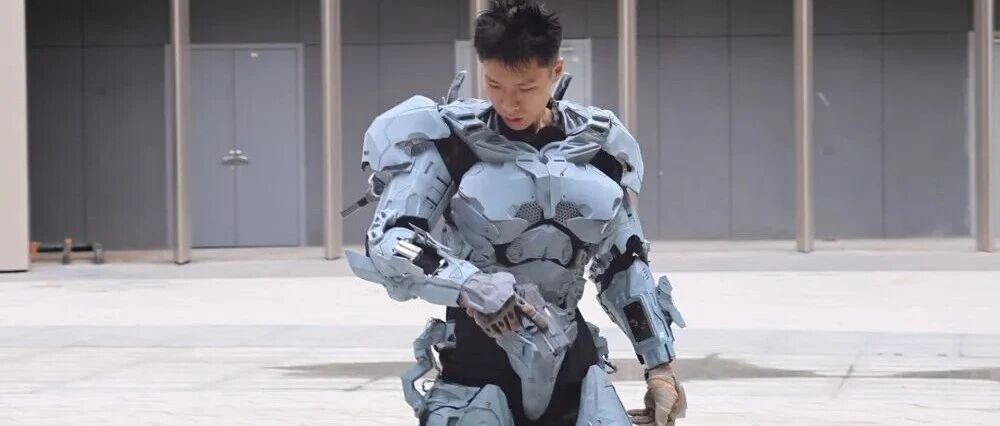
Core Viewpoint - The article highlights the innovative achievements of Huang Yanjun, a student from Chongqing Jiaotong University, who has developed advanced robotic technologies, including a "Iron Man" suit and a bionic controller, showcasing his journey from a young enthusiast to a skilled inventor [1][2][30]. Group 1: Innovations and Achievements - Huang Yanjun's latest creation is a fully functional "Iron Man" suit that can automatically open and close, adapting to the wearer's body [2]. - The suit features an IMU-based system that allows for the launch of projectiles and the addition of various weapon props, such as smoke and laser beams [5]. - The suit includes an exoskeleton that provides additional power, enhancing human capabilities [7]. - Huang previously developed a wearable exoskeleton for walking assistance, which earned him a patent [17][19]. Group 2: Background and Development - Huang's interest in robotics began in elementary school after watching the movie "Iron Man," leading him to experiment with various materials and electronics [9][10]. - Throughout his education, he received numerous awards for his innovations, including first place in the National Youth Science Literacy Competition [13][15]. - After entering university, he transformed his dormitory into a "smart dormitory" and continued to work on various projects, including a bionic controller that gained significant attention [17][19]. Group 3: Future Aspirations and Community Impact - Huang is currently working on an AI mech project that integrates advanced design software and AI capabilities, aiming to create a complete and functional suit [22][24]. - His work has garnered millions of views on social media, inspiring many young enthusiasts in the engineering and robotics fields [26][28]. - Huang emphasizes the importance of hard work and collaboration in the field of weapon and equipment development, aiming to influence and guide others in their engineering journeys [28][29].

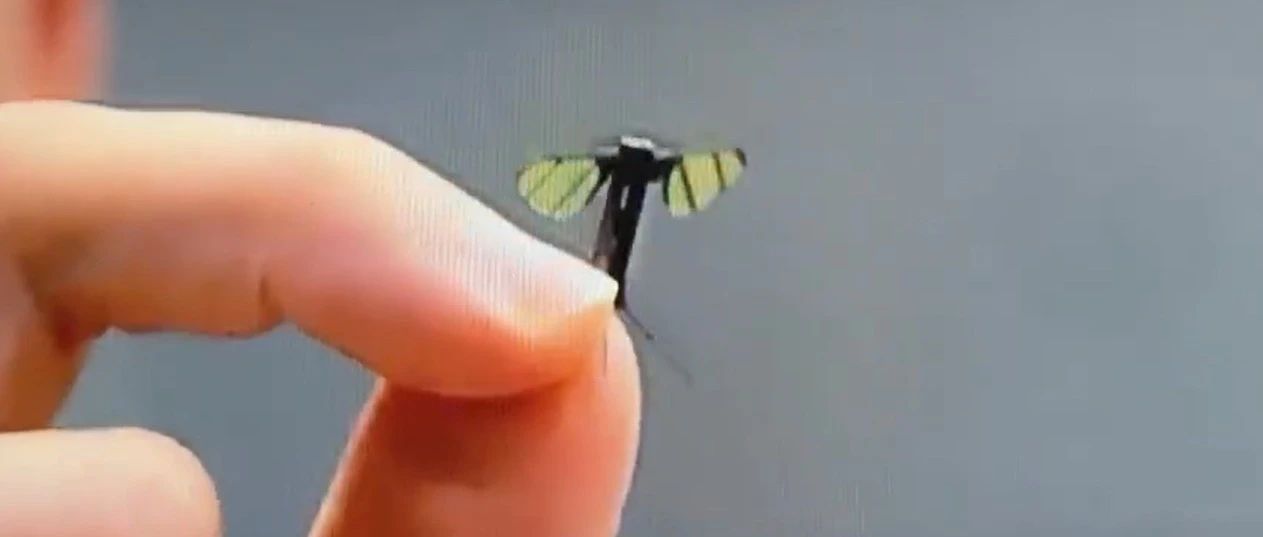
新突破!我国成功研发蚊子大小仿生机器人
是说芯语· 2025-06-19 04:12
Core Viewpoint - The successful development of a bionic robot the size of a mosquito by the National University of Defense Technology represents a significant advancement in the integration of biological characteristics and cutting-edge technology, potentially reshaping future battlefield reconnaissance methods [1][2]. Group 1: Technological Integration - The creation of a mosquito-sized robot involves collaborative efforts across multiple disciplines, including micro-electromechanical systems (MEMS), materials science, and biomimicry [2]. - The design and manufacturing of microchips for this robot require high precision to integrate sensors, power devices, and control circuits into a very small space [2]. - In materials science, there is a need for lightweight, high-strength, and flexible materials to mimic the flight posture and movements of mosquitoes [2]. Group 2: Application and Advantages - The bionic robot's small size, light weight, and excellent concealment make it particularly suitable for intelligence reconnaissance and other special tasks on the battlefield [1][2]. - Traditional reconnaissance methods have limitations in certain scenarios, while the mosquito-sized bionic robot can easily overcome these constraints, allowing it to infiltrate enemy positions undetected [1][2].