生物医药出海

Search documents
《医药出海新图景》:一年吸金超千亿美元
3 6 Ke· 2026-01-30 10:32
Core Viewpoint - The report highlights that China's biopharmaceutical industry is transitioning from a "cost advantage" to "innovation-driven" growth, with overseas expansion becoming a second growth curve for innovative drug companies, indicating a shift from "heavy R&D" to "strong commercialization" [1][3]. Group 1: Industry Growth and Financial Performance - By the first three quarters of 2025, China's innovative drug sector revenue reached 48.83 billion yuan, reflecting a year-on-year growth of 22.1% [3]. - The total amount of foreign licensing for Chinese innovative drugs exceeded 100 billion USD in the first ten months of 2025, averaging nearly 300 million USD per day in international capital for Chinese original innovative drugs [3]. - Several companies have turned losses into profits, marking a period where the profitability of the Chinese biopharmaceutical industry is entering a realization phase [3]. Group 2: Evolution of Export Structure - The report outlines a significant transformation in China's biopharmaceutical exports, moving from low-value raw materials to high-value formulations, innovative drugs, and high-end medical devices [6][13]. - The overseas market strategy has diversified, focusing on consolidating developed markets while exploring emerging markets, with the U.S. remaining a primary target for innovative drugs [6][8]. Group 3: Outbound Strategies and Models - Chinese biopharmaceutical companies have developed a diverse set of outbound strategies, including independent expansion, co-development, licensing-out, NewCo models, and distribution agency, evolving from simple equity transactions to deeper participation in the global value chain [9][11]. - The limitations of traditional licensing-out models are becoming apparent, while Co-Co and NewCo models facilitate deeper involvement in global R&D, registration, and commercialization processes [9][11]. Group 4: Future Trends and Strategic Recommendations - The report identifies four key trends for 2026 and beyond: continuous evolution of technological frontiers, a shift from equity transactions to strategic symbiosis, the growing importance of emerging markets, and enhanced collaborative effects across the industry chain [14]. - Companies are encouraged to build long-term capabilities in compliance, commercialization, and brand image, moving from "industry outbound" to "global brand building" [17][18].

赛分科技扬州二期项目开工 新增年产能20万升
Zheng Quan Shi Bao Wang· 2025-12-08 09:41
Core Viewpoint - The construction ceremony for the 200,000 liters/year biopharmaceutical separation and purification auxiliary materials project by Suzhou Saifen Technology Co., Ltd. was held, marking a significant milestone in the company's expansion and capacity enhancement in the biopharmaceutical sector [1]. Group 1: Project Details - The project will include the construction of three chromatography medium production workshops, along with supporting warehouses, tank areas, and wastewater treatment facilities, covering an area of approximately 21,000 square meters [1]. - The new project will add an annual production capacity of 200,000 liters of chromatography media, including affinity chromatography fillers, ion exchange fillers, and composite chromatography fillers [1]. Group 2: Company Performance - Saifen Technology has been actively involved in the rapid development of China's biopharmaceutical industry, accumulating over 100 application projects in various biopharmaceutical segments, including antibodies and insulin [2]. - The company reported a strong business performance since its listing on the STAR Market, achieving a revenue of 302 million yuan in the first three quarters of 2025, a year-on-year increase of 38.39%, and a net profit of 93.21 million yuan, up 71.07% [3]. Group 3: Market Context - The rapid development of the Chinese biopharmaceutical industry is highlighted by significant achievements from partners of Saifen Technology, indicating a growing demand for high-performance, large-scale, and high-quality domestic chromatography fillers [4]. - The new project will enhance the company's ability to deliver on a large scale and support the stable production and capacity growth of its partners, while also aiding in the company's strategy to expand into overseas markets [4].
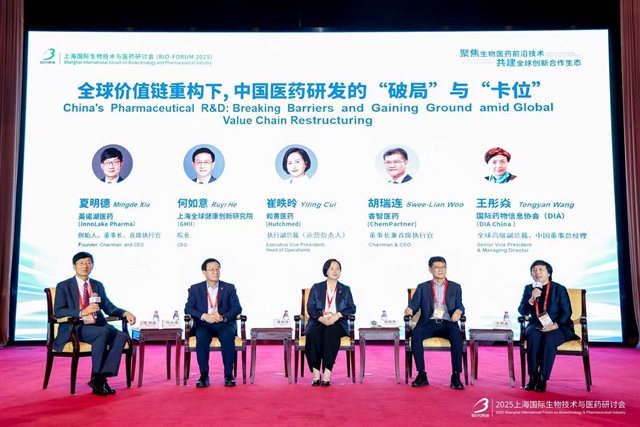
生物医药“出海”路在何方?补短板、铸长板,走多元化之路
Di Yi Cai Jing· 2025-10-30 13:28
Core Insights - The article emphasizes the importance of international expansion for Chinese biopharmaceutical companies, particularly through licensing agreements and strategic partnerships, as they seek to enhance their global competitiveness [1][3][4]. Group 1: Market Trends and Opportunities - Chinese biopharmaceutical companies are increasingly focusing on international markets, with a projected licensing-out transaction value of nearly $66 billion in the first half of 2025, surpassing the $51.9 billion total for 2024 [1]. - The U.S. market offers the highest returns, but recent regulatory changes by the FDA have raised challenges for Chinese companies, necessitating a proactive approach to adapt to evolving policies [5]. - There is a growing interest in exploring "small loop" markets such as Hong Kong and Southeast Asia, which could serve as gateways for Chinese products due to similar clinical needs and expedited approval processes [5]. Group 2: Strategic Approaches - Companies are advised to collaborate with larger pharmaceutical firms to leverage their international experience and resources, rather than attempting to enter foreign markets independently [6]. - Establishing a dual strategy that combines "big loop" (focusing on major markets like the U.S. and Europe) with "small loop" (targeting emerging markets) is recommended to enhance market reach [5]. - The importance of building trust and understanding local market regulations is highlighted, suggesting that companies engage with platforms like DIA for better insights into international markets [5]. Group 3: Policy and Regulatory Environment - The article notes that policy and institutional reforms in China, particularly since 2015, have significantly improved the clinical trial environment, aligning it with international standards and attracting foreign investment [3]. - Shanghai has introduced various policies to support the biopharmaceutical industry, aiming to create a comprehensive innovation support system [6].