
生猪产能释放

Search documents
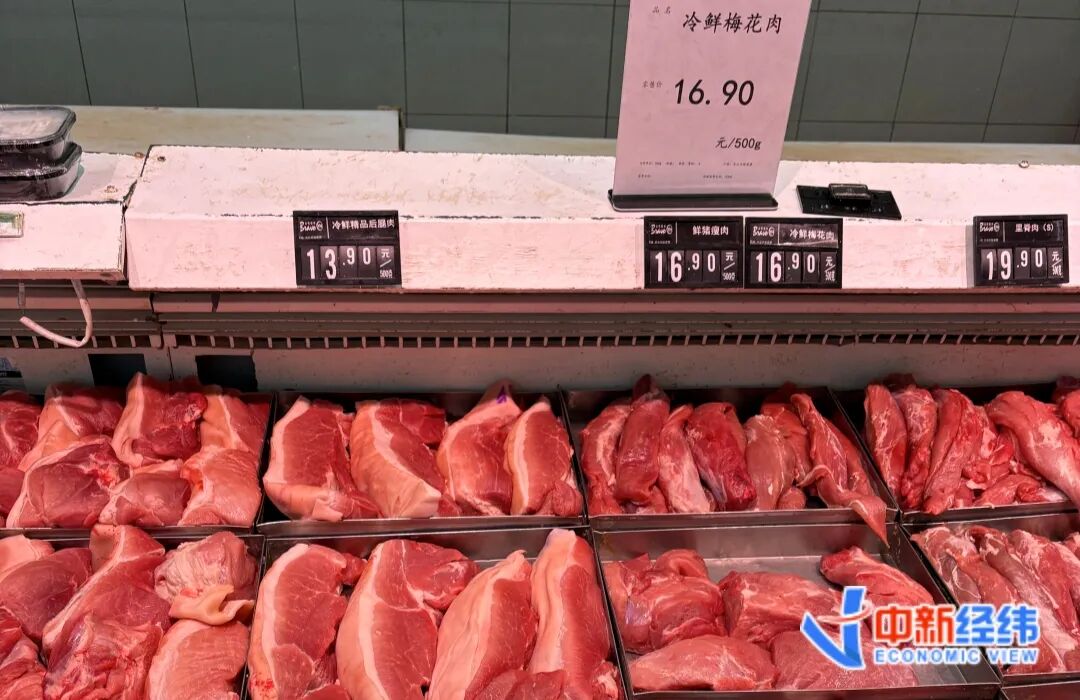
连降十周,猪肉为何这么便宜?
3 6 Ke· 2025-10-22 09:02
Core Viewpoint - The continuous decline in pork prices in China has raised questions about the reasons behind the drop and whether prices will continue to fall further [1][5]. Price Trends - Pork prices have been decreasing for ten consecutive weeks, with the average wholesale price dropping to 18.43 yuan per kilogram, a 3.1% decrease week-on-week and a 26.6% decrease year-on-year [5][6]. - As of October 21, the average price of pork in national wholesale markets was 17.70 yuan per kilogram, reflecting a slight decrease of 0.1% from the previous day [5]. Supply and Demand Dynamics - The decline in pork prices is primarily attributed to an increase in supply, with the average price of piglets falling to 27.23 yuan per kilogram, down 3.6% week-on-week and 26.6% year-on-year [5][6]. - The average price of live pigs has also decreased to 12.90 yuan per kilogram, a 2.8% drop week-on-week and a 29.5% drop year-on-year [5][6]. Industry Insights - Major pig farming companies such as Muyuan Foods, Wens Foodstuff Group, and New Hope Liuhe have reported declining sales prices for their products, with September figures showing a year-on-year decrease of around 30% [6][7]. - Analysts indicate that the increase in breeding sows and the high output of market pigs have led to an oversupply, contributing to the price drop [7][8]. Future Outlook - Experts predict that while pork prices may see a slight rebound due to seasonal demand increases, the overall supply remains high, limiting significant price increases [8][9]. - The expectation is that pork prices may rise in November as cooler weather boosts demand for pork products, particularly in southern regions [8][9].

生猪专题:供应压力持续释放,现货回落加深
Yin He Qi Huo· 2025-10-10 10:39
Report Industry Investment Rating No relevant content provided. Core Viewpoints - Recently, the prices of live hog futures and spot have dropped significantly, with the spot price falling from 15.26 yuan/kg in early July to around 11.3 yuan/kg, a cumulative decline of 26%, and the futures price dropping from a previous high of 14,745 yuan/ton to 11,320 yuan/ton, a cumulative decline of 23%. The decline in hog prices has led to some de - capacity effects, but the far - month futures mainly follow the spot and near - month prices downwards [3]. - The continuous decline in live hog prices is due to the concentrated release of hog production capacity, increased overall supply, and limited demand support, resulting in an obvious supply - demand imbalance. In the short term, the supply pressure remains, and the rebound space of spot prices is limited. The far - month support may also be limited [4]. - Although the current decline in live hog prices is relatively large, there are differences in the impact on near - term and far - term prices, and the upward driving force is relatively limited [30]. Summary by Directory Preface Summary - The prices of live hog futures and spot have continued to decline rapidly recently, and the far - month futures mainly follow the spot and near - month prices downwards [3]. Fundamental Situation 1. Limited Release of Previous Production Capacity, Limited Price Decline - The market was generally pessimistic about the live hog price this year due to high previous production capacity data. However, before the recent decline, the live hog spot price mainly fluctuated, with the price center at 14 - 15 yuan/kg. This was because the previous production capacity was not fully released. In the first quarter, the slaughter volume decreased by 2.23% year - on - year, and the price was flat year - on - year; in the second quarter, the slaughter volume increased by 0.62% year - on - year, and the price decreased by 10.67% year - on - year [8]. - The slow release of previous production capacity was affected by factors such as the rapid increase in hog slaughter weight due to farmers' pen - holding, more secondary fattening, and the relatively large proportion of large - scale enterprises' slaughter, which supported prices [9]. 2. Accumulation of Supply Surplus Pressure, Obvious Increase in Slaughter Volume - Although the third - quarter slaughter data has not been released, the year - on - year price decline of about 30% indicates a significant increase in actual slaughter volume. The increase in recent slaughter volume is due to the increase in secondary fattening slaughter, the active weight reduction in the market since May, and the reduction in the year - on - year decline of small - scale farmers' slaughter since August [12]. 3. Slaughter Pressure Still to Be Reflected, Prices to Run Weakly - The slaughter volume of various groups is increasing. The slaughter plan of large - scale enterprises this year has increased by 22.72% year - on - year, and it is expected that their subsequent slaughter volume will remain relatively high. The slaughter volume of ordinary farmers may also increase. The secondary fattening inventory is still relatively high, and the overall enthusiasm for slaughter is expected to remain high [15][16]. - The demand for live hogs has declined, with high slaughter volume, increasing frozen product inventory, a significant decline in the fresh sales rate, and limited demand support for prices [25]. 4. Gradual Initiation of Capacity Reduction, Medium - and Long - Term Price Support - As of the week ending September 30, the price of 7 - kg piglets was 212 yuan/head, lower than the market cost, and the purchase of piglets for fattening was also in a loss state. The market's capacity reduction has become more obvious, with an increase in the number of culled sows [26]. - In the short term, reducing the slaughter weight and volume may help stabilize prices, but the improvement space is limited. In the medium and long term, the overall hog production capacity is still relatively high, and the current piglet price provides some support, while the futures price is under pressure [26][30]. Comprehensive Analysis & Strategy Evaluation 1. Comprehensive Analysis - In the short term, the live hog market may still face pressure. The subsequent slaughter volume is expected to increase, and the overall supply will remain at a relatively high level. The stabilization of spot prices is mainly affected by slaughter weight and motivation. A further decline in slaughter weight may drive a phased rebound in prices, but medium - and long - term price changes are still affected by production capacity [31]. 2. Strategy Recommendation - Unilateral: Do not easily short - sell on the falling market. Instead, short - sell on rebounds and wait for a significant decline in slaughter weight. Do not easily determine the bottom for far - month contracts, as capacity changes have a significant impact [5][32]. - Arbitrage: Adopt a reverse arbitrage strategy for LH15 [5][35]. - Options: Sell call options on near - month contracts at high prices [5][35].