生育保险制度

Search documents
生娃不花钱,真的来了
盐财经· 2026-03-06 09:13
Core Viewpoint - The article discusses the emerging national policy goal of making childbirth essentially free for families in China, with a focus on expanding maternity insurance coverage and reducing out-of-pocket expenses for childbirth and prenatal care [3][4][29]. Group 1: Policy Developments - The "14th Five-Year Plan" emphasizes improving maternity support policies, including expanding maternity insurance coverage and ensuring that personal costs for childbirth are minimized [2]. - The National Healthcare Security Administration aims to achieve "no out-of-pocket" expenses for childbirth within the policy framework by 2026 [3]. - Several provinces, including Jilin, Jiangsu, and Shandong, have already implemented full coverage for maternity expenses within the policy framework [18]. Group 2: Current Experiences - A case study from Guangdong shows that a mother incurred only 2.5 yuan in personal expenses for childbirth, with the total hospital bill being 5,368.66 yuan, largely covered by insurance [6][10]. - In Guangxi, data indicates that since 2025, many mothers have reported personal expenses of less than 10 yuan for childbirth due to effective insurance reimbursements [10][13]. - The article highlights that while many mothers experience minimal costs, there are still instances of out-of-pocket expenses due to non-covered services or personal choices [16][23]. Group 3: Future Directions - The article notes that expanding maternity insurance to cover more demographics, including flexible employment workers and rural non-employed individuals, is a key focus of ongoing policy development [21][22]. - New policies in cities like Fuzhou aim to provide free prenatal check-ups and hospital deliveries for both employees and residents starting in 2026 [18][20]. - The article suggests that while the goal of "no cost" childbirth is promising, comprehensive support throughout the entire parenting journey is necessary to address deeper societal concerns about childbirth and child-rearing [26][28].


政府工作报告:加强初婚初育家庭住房保障
21世纪经济报道· 2026-03-05 02:15
Core Viewpoint - The government work report emphasizes the need to strengthen housing security for newly married and childbearing families, and to support multi-child families in improving their housing needs. It also highlights the importance of improving the maternity insurance system and maternity leave policies [1]. Group 1 - The report outlines tasks for 2026, focusing on housing support for initial marriage and childbirth families [1]. - It mentions the need to enhance housing conditions for families with multiple children [1]. - The report calls for the improvement of maternity insurance and maternity leave systems [1].

政府工作报告:加强初婚初育家庭住房保障
财联社· 2026-03-05 02:05
Group 1 - The government work report emphasizes the need to strengthen housing security for first-time married and childbearing families, supporting multi-child families in improving their housing needs [1] - It highlights the importance of improving the maternity insurance system and maternity leave policies [1]

2025年医疗保障领域10大热词,点击查看→
Xin Lang Cai Jing· 2025-12-31 05:49
Core Viewpoint - The year 2025 marks significant advancements in China's medical insurance system, showcasing resilience and a focus on people's health through various reforms and initiatives [1][20]. Group 1: "1+3+N" Multi-layered Medical Security System - The National Healthcare Security Administration emphasizes the establishment of a "1+3+N" multi-layered medical security system, which includes a unified national medical insurance information platform, three levels of basic medical insurance, and support for commercial health insurance and other forms of assistance [2][21]. - The reimbursement rates for inpatient expenses under employee and resident medical insurance have reached approximately 80% and 70%, respectively, while the level of serious illness insurance has increased by 10 to 15 percentage points [2][21]. Group 2: Dual Directory System - The introduction of the "dual directory" system, which includes the National Basic Medical Insurance and Commercial Health Insurance Innovation Drug Directories, represents a significant step in defining the boundaries of basic and commercial insurance [3][23]. - In 2025, the basic medical insurance directory added 114 new drugs, with 50 being innovative drugs of significant clinical value, achieving a historic high [3][23]. Group 3: Provincial Coordination - The push for provincial coordination of basic medical insurance aims to enhance fairness and sustainability within the system, with 20 provinces already advancing this initiative [5][24]. - The National Healthcare Security Administration has mandated the optimization of fund management and the establishment of provincial adjustment funds to support this coordination [5][24]. Group 4: Anti-Overcompetition - The eleventh round of centralized drug procurement has shifted towards a focus on quality and sustainability, with the concept of "anti-overcompetition" introduced to prevent irrational price competition [6][24]. - Mechanisms have been implemented to ensure rational pricing and to enhance clinical choice, allowing medical institutions to report quantities based on specific brands [6][26]. Group 5: Real-World Research - Real-world research (RWS) has been established as a key tool for evaluating the comprehensive value of drugs and medical technologies, aiming to support sustainable fund management and high-quality industry development [7][25]. - The National Healthcare Security Administration is planning to integrate real-world evaluation results into the entire chain of medical insurance payment and management [7][27]. Group 6: Long-term Care Workers - Long-term care workers have been introduced as a new profession to support long-term care services, with over 3,500 candidates participating in skill assessments across 28 provinces [10][29]. - The long-term care insurance system has covered nearly 300 million people, benefiting over 3.3 million individuals with disabilities [10][30]. Group 7: Maternity Insurance System - The maternity insurance system aims to achieve "no out-of-pocket" expenses for childbirth within policy coverage, with 2.55 billion people enrolled in maternity insurance during the 14th Five-Year Plan [11][30]. - The plan includes expanding coverage to flexible workers and improving prenatal care expense coverage [11][12]. Group 8: Drug Traceability Codes - The implementation of drug traceability codes has led to the collection of 39.885 billion codes, enhancing consumer protection and combating drug return issues [14][32]. - By July 2025, all medical institutions will be required to implement full traceability code collection [14][32]. Group 9: Three Settlement Reforms - The "three settlements" reform (instant, direct, and synchronized settlements) aims to reshape the payment ecosystem in the healthcare sector, with significant progress made in instant settlements covering 593,600 medical institutions [15][33]. - Direct settlements are designed to expedite payments to enterprises, reducing the average payment cycle from 180 days to under 30 days [15][33]. Group 10: Medical Service Pricing Guidelines - The National Healthcare Security Administration is working on standardizing medical service pricing across provinces to enhance transparency and service quality [18][35]. - By 2026, the administration aims to complete the compilation of 40 pricing guidelines to unify medical service pricing projects nationwide [18][35].

小客车指标向多子女无车家庭倾斜,北京发布生育支持政策15条
Xin Jing Bao· 2025-07-31 14:03
Core Viewpoint - The article discusses the implementation of a comprehensive set of measures in Beijing aimed at enhancing fertility support policies and creating a family-friendly society, focusing on various aspects such as financial support, childcare services, and housing policies [1][10]. Summary by Category Financial Support - A new childbirth subsidy system will be established in Beijing, providing annual subsidies of 3,600 yuan per child for families with children under three years old, starting from January 1, 2025 [2][11]. - The measures aim to reduce short-term financial burdens on families, particularly benefiting middle and low-income groups through direct cash subsidies and insurance coverage [11]. Childcare Services - The measures propose to strengthen the childcare service system by increasing the supply of public childcare spaces and establishing a dynamic adjustment mechanism for pricing and financial subsidies [6][7]. - The goal is to achieve a ratio of 4.5 childcare spaces per 1,000 population for children under three by 2025, with at least 60% of these spaces being affordable [7]. Housing Policies - Families with multiple underage children will receive priority in public rental housing allocations, and there will be support for increasing housing loan limits for families with many children [8][9]. - The measures also include provisions for families to withdraw housing provident fund contributions based on actual rent paid, easing the housing burden for multi-child families [8][11]. Education Support - The measures emphasize optimizing educational resource allocation and promoting free preschool education, while ensuring that siblings from the same family can attend the same school [8][11]. - There will be an increase in the supply of kindergarten places and support for after-school services in primary and secondary schools [8]. Employment and Labor Rights - The measures include provisions to enhance labor protections for women, particularly those who are pregnant or breastfeeding, and to support their re-employment after childbirth [8][11]. - The inclusion of unemployed individuals receiving unemployment insurance in the maternity insurance system is aimed at providing comprehensive support during childbirth [3][10]. Healthcare Services - The measures call for the establishment of at least one critical newborn rescue center in each district and the expansion of pediatric services in hospitals [5]. - There will be an emphasis on improving the quality of pediatric healthcare and ensuring that children's medications are included in insurance coverage [5].
国家医保局:截至2025年6月生育保险参保人数已达到2.53亿人
Xin Hua Cai Jing· 2025-07-30 08:20
Core Viewpoint - The National Healthcare Security Administration emphasizes the importance of the maternity insurance system as a key component of the reproductive support policy framework, aiming to foster a pro-natal society [1] Summary by Relevant Sections Coverage Expansion - The maternity insurance coverage is set to reach 253 million people by June 2025 [1] Improvement of Medical Expense Coverage - During the 14th Five-Year Plan period, a total of 96.14 million people have benefited from various maternity insurance benefits, with cumulative fund expenditures reaching 438.3 billion yuan [1] Expansion of Coverage Content - All 31 provinces (regions, municipalities) and the Xinjiang Production and Construction Corps have included assisted reproductive technology in reimbursement, with over 1 million people expected to benefit in 2024 [1] - Some provinces have also included pain relief during childbirth in the reimbursement scope, alleviating the burden and pain for pregnant women [1] Optimization of Management Services - The administration is exploring allowing newborns to participate in basic medical insurance using birth certificates, and aims to process maternity allowance applications within 10 working days, with over 60% of regions already implementing direct payments to individuals [1]
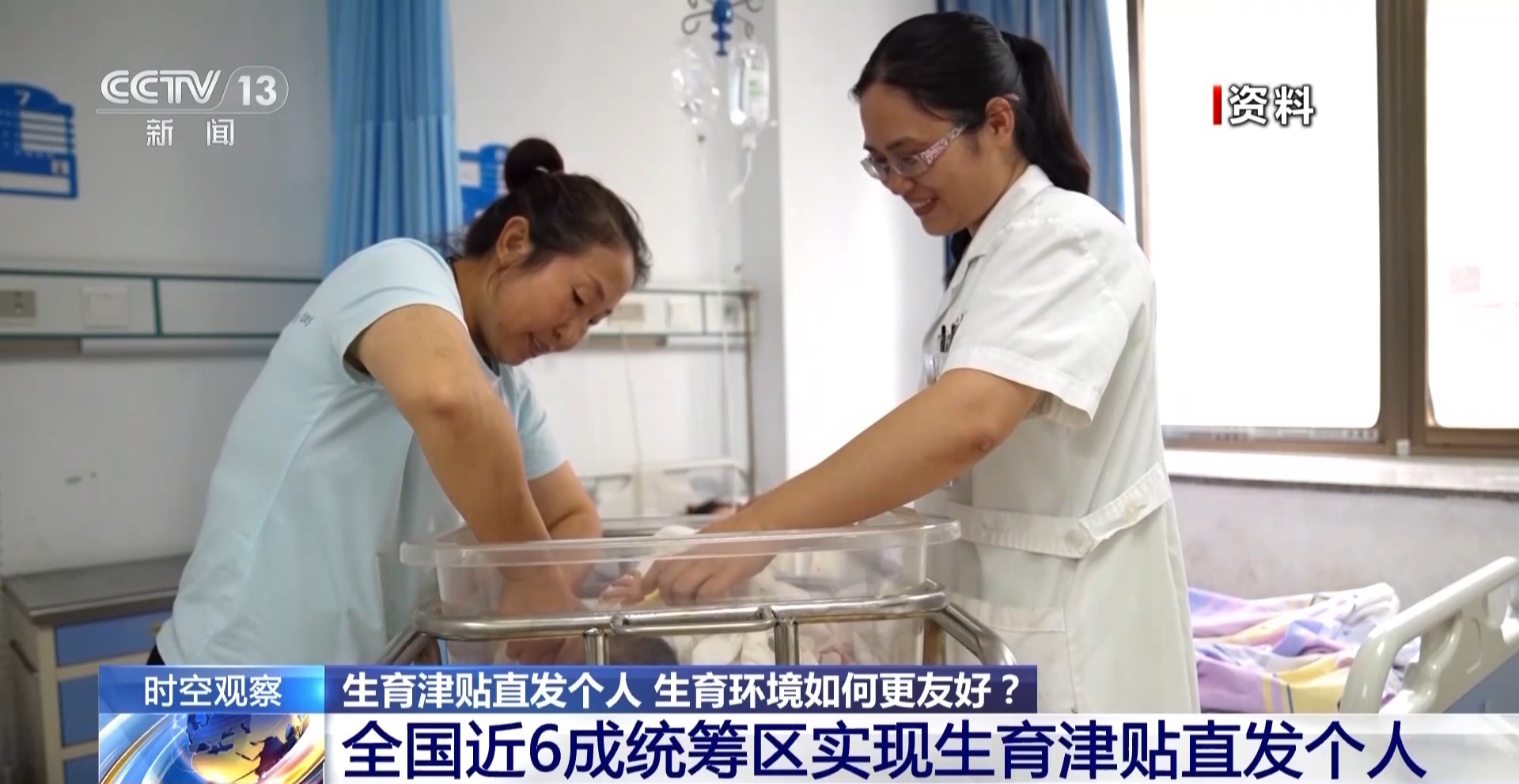
生育津贴直发个人 生育环境如何更友好?
Yang Shi Wang· 2025-06-25 21:17
Core Viewpoint - The Chinese government is enhancing the direct issuance of maternity benefits to insured women, aiming to create a more supportive environment for childbirth and address the financial pressures faced by working mothers [1][4][5]. Group 1: Policy Implementation - As of June 12, nearly 60% of the national insurance areas have implemented direct payments of maternity benefits to individuals [1][4]. - The maternity benefits are funded by the maternity insurance system, not by the employers of the insured women [1][3]. - The average maternity benefit for insured women in 2024 is projected to exceed 26,000 yuan, with total expenditures on maternity insurance benefits reaching 143.1 billion yuan [4]. Group 2: Process Improvement - The process for claiming maternity benefits has been streamlined, eliminating the need for various documents such as marriage certificates and birth permits, which previously delayed payments [4][12]. - In regions where direct payments have been implemented, women can now apply for maternity benefits online, significantly reducing the processing time from 20 days to 10 days [9][12]. - The new system allows women to receive maternity benefits directly into their bank accounts without needing to leave their homes during the postpartum period [12][14]. Group 3: Future Directions - The National Healthcare Security Administration plans to promote the direct issuance of maternity benefits in more regions across the country [4][15]. - There is a call for further improvements in maternity policies, including the potential for automatic benefit issuance and enhanced support for families facing challenges in childbirth [15][17]. - The ongoing exploration of increasing maternity subsidies and extending maternity leave is seen as essential for creating a more family-friendly environment and attracting talent [17].