
电池+战略

Search documents
锂电大淘沙,走到而立之年的欣旺达凭什么?
汽车商业评论· 2026-03-18 23:05
Core Viewpoint - The article highlights the strategic evolution of XINWANDA, emphasizing its commitment to high-end battery technology over low-end markets, which has allowed the company to thrive in the competitive lithium battery industry [5][10][96]. Group 1: Company Development and Strategy - XINWANDA has achieved significant milestones, including the mass production of semi-solid batteries and plans for solid-state battery trials, alongside a successful listing on the Hong Kong Stock Exchange to fund overseas expansion [3]. - The company has navigated through industry cycles and challenges, focusing on high-end markets rather than quick profits from low-end products, which has been a core part of its survival strategy [5][10]. - The decision to avoid low-end markets was based on the understanding that such paths would not yield sustainable competitive advantages, especially as the smartphone market evolved [11][12]. Group 2: Key Partnerships and Quality Management - XINWANDA's breakthrough came when it secured an emergency order from Philips, which allowed it to demonstrate its capabilities and gain credibility in the high-end market [17][23]. - The company underwent a significant transformation in quality management, adopting international standards and rigorous processes, which were further refined through partnerships with major clients like Huawei and Renault-Nissan [30][36][55]. - The collaboration with Huawei introduced stringent quality control measures, pushing XINWANDA to enhance its operational standards and management systems [32][34]. Group 3: Technological Advancements and Market Position - XINWANDA strategically focused on HEV (Hybrid Electric Vehicle) batteries, which presented a less competitive landscape compared to pure electric vehicles, allowing the company to build a strong technological foundation [46][48]. - The company has established itself as a leader in the HEV battery market, achieving the top position in China for five consecutive years from 2021 to 2025 [56]. - XINWANDA's advancements in high-power battery technology have enabled it to address critical issues in the electric vehicle sector, such as range anxiety and charging speed [58][66]. Group 4: Global Expansion and Sustainability - As the global market for electric vehicles evolves, XINWANDA is adapting to stringent ESG (Environmental, Social, and Governance) requirements, ensuring its products meet international sustainability standards [68][73]. - The company has invested heavily in developing a comprehensive carbon footprint management system, which extends to its supply chain partners, promoting a collaborative approach to sustainability [75][76]. - XINWANDA's commitment to R&D remains strong, with approximately 6% of its revenue allocated annually to innovation, ensuring it stays at the forefront of battery technology [94]. Group 5: Long-term Vision and Industry Impact - XINWANDA's growth trajectory reflects a broader narrative of resilience and strategic foresight within China's manufacturing sector, emphasizing the importance of long-term planning and adherence to industry standards [87][98]. - The company has cultivated a culture of self-reflection and continuous improvement, which has been crucial in navigating challenges and seizing opportunities in the dynamic battery market [88][90]. - XINWANDA's evolution from a manufacturing entity to a comprehensive energy solutions provider illustrates the potential for Chinese companies to lead in high-tech industries through innovation and collaboration [83][99].


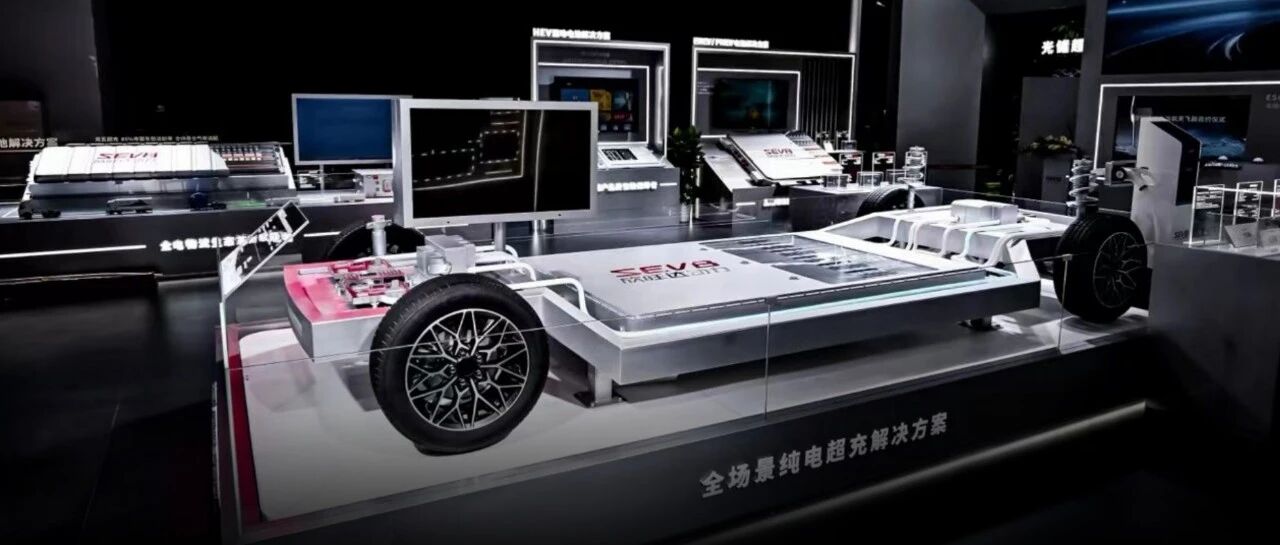
欣旺达发布固态电池新品
Shang Hai Zheng Quan Bao· 2025-10-23 18:37
Core Insights - The 2025 New Energy Battery Industry Development Conference was held in Zaozhuang, Shandong, where XINWANDA unveiled a polymer solid-state battery with an energy density of 400Wh/kg and plans to establish a 0.2GWh production capacity by the end of the year [1][2] - XINWANDA's R&D director announced the successful trial production of a lithium metal battery with an energy density of 520Wh/kg, showcasing advancements in battery technology [3] Group 1: Product Innovations - XINWANDA's "XIN·BIXIAO" polymer solid-state battery features an energy density of 400Wh/kg, a capacity of 20Ah, and a cycle life of 1200 times, demonstrating high safety through rigorous testing [2] - The solid-state battery utilizes innovative materials, including ultra-dense solid-state electrodes and nano-structured high-entropy anodes, achieving a specific capacity of 2700mAh/g, which is 7.2 times that of graphite anodes [2] - The company has a multi-threaded strategy for solid-state battery development, progressing from semi-solid to soft solid, polymer solid, sulfide solid, and lithium metal super batteries [3] Group 2: Industry Trends and Future Outlook - The conference highlighted the ongoing transition towards high-quality development in China's new energy industry, with increasing competition and a restructuring of global supply chains [3][4] - XINWANDA's "Battery+" strategy aims to extend beyond traditional battery products, integrating into various sectors including consumer electronics, automotive, energy storage, and maritime applications [4] - The electric vehicle market is expected to see significant growth, with projections indicating that by the end of 2024, electric trucks will have a penetration rate of 28.93%, up from 3.74% in 2023 [5] Group 3: Market Projections - The average range of electric vehicles is projected to improve significantly from 2023 to 2025, with C-class vehicles increasing from 594 km to 695 km, B-class from 572 km to 607 km, and A-class from 481 km to 505 km [5] - By the end of 2024, pure electric vehicles are expected to account for 9% of the total vehicle ownership in China, with projections of surpassing 25% by 2030 and 50% by 2035 [6]