
HEV电池

Search documents
锂电大淘沙,走到而立之年的欣旺达凭什么?
汽车商业评论· 2026-03-18 23:05
Core Viewpoint - The article highlights the strategic evolution of XINWANDA, emphasizing its commitment to high-end battery technology over low-end markets, which has allowed the company to thrive in the competitive lithium battery industry [5][10][96]. Group 1: Company Development and Strategy - XINWANDA has achieved significant milestones, including the mass production of semi-solid batteries and plans for solid-state battery trials, alongside a successful listing on the Hong Kong Stock Exchange to fund overseas expansion [3]. - The company has navigated through industry cycles and challenges, focusing on high-end markets rather than quick profits from low-end products, which has been a core part of its survival strategy [5][10]. - The decision to avoid low-end markets was based on the understanding that such paths would not yield sustainable competitive advantages, especially as the smartphone market evolved [11][12]. Group 2: Key Partnerships and Quality Management - XINWANDA's breakthrough came when it secured an emergency order from Philips, which allowed it to demonstrate its capabilities and gain credibility in the high-end market [17][23]. - The company underwent a significant transformation in quality management, adopting international standards and rigorous processes, which were further refined through partnerships with major clients like Huawei and Renault-Nissan [30][36][55]. - The collaboration with Huawei introduced stringent quality control measures, pushing XINWANDA to enhance its operational standards and management systems [32][34]. Group 3: Technological Advancements and Market Position - XINWANDA strategically focused on HEV (Hybrid Electric Vehicle) batteries, which presented a less competitive landscape compared to pure electric vehicles, allowing the company to build a strong technological foundation [46][48]. - The company has established itself as a leader in the HEV battery market, achieving the top position in China for five consecutive years from 2021 to 2025 [56]. - XINWANDA's advancements in high-power battery technology have enabled it to address critical issues in the electric vehicle sector, such as range anxiety and charging speed [58][66]. Group 4: Global Expansion and Sustainability - As the global market for electric vehicles evolves, XINWANDA is adapting to stringent ESG (Environmental, Social, and Governance) requirements, ensuring its products meet international sustainability standards [68][73]. - The company has invested heavily in developing a comprehensive carbon footprint management system, which extends to its supply chain partners, promoting a collaborative approach to sustainability [75][76]. - XINWANDA's commitment to R&D remains strong, with approximately 6% of its revenue allocated annually to innovation, ensuring it stays at the forefront of battery technology [94]. Group 5: Long-term Vision and Industry Impact - XINWANDA's growth trajectory reflects a broader narrative of resilience and strategic foresight within China's manufacturing sector, emphasizing the importance of long-term planning and adherence to industry standards [87][98]. - The company has cultivated a culture of self-reflection and continuous improvement, which has been crucial in navigating challenges and seizing opportunities in the dynamic battery market [88][90]. - XINWANDA's evolution from a manufacturing entity to a comprehensive energy solutions provider illustrates the potential for Chinese companies to lead in high-tech industries through innovation and collaboration [83][99].


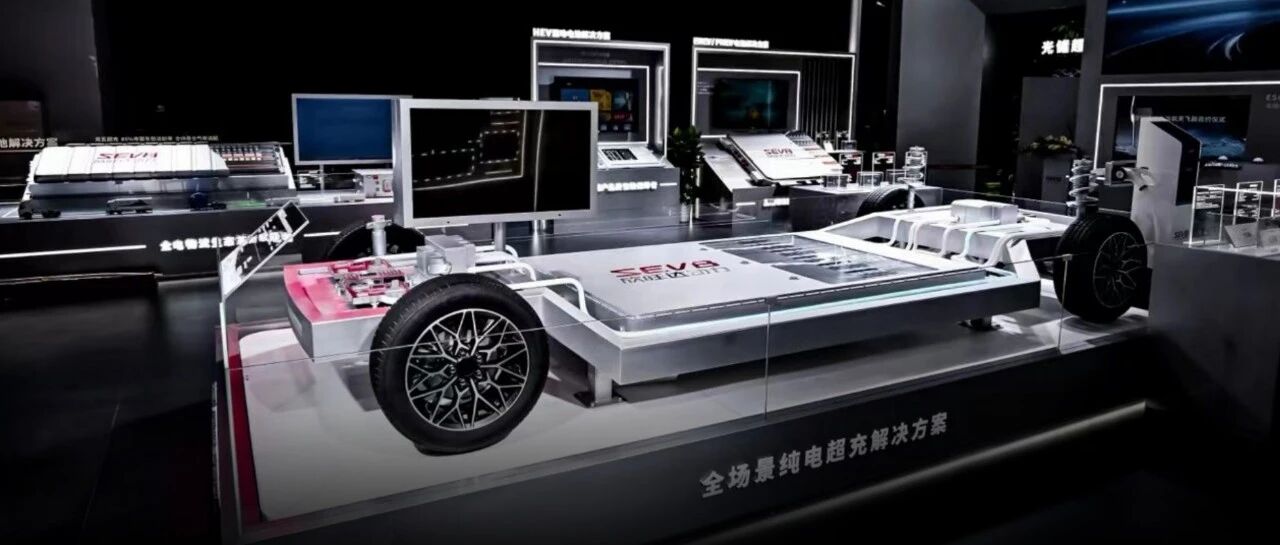
从HEV到超充的技术同源,助力欣旺达动力电池差异化突围
Xin Lang Cai Jing· 2026-02-26 02:20
Core Insights - The transition of the new energy vehicle market from policy-driven to demand-driven is reshaping user expectations for power batteries, emphasizing the need for fast charging, long lifespan, and high safety [1] - The HEV market presents significant opportunities as companies like Xinwanda leverage their technological advancements to create a comprehensive product lineup [1] Group 1: Technological Advancements - Xinwanda began its journey in power batteries by tackling the high-difficulty HEV battery sector, which requires balancing energy density, lifespan, safety, and reliability [3] - The company achieved a breakthrough by becoming a core supplier for Renault-Nissan in 2018, marking a significant milestone for Chinese battery manufacturers in high-tech fields [3][4] - Xinwanda's HEV products have demonstrated impressive performance metrics, including 80C fast charging and over 100,000 cycles at high temperatures, solidifying its market leadership with over 2 million units shipped [4] Group 2: Market Positioning - Xinwanda's experience in HEV technology has provided a competitive edge in the pure electric fast-charging market, allowing for rapid product iterations and advancements [5][8] - The company has launched the industry's first 4C fast-charging battery and plans to introduce a 15C peak power battery by 2025, achieving significant charging efficiency [5][7] Group 3: Quality Control and Innovation - Xinwanda has implemented PPB-level quality control, enhancing product reliability and gaining recognition from major automotive manufacturers [10] - The company invests heavily in R&D, with over 12.9 billion yuan in the last five years, focusing on solid-state batteries, aviation batteries, and sodium-ion batteries [11][14] Group 4: Strategic Vision - Xinwanda's dual strategy of focusing on both HEV and pure electric markets aims to meet diverse global electrification needs [8][17] - The company's approach emphasizes long-term value creation through technological innovation and quality assurance, positioning it as a leader in the evolving battery industry [15][17]
盘点2025年汽车产业政策新风向:从追求“规模速度”到比拼“质量效益”
Zhong Guo Qing Nian Bao· 2026-01-27 22:48
Core Insights - The Chinese automotive industry achieved significant milestones in 2025, with total vehicle production and sales showing steady growth, and new energy vehicle sales surpassing 10 million units for the first time, achieving a market penetration rate of over 50% [2][10] - A comprehensive set of policies was implemented to guide and correct the industry, with over 30 key standards and regulatory policies released by relevant departments, averaging more than 2.5 per month [2] Group 1: Market Competition and Regulation - The year 2025 marked a shift from "price wars" to "value wars," with a strong emphasis on curbing "involution" in the automotive sector through regulatory measures [3][4] - Key regulations included a "60-day payment cycle" for suppliers and a "price behavior compliance guideline" aimed at restoring order in the market and protecting supplier rights [3][4] - Major automakers like SAIC, BYD, and Geely adopted the 60-day payment cycle, which is seen as a move towards healthier industry ecology and stable cash flow for suppliers [3][4] Group 2: Safety and Technological Standards - Policies focused on safety in both intelligent connected vehicles and new energy vehicles were intensified, establishing a robust safety regulatory framework [5][6] - In the intelligent connected vehicle sector, new mandatory standards were introduced to ensure safety and prevent exaggerated claims about advanced driving capabilities [5] - The new national standards for electric vehicle batteries introduced stringent safety requirements, including tests for fire resistance and crash safety, which are considered the strictest in history [6] Group 3: Future Policy Directions - The continuity and foresight of policies in 2026 are expected to reinforce the stability of the automotive industry, with high standards established in 2025 set to be fully implemented [7] - Future competition will focus on the resilience and collaboration of the entire supply chain, emphasizing technological research, high-end manufacturing, and global operations [7] - Policies will increasingly support the development of cutting-edge technologies like L3-level autonomous driving and solid-state batteries, while promoting collaboration across the supply chain [7][10] Group 4: Global Expansion and Innovation - The push for "going global" is shifting from product export to "industry chain export" and "standard export," with a focus on building a complete ecosystem for Chinese automakers in international markets [9][10] - Companies like Leap Motor and Chery are rapidly expanding globally, utilizing diverse strategies to enhance their market presence and competitiveness [9][10] - The policies are driving innovation across the supply chain, with companies like Xinwangda developing advanced battery technologies to meet stringent safety and performance standards [8][9]
电池企业与车企联姻,一场格局重塑与创新效率的双向奔赴
Zhong Guo Qi Che Bao Wang· 2025-09-28 09:13
Core Insights - The joint venture model between core battery suppliers and automotive companies is gaining traction in the automotive industry due to its synergistic effects in scale growth, collaborative innovation, and cost reduction [1][4][6] Joint Ventures and Collaborations - Li Auto and Aoxin Wanda Electronics' subsidiary, Aoxin Wanda Power Technology, have established a 50:50 joint venture named Shandong Li Auto Battery Co., Ltd., focusing on the production and sales of lithium-ion power batteries for electric vehicles [1] - Aoxin Wanda Power is not the first to partner with automotive companies; it has previously collaborated with Dongfeng Group to establish Hubei Dongyu Xinshi New Energy Co., Ltd., marking a significant milestone in their deep cooperation in the power battery sector [4][5] Technological Advancements - Aoxin Wanda Power has made significant technological breakthroughs in collaboration with Renault-Nissan, focusing on high power, long life, and safety in battery technology, which has been integrated into Dongfeng Nissan's products [5] - The establishment of Dongyu Xinshi has led to rapid production capacity growth, supporting Dongfeng's electric vehicle transformation [5][6] Industry Trends - The relationship between automotive companies and core suppliers is evolving from a simple supplier-customer dynamic to a collaborative partnership, emphasizing joint innovation and co-creation [6][9] - Aoxin Wanda Power's Vice President highlighted the importance of understanding both B-end (automakers) and C-end (consumers) needs, indicating a shift in the supplier's role towards a more integrated approach [9][18] Market Performance - Dongfeng Nissan's N7 model achieved a monthly sales record of over 10,000 units, reflecting the successful collaboration with Aoxin Wanda Power, which has been the exclusive battery supplier for this model [10][13] Production Efficiency - The establishment of a smart manufacturing line at Dongyu Xinshi has significantly improved production efficiency and product quality, achieving over 98% improvement compared to traditional automation methods [13][17] - The focus on production efficiency and cost-effectiveness is crucial for the competitiveness of new ultra-fast charging battery projects [17] Sustainable Development - Aoxin Wanda Power is actively participating in the global battery alliance and is involved in the development of battery passport standards, aiming to promote sustainability in the battery industry [18][19] - The company is also contributing to the digital platform for battery ID, enhancing lifecycle traceability and management for automotive companies [19]

蜂巢能源秀2025年“新打法”
起点锂电· 2025-01-09 09:43
越野电池 1月8日,蜂巢能源秀出2025年"新打法"! 第五届蜂巢电池日,杨红新不再论述供求关系、价格预测,而是直接说四个增量市场:新能源越野,超快充EV,燃油商用车、乘用车混动 化,以及长寿命和快充的商用车,并且给出了相应产品: 越野电池、6C电池、HEV电池和远路电池。 增混细分品类——越野电池:依据市场上的越野车的品类推出四种,分别是 城市SUV、泛越野、强越野、超强越野版本 。 越野电池:59度大容量电池、充电功率163kW、快充15分钟、高速行驶120公里、放电功率600kW。截止2025年1月8日蜂巢能源越野电池已搭 载十万辆车。 蜂行短刀电池 蜂巢能源短刀电池:第三代短刀电芯,分为超充版和长寿命版本。 超充版:具有6C充电能力,相比上一代提升100%,8.5分钟充电10%-80%SOC。 长寿命版:大于5000次快充循环,相比上一代提升67%,整车达成15年60万公里。 商用车远路电池 商用车远路电池:由于提升快充和寿命是商用车的迫切需求,蜂巢能源商用车远路电池推出了快充寿命版本以及4C超充版。 快充长寿命版(已上市):95.7Wh单粒电量,最高匹配574kWh系统电量,3C充电倍率。 4C超充 ...