电池谷

Search documents
总投资超100亿元!16GWh电池厂开业
起点锂电· 2025-12-16 10:32
Core Viewpoint - The article highlights the opening of Verkor's first battery super factory in France, which is part of a broader trend in the European battery manufacturing sector aimed at supporting electric vehicle production and enhancing local supply chains [3][7]. Group 1: Verkor's Battery Factory - Verkor's factory has a total investment of €1.5 billion (approximately 120 billion RMB) and began construction in November 2023, with an initial annual production capacity of 16 GWh, planned to expand to 50 GWh by 2030 [3]. - The factory is expected to create around 1,200 direct jobs and 3,000 indirect jobs, with the first battery units projected to be available in early 2026 for the Renault Alpine A390 model [3]. - By 2027, the factory aims to supply lithium-ion batteries for 300,000 electric vehicles annually [3]. Group 2: Strategic Partnerships - Verkor established a strategic partnership with Renault in 2021, which evolved into a commercial relationship in April 2023, leading to a binding supply agreement for high-performance batteries [4]. - Renault plans to purchase 10 GWh of batteries from Verkor starting in 2026, increasing to 20 GWh by 2030 [4]. Group 3: Technology Focus - Verkor primarily focuses on ternary batteries while also developing lithium iron phosphate (LFP) and solid-state batteries [5]. - Renault has partnered with CATL and LG Energy Solution for LFP battery technology, with plans to integrate this technology into its production by 2026 [6]. Group 4: Battery Valley Development - The article notes that the Dunkirk area in France has seen the establishment of four major battery projects, including Verkor's factory, with other factories from ACC and Envision AESC also contributing to the region's battery production capabilities [7]. - The ACC factory, which opened in June 2023, has a planned capacity of 40 GWh, while Envision AESC's factory in Douai will have an initial capacity of 10 GWh, expected to be operational by June 2025 [7].


“西方还以为中国甘当廉价劳动力,没想到已成专家”
Guan Cha Zhe Wang· 2025-05-26 04:02
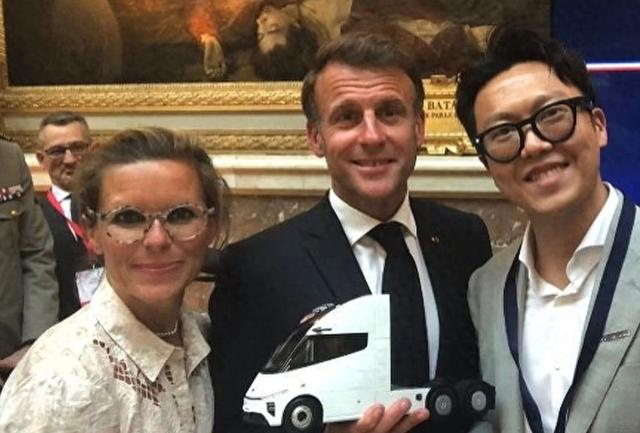
Core Viewpoint - The article discusses the challenges and opportunities for Chinese electric vehicle manufacturers, particularly Windrose, in the European market, highlighting the complex dynamics of investment, technology transfer, and competition within the EU. Group 1: Investment Plans - Windrose plans to invest €175 million to build an electric truck factory in northern France, creating 300 jobs, aligning with President Macron's strategy to develop a "battery valley" in the region [1][4] - The company aims to produce 4,000 trucks annually in France by 2027 and is also preparing to establish a factory in the United States [4] Group 2: EU's Investment Dilemma - The EU is caught between the desire to attract Chinese investment and the fear of competition from Chinese companies, leading to ongoing negotiations over technology transfer and market access [1][5] - Despite Macron's welcoming stance towards Chinese electric vehicle companies, the actual investment levels have not met expectations [5] Group 3: Industry Dynamics - The article notes that while the EU seeks high-value manufacturing, it is still negotiating with China on investment and tariff issues, with slow progress reported [5] - Windrose's executives express a willingness to collaborate with local suppliers but highlight the current lack of suitable local battery manufacturers in France [7] Group 4: Perception and Market Entry - The article mentions that perceptions of Chinese investment in Europe may gradually improve, drawing parallels to the historical acceptance of Japanese and South Korean automotive brands in the U.S. market [9] - Windrose's leadership emphasizes the importance of marketing and innovation to change the perception of Chinese products in Europe [9]