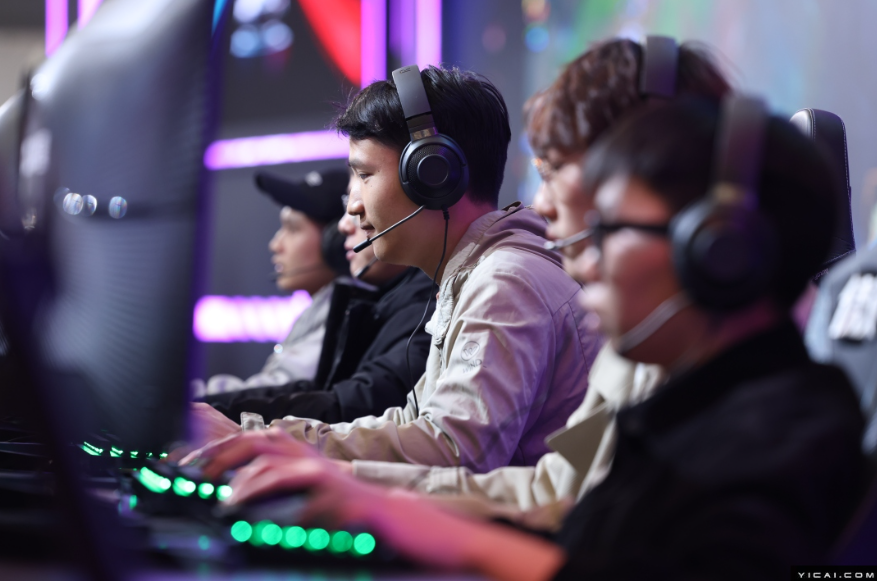
电竞产业生态

Search documents
这一好逛又好买的地方花落石桥 预计1月中旬开业
Mei Ri Shang Bao· 2026-01-04 01:56
Core Insights - The second "Hui Pin Cang City Outlet" in Gongshu District is set to open in January 2026, located in the Hailan eSports Commercial Center with a store area of 12,000 square meters, marking the fourth store in Hangzhou [1] - The Hailan eSports Commercial Center aims to create a new neighborhood commercial hub integrating office spaces, community living, and social connections, with a total construction area of 150,000 square meters [1] Group 1 - The new outlet will feature six major categories including sports and outdoor, men's and women's clothing, children's apparel, luxury shoes and bags, beauty and skincare, and home living, housing over 300 international brands such as Nike, Adidas, and Coach [2] - The location is strategically chosen for its excellent geographical position, convenient transportation, and a thriving community ecosystem, which are seen as significant advantages for the business [2] Group 2 - The Hailan eSports Commercial Center is the first innovative business community in the province centered around the eSports industry, creating a complete industrial ecosystem from professional venues to commercial support [2] - The center offers diverse space options ranging from 1,000 to several thousand square meters, catering to various business needs and making it an ideal place for investment and integration into the eSports ecosystem [2]
又一全球顶级电竞赛事落地中国,为何是成都?
Mei Ri Jing Ji Xin Wen· 2025-08-28 08:48
Core Insights - The article highlights the significance of esports as a powerful symbol of globalization, attracting young tourists and enhancing a city's international influence [1] Group 1: Event Announcement - A major esports event, the BLAST DOTA2 Grand Slam, will be co-hosted in Chengdu in December 2023 by BLAST, Chengdu Radio and Television Station, and Chengdu Broadcasting and Television Group [1][2] - The BLAST Grand Slam is an international esports tournament created in collaboration with DOTA2 developer Valve, with the first three events held in Europe before moving to Chengdu in 2025 [1][2] Group 2: Strategic Importance - Chengdu was chosen for the event due to its rich cultural heritage, superior infrastructure, and mature esports environment, marking it as a significant esports destination [1][2] - BLAST aims to tap into the rapidly growing Chinese esports market, which is one of its fastest-growing audience markets [2][4] Group 3: Event Details - The total prize pool for the tournament is set at $1 million, featuring 12 top-ranked teams from various global regions, including China, Southeast Asia, and Europe [2][3] - The event will consist of online qualifiers from November 25 to 30, followed by the main event from December 5 to 7, with live audience attendance and global streaming in over 50 countries [3] Group 4: Local Impact and Collaboration - The event provides a platform for local DOTA2 teams to compete against international teams, enhancing the local esports scene [3] - A three-year strategic cooperation agreement was signed between Chengdu Broadcasting Group and BLAST to bring more international esports events to Chengdu [5] Group 5: Industry Development - Chengdu has a history of hosting major international sports events and has been recognized as China's "Esports Cultural Capital" [3][6] - The city has introduced policies to support the esports industry, including financial incentives for esports clubs and event hosting, fostering a robust esports ecosystem [6]
上海电竞产业已成亚洲独一档的存在 | 海斌访谈
Di Yi Cai Jing· 2025-05-03 13:49
Core Viewpoint - The esports industry in Shanghai is rapidly developing and is now considered to be at a unique level compared to other Asian cities, surpassing South Korea's Seoul and Japan's Tokyo in terms of scale and capability [1][5][7]. Group 1: Event Highlights - The DOTA2 offline elimination tournament held in Shanghai attracted over 3,000 on-site viewers and millions online from May 1-3 [1]. - The upcoming finals for nine esports projects will take place in major venues in Shanghai from May 16-18, showcasing the city's capacity to host large-scale events [3][4]. - The Asian Champions League (ACL) has engaged over 1,000 teams from 32 cities in China for the CS2 project, indicating widespread participation [3]. Group 2: Comparative Analysis - Shanghai's esports infrastructure, including multiple large venues, allows for hosting events that would be challenging in South Korea, even in its largest city, Seoul [4]. - While South Korea had a pioneering advantage in esports, the current level of China's esports capabilities, particularly in Shanghai, has surpassed that of South Korea [5]. - Japan's esports scene is still developing and lacks the depth seen in Shanghai, with a focus on console gaming rather than competitive esports [7]. Group 3: Financial Challenges - The esports industry faces significant profitability challenges, with many events struggling to break even [11][13]. - The ACL's total investment for this year's nine esports projects is close to 200 million RMB, covering various operational costs [14]. - Despite the challenges, the ACL is focusing on building audience reputation and engagement in its first year, with profitability not being the primary concern initially [15].