《堡垒之夜》

Search documents
突发!OpenAI关停Sora,精简产品线为 IPO 铺路;Momenta 港股秘密递表,预计年内上市;别吵了!Token中文名定了:词元丨雷峰早报
雷峰网· 2026-03-25 00:52
Group 1 - OpenAI has shut down its video generation service Sora to streamline its product line in preparation for an IPO, focusing on enterprise-level products [2][3] - The decision to terminate Sora also ends a partnership with Disney, which had planned to invest $1 billion in OpenAI [3] - OpenAI's CFO emphasized the need to build a company that meets IPO standards [2] Group 2 - The Chinese term for "Token" has been officially designated as "词元," which is seen as a key metric in the AI industry [5][6] - The daily average Token call volume in China is projected to rise from 100 billion in early 2024 to 100 trillion by the end of 2025, with a significant increase noted in March 2023 [5] - The rapid growth in Token usage indicates a new commercial logic based on Token billing is evolving [5] Group 3 - The CEO of Mixue Group, Zhang Hongfu, has stepped down, with Zhang Yuan, a 35-year-old Tsinghua University graduate, taking over as CEO [6][8] - Mixue Group reported a revenue of 33.56 billion yuan for 2025, a year-on-year increase of 35.2%, with a net profit of 5.88 billion yuan, up 32.7% [8] Group 4 - Xiaomi's CEO, Lu Weibing, acknowledged the challenges posed by rising memory prices, indicating that product price increases may not be ruled out in the future [13] - Xiaomi's total revenue for 2025 reached 457.29 billion yuan, a 25% increase year-on-year, with a net profit of 39.17 billion yuan, up 43.8% [13][14] Group 5 - BMW is recalling nearly 180,000 vehicles in China due to a potential fire risk related to the air conditioning wiring harness [18] - The recall affects various models produced between 2023 and 2025, with free inspections and repairs offered to affected customers [18] Group 6 - Momenta, a leading provider of intelligent driving solutions, has secretly submitted its IPO application in Hong Kong, with an expected valuation exceeding 100 billion yuan [46][47] - The company has equipped nearly 700,000 vehicles and has expanded its intelligent driving solutions to over ten countries [46] Group 7 - Arm Holdings plans to sell its own chips for the first time, targeting a share of the AI device market, with Meta Platforms as its first major customer [37] - The new AGI CPU chip will feature up to 136 cores and a power consumption of 300 watts [37] Group 8 - Epic Games announced a layoff of 1,000 employees due to declining player engagement in Fortnite, which has led to increased expenses [38] - The company is also cutting costs by $500 million, focusing on outsourcing and marketing [38]


下一个TikTok?美国盯上腾讯游戏
财富FORTUNE· 2026-03-06 13:09
Core Viewpoint - The article discusses the potential implications of the U.S. government's renewed scrutiny of Tencent's significant stakes in various international gaming companies, positioning it as a new front in the ongoing U.S.-China technology and investment rivalry [1][3]. Group 1: U.S. Government Actions - The U.S. Committee on Foreign Investment (CFIUS) has been monitoring Tencent's global gaming investments for several years, with recent discussions about evaluating Tencent's investment structure in the U.S. and abroad [4]. - The scrutiny is framed under the guise of "data and national security," reflecting a continuation of past U.S. investigations into Chinese tech firms like ZTE, Huawei, and TikTok, but with some new characteristics [4][10]. - A meeting originally scheduled to assess Tencent's investments was postponed, indicating ongoing internal deliberations within the U.S. government [4]. Group 2: Tencent's Gaming Investments - Tencent has a vast gaming investment portfolio, including major stakes in companies like Supercell, Epic Games, and Riot Games, which contribute significantly to its revenue, with gaming accounting for one-third of Tencent's total income [5]. - The data collected from these games, such as user names, device information, and behavioral data, raises concerns about potential misuse for surveillance or influence [5][7]. - The cultural and ideological implications of gaming as a medium can also be leveraged to shape perceptions and influence young players, further complicating the narrative around Tencent's investments [6]. Group 3: Comparison with TikTok - Unlike TikTok, which is a non-public company and easier to divest from, Tencent is a publicly traded company with a transparent ownership structure, making it more challenging for the U.S. to impose drastic measures without considering market reactions [8][10]. - The potential outcomes of the scrutiny could range from selective approval of Tencent's investments to demands for divestiture, which would have significant repercussions for Tencent's revenue and the global gaming industry [10]. Group 4: Broader Implications - If the U.S. allows Tencent to retain its stakes, it may signal a pragmatic shift in U.S. technology policy towards China [10]. - Conversely, if Tencent is forced to divest, it could lead to a loss of independence for various gaming IPs and signal a broader trend of regulatory caution for Chinese internet companies looking to expand internationally [10][11].


谷歌将应用抽成砍到20%,出海游戏厂商迎来多重利好
第一财经· 2026-03-06 08:55
Core Viewpoint - The article discusses a significant transformation in the global mobile application ecosystem, particularly due to Google's structural updates to its Google Play business model, which includes lowering in-app purchase fees, opening more payment options, and introducing a third-party app store registration program [3][12]. Summary by Sections Changes in Commission Structure - Google has reduced the in-app purchase (IAP) commission from a maximum of 30% to a new structure of "service fee + payment processing fee," where the IAP service fee is now 20% and the payment processing fee is an additional 5% in certain regions [6][8]. - New applications participating in incentive programs can have a commission as low as 15%, while subscription services see a reduction from 15% to 10% [6][10]. Impact on Developers - The changes are expected to benefit overseas game developers significantly, as Google Play accounts for about 40% of the revenue share in the overseas mobile game market [6][12]. - The reduction in commission fees is anticipated to enhance profit margins for overseas game products in the short term, while in the long term, it shifts pricing power from content channels to content creators [6][12]. Payment System Flexibility - Google Play will now allow developers to choose their payment systems, with a 5% fee applicable if they use Google's official payment system in specific regions, while opting for third-party payments incurs no additional fees [7][10]. - This flexibility may lead to reduced costs for developers, especially for those relying heavily on in-app purchases [10][11]. Competitive Landscape - The introduction of a third-party app store registration program may intensify competition within the Android ecosystem, potentially leading to a more diverse range of app stores and platforms [11][12]. - If third-party stores mature, the competitive dynamics of the Android channel landscape may change significantly [11]. Broader Implications - The reforms are seen as a systemic restructuring of Google Play's platform openness and business model, largely influenced by a long-standing legal battle with Epic Games, which recently concluded with a settlement [12][15]. - The adjustments made by Google could serve as a model for optimizing channel fees across the broader Android ecosystem, despite being primarily focused on overseas markets [15].


下跌别慌,聊四个投资核心
雪球· 2026-03-06 08:28
Core Viewpoint - The article emphasizes the importance of value investing as a long-term strategy that aligns with personal growth and life experiences, advocating for a focus on quality companies and emotional resilience in investment decisions [7][50]. Group 1: Investment Strategy - Value investing is presented as a method that allows for long-term asset accumulation without sacrificing current life enjoyment [7]. - The article suggests that during market downturns, investors should focus on their own decision-making rather than blaming external factors, highlighting that many companies will eventually recover [10]. - It is recommended that investors maintain a portion of their portfolio in broad market indices to simplify investment decisions and reduce emotional stress during market fluctuations [10][50]. Group 2: Behavioral Insights - Many investors fail to make profits due to emotional reactions, such as buying high during market excitement and selling low during downturns, which is attributed to a tendency for simple reasoning [12][13]. - The article discusses the dangers of oversimplifying investment decisions, which can lead to poor outcomes, emphasizing the need for deeper analysis and understanding of market dynamics [24][30]. - It highlights that successful investing requires emotional control, the ability to withstand market volatility, and a clear judgment of a company's future prospects [50][78]. Group 3: Risk Management - The article stresses the importance of avoiding significant losses, as even a few bad outcomes can jeopardize long-term investment success [33][36]. - It references the Blackstone Group's investment philosophy, which prioritizes risk avoidance and survival during market downturns as a key to their sustained success [35][46]. - Investors are encouraged to focus on risk management and ensure they are not overly exposed to any single investment, as this can lead to substantial losses [47][48].

8点1氪:寿司郎被曝吃出寄生虫卵,当地市监局通报;全国人大代表建议尽量不要调休;谷歌DeepMind高管公开邀请千问团队入职
36氪· 2026-03-06 00:31
Group 1 - Sushi restaurant Sushi Lang was reported to have served a dish containing parasitic eggs, leading to an investigation by the local market supervision bureau [2][3] - A consumer claimed to have found parasitic eggs in tuna after waiting three hours to eat at Sushi Lang, prompting a response from the restaurant's management regarding potential medical compensation [3] - The market supervision bureau emphasized its commitment to protecting consumer rights and will take strict action against any violations [4] Group 2 - Xiaomi's founder Lei Jun stated that the rising demand for AI has led to increased prices for storage chips, putting pressure on the company's mobile business [5] - Alibaba denied rumors of a mass departure from its AI team, asserting that the team remains stable and operational [5] - JD Group's CEO revealed that the company's investment in food delivery services will decrease compared to the previous year, aiming for improved operational efficiency [6] Group 3 - Iran's Islamic Revolutionary Guard Corps announced a ban on U.S., Israeli, and European vessels from passing through the Strait of Hormuz, citing wartime rights [7] - The U.S. stock market saw a collective decline, with major indices falling, and Bilibili's stock dropping over 7% [7] - Silver prices fell below $81 per ounce, marking a 3.09% decrease [8] Group 4 - OpenAI's annual revenue surpassed $25 billion, reflecting a 17% increase from the previous year, although competition with Anthropic is intensifying [10] - Israel plans to reopen its airspace for outbound flights starting March 8, contingent on security assessments [10] - Apple's new MacBook Neo is priced to fall within the range of government subsidies, potentially costing around 3000 yuan after subsidies [11] Group 5 - JD Logistics reported a revenue of 217.1 billion yuan for 2025, marking an 18.8% year-on-year increase [24] - JD Health achieved a total revenue of 73.4 billion yuan in 2025, reflecting a 26.3% growth [25] - Hightu Group's revenue for 2025 reached 6.15 billion yuan, a 35% increase year-on-year [22]


两大利好突袭!科技巨头,突然宣布:降价!
券商中国· 2026-03-05 11:52
Core Viewpoint - Google's announcement to reduce the commission rate on the Google Play Store from 30% to 20% or lower, along with the opening of third-party payment systems, is a significant benefit for global game developers, reducing channel costs and increasing operational autonomy, which is expected to enhance profits for gaming companies [1][3][7]. Summary by Sections Commission Rate Changes - Google will lower the commission rate for most app stores in the US, UK, and the European Economic Area from 30% to 20% or lower by June 30 [3]. - By the end of 2026, Google plans to launch a "Registered App Stores" initiative, allowing users to download and install third-party app stores directly from the web [3][4]. Third-Party Payment Systems - Developers will be allowed to use their own payment systems alongside Google Play's, with Google separating "payment fees" from "service fees" [3][4]. - If users make in-app purchases again, Google will charge a 25% fee, while purchases through external links will incur a fee of $2 to $4 or 20% [3]. Benefits for Game Developers - The reduction in commission means that for every 100 yuan in revenue, game developers can earn an additional 10 yuan, translating to significant profit increases for high-revenue games [7]. - The opening of third-party payments allows developers to bypass a 5% channel fee, potentially lowering overall costs to 15% [7]. Impact on Other Companies - Third-party app stores and distribution platforms will benefit from the new "Registered App Stores" plan, leading to increased user growth due to lower installation barriers [7]. - Payment service providers and fintech companies are expected to see a surge in business as game developers adopt third-party payment systems to save on fees [7]. - Internet giants with strong proprietary channels, such as Tencent, NetEase, and ByteDance, will also benefit from reduced fees and their ability to guide users to their payment systems [7].


特朗普政府重启审查腾讯千亿游戏资产
制裁名单· 2026-03-04 03:24
Core Viewpoint - The U.S. White House has restarted the review process of Tencent's gaming investments to assess potential security risks, focusing on Tencent's stakes in globally recognized gaming companies such as Epic Games, Riot Games, and Supercell [1]. Background and Core Controversy - The review by the Committee on Foreign Investment in the United States (CFIUS) has been ongoing for several years, making it one of the longest cases under review. The main controversy revolves around whether Tencent's ownership of these gaming companies allows access to personal data of millions of U.S. users, including financial information, privacy, and game chat records. Despite Supercell being headquartered in Finland, its large U.S. user base also falls under scrutiny [3]. Key Assets Involved in the Review - Tencent's global gaming strategy is the focal point of this review, specifically involving the following key assets: - Epic Games: Tencent holds a 28% stake in this company, known for the popular game "Fortnite" [5]. - Riot Games: Tencent fully owns this company, which developed "League of Legends," one of the most popular PC games globally [6]. - Supercell: Tencent has a controlling stake in this company, known for games like "Clash of Clans," which has a vast global user base [7]. Review Progress and Potential Impact - During the Biden administration, there were internal disagreements within CFIUS, with the Department of Justice favoring forced divestment of Tencent's assets, while the Treasury Department preferred to retain the investment through data protection measures. Due to the lack of consensus, no final decision was made at that time. The Trump administration has now restarted the review, but it remains unclear whether the inclination is towards forced divestment or allowing the investment to continue. Tencent has previously engaged with CFIUS regarding mitigation measures to address security concerns [9].

任天堂击碎“需求疲软论”:Switch 2北美销量强势反弹,领先索尼PS4
智通财经网· 2026-01-23 03:26
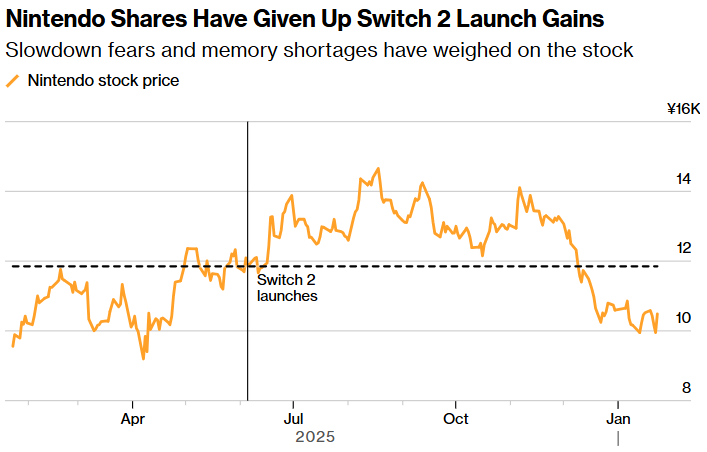
Group 1 - Nintendo's flagship console, Switch 2, saw a sales rebound last month, alleviating concerns about demand slowdown, leading to a 6.6% increase in Nintendo's stock price, the largest single-day gain since November 5 [1] - According to Circana, Switch 2 was the best-selling console in the U.S. for both December and the entire year of 2025, contributing to a 9% growth in overall hardware spending in the industry [1] - Despite a significant drop in spending due to increased tariffs and component costs in November, Switch 2 maintained strong sales, contradicting claims of its weakness [1] Group 2 - After seven months on the market, Switch 2's sales exceeded Sony's PlayStation 4 by 35%, supported by multiple best-selling games in December [2] - The overall U.S. gaming market is expected to grow by 1% to $60.7 billion by 2025, with a shift towards subscription models, which have seen a 20% increase [5] - Epic Games' Fortnite continues to dominate user attention and gaming time on console platforms, with a significant portion of active users having experienced the game [5]

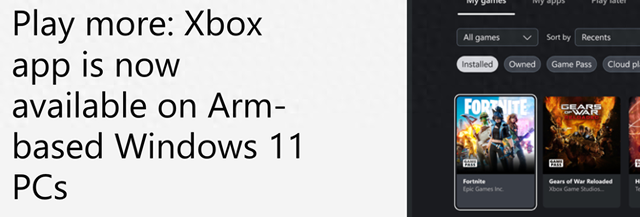
微软宣布Xbox应用全面拥抱Arm架构Win11 PC
Xin Lang Cai Jing· 2026-01-22 06:52
Group 1 - Microsoft has officially announced that the Xbox app now fully supports all Arm-based Windows 11 PCs, marking a significant step in enhancing cross-device gaming experiences [1] - Arm architecture Windows 11 PC users can now download and play a large number of games directly through the Xbox PC app, with over 85% of Game Pass games currently compatible with Arm devices [3] - The company is actively working with partners to adapt more titles for Arm devices, and the Prism emulator now supports AVX and AVX2 instruction sets for running x86/x64 software on Arm devices [3] Group 2 - Popular games such as "Gears of War: Ultimate Edition" and "Fortnite" can now run smoothly on Arm devices, thanks to support from Epic Anti-Cheat (EAC) [3]

让AI融入游戏剧情和玩法,怎样才能少走弯路?
3 6 Ke· 2026-01-14 12:26
Core Viewpoint - The integration of generative AI in gaming has led to mixed reactions, with many players finding AI-generated dialogues to be dull and lacking creativity, while some industry experts see potential for innovation if used correctly [1][2][4]. Group 1: Current State of AI in Gaming - Generative AI has permeated mainstream gaming, but its implementation has often resulted in poor quality experiences, such as incorrect dialogues and low-quality graphics [1]. - Players have expressed skepticism towards AI-driven NPCs, with some arguing that interacting with a chatbot instead of a well-crafted story is foolish [1][2]. - Experts like Meg Jayanth criticize AI-generated dialogues as "boring" and lacking the depth that human writers provide, emphasizing the importance of human creativity in storytelling [4][5]. Group 2: Potential and Future of AI in Gaming - There is a belief that with careful guidance, generative AI could enhance game narratives and create more immersive experiences [2]. - Some experts suggest that AI could be effectively utilized in new game genres, as seen in games like "1001 Nights" and "Infinite Craft," where AI is central to gameplay rather than just an add-on [8][9]. - Dan Griliopoulos highlights the need for narrative designers to adapt to the evolving landscape of AI, suggesting that AI could be used to enhance storytelling if integrated thoughtfully [11][12]. Group 3: Ethical and Practical Considerations - Concerns about ethical implications, such as privacy risks and the potential for job loss in the industry, are prevalent among experts [5][11]. - Younès Rabii points out that while AI has the potential to generate content, it requires significant investment in training and resources to be effective, which may not be feasible for all developers [15][16]. - Chris Gardiner warns against the over-reliance on AI, arguing that it could lead to a loss of originality and depth in games, which players value [18].