
白酒互联网渗透率提升

Search documents
电商低价促销知名白酒常态化,酒商担忧没有最低只有更低
Di Yi Cai Jing· 2025-10-09 00:53
假日经济|电商低价促销知名白酒常态化,酒商担忧"没有最低,只有更低" 【中国白酒网】电商与白酒企业的矛盾日益加剧。 电商平台与白酒企业的价格冲突仍在持续。记者注意到,今年双节前后,即时电商和平台电商的白 酒促销大战仍在持续,多个名酒品牌的核心产品优惠后价格都跌破了线下市场的批发价,这也加剧了线 下渠道的压力。 记者注意到,多个电商平台采用了限时补贴的方式进行优惠,优惠后的价格比批发价更低。比如飞 天茅台的市场零售价约在1900元/瓶左右,但优惠后价格只有1700元/瓶,而第三方平台该产品的批发价 约在1780元/瓶;五粮液的核心单品普五优惠后价格为769元/瓶,而同期市场批发价为840元/瓶。不仅仅 是头部酒企,记者注意到,包括山西汾酒、剑南春等名酒补贴后价格也都低于批发价。 济南酒商老盛告诉记者,由于价格的波动,线下终端商拿货非常谨慎,不愿囤货,经销商的出货节 奏也受到影响。一般而言,双节前名酒的价格都会有所上涨,但今年完全没有起色,预计节后酒价还有 下行空间。 多位经销商表示,前一段时间即时电商的售价更低,但在双节市场,电商平台的促销力度更大,消 费者已经养成了线上比价的习惯,这样一来,不得已也只能偷偷降 ...



电商低价促销知名白酒常态化,酒商担忧“没有最低,只有更低”
Di Yi Cai Jing· 2025-10-08 05:33
Core Viewpoint - The ongoing price conflict between e-commerce platforms and liquor companies is intensifying, with promotional prices for well-known liquor brands falling below wholesale prices, raising concerns among liquor merchants about the sustainability of such pricing strategies [1][2]. Group 1: E-commerce Impact on Liquor Pricing - E-commerce platforms are employing limited-time subsidies, resulting in prices for products like Feitian Moutai dropping to 1700 RMB per bottle, below the wholesale price of 1780 RMB [1]. - Major liquor brands, including Wuliangye, are also seeing their promotional prices undercutting wholesale prices, with Wuliangye's core product priced at 769 RMB compared to a wholesale price of 840 RMB [1]. - The trend of e-commerce platforms offering lower prices is leading to increased caution among offline retailers, who are reluctant to stock up due to price volatility [1][2]. Group 2: Shift in Sales Dynamics - The traditional dominance of offline sales in the liquor industry is being challenged as e-commerce platforms increasingly offer low-priced liquor, disrupting the price control previously held by liquor companies [2]. - The liquor industry is currently undergoing a deep adjustment phase, with companies struggling to manage e-commerce pricing effectively [2]. - The internet penetration rate for liquor sales has increased from under 10% to approximately 20% due to recent e-commerce promotions, with projections suggesting it could reach 50% in the next five years [2]. Group 3: Future of Liquor Sales - The rise of e-commerce is prompting a necessary change in the sales model for liquor, as online sales now offer traceability and lower prices, potentially leading to the exit of half of traditional offline liquor retailers in the next three years [3].
假日经济|电商低价促销知名白酒常态化,酒商担忧“没有最低,只有更低”
Di Yi Cai Jing· 2025-10-08 02:12
Core Insights - The ongoing price conflict between e-commerce platforms and liquor companies is intensifying, with promotional prices for major liquor brands falling below wholesale prices in offline markets [1] - E-commerce platforms are employing limited-time subsidies, leading to lower prices than wholesale, which is putting additional pressure on offline channels [1][5] - The trend of online price comparison among consumers is becoming habitual, forcing offline sellers to reduce prices discreetly, further impacting their profit margins [5] Group 1: Price Dynamics - Major liquor brands like Moutai and Wuliangye are seeing promotional prices significantly lower than their wholesale prices, with Moutai priced at approximately 1700 RMB per bottle compared to a wholesale price of 1780 RMB [1] - Other brands, such as Wuliangye, are also experiencing similar price drops, with their core product priced at 769 RMB per bottle against a wholesale price of 840 RMB [1] - The overall expectation is that liquor prices may continue to decline post-holiday, contrasting with the typical price increase seen during festive seasons [1] Group 2: E-commerce Impact - The penetration rate of e-commerce in the liquor industry has increased from under 10% to around 20% due to recent promotional activities, with projections suggesting it could reach 50% in the next five years [5][6] - The shift towards online sales is prompting a reevaluation of traditional sales models, as e-commerce now offers traceability and lower prices, which could lead to the exit of many traditional offline liquor retailers [6] - The current environment is characterized by a low-price competition cycle among e-commerce platforms, which is harming the traditional liquor distribution system [5]

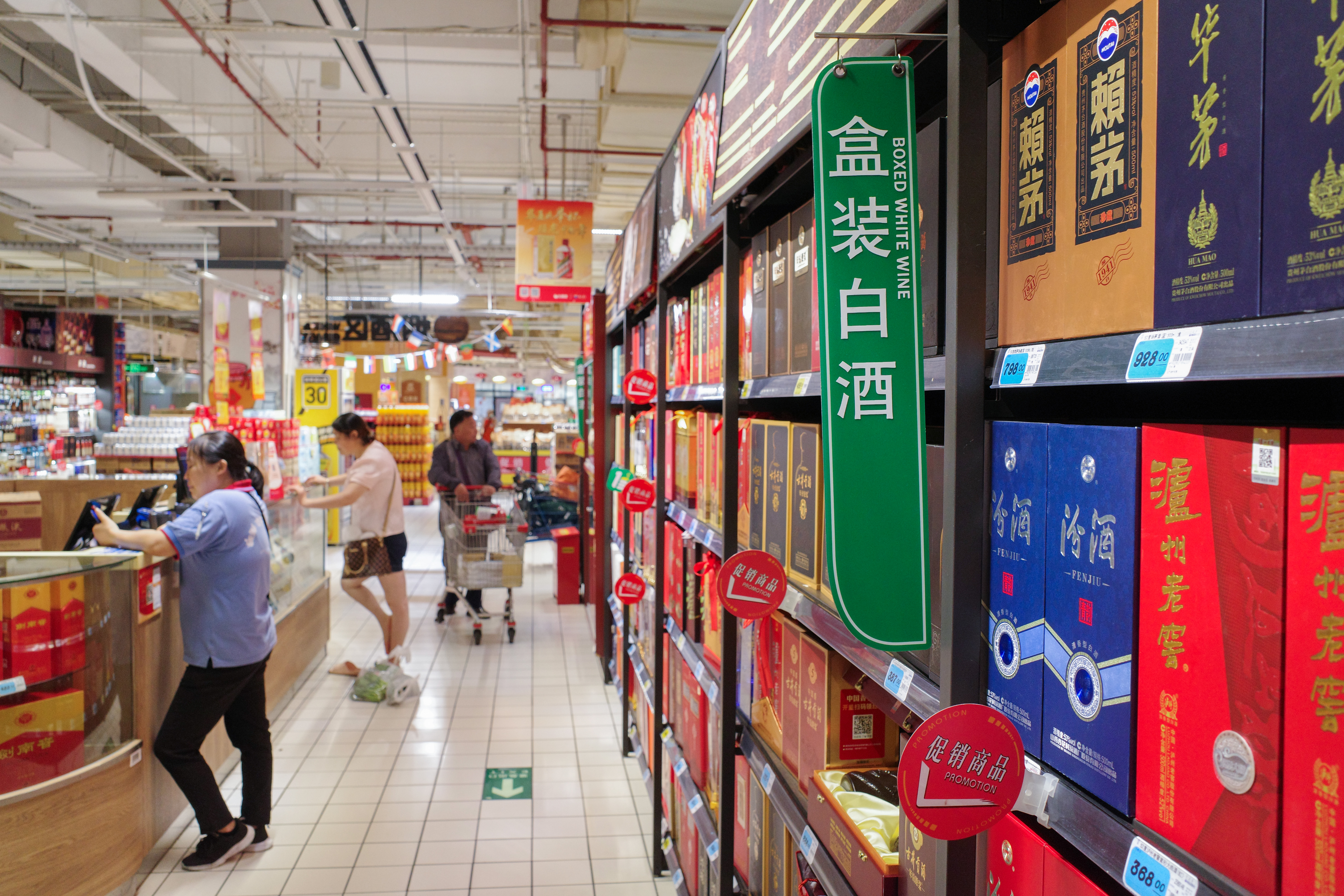
假日经济|中秋前酒市动销乍暖还寒,新一轮渠道整合正悄然发生
Di Yi Cai Jing· 2025-09-18 11:13
Core Insights - The market for liquor is showing signs of recovery after a weak second quarter, with sales increasing in August and September, although the overall market remains sluggish [1][2] - Industry expert Hao Hongfeng believes that while the most difficult phase for liquor distributors has passed, the deep adjustment in the industry may continue for another 3-5 years, with many changes occurring [1][7] Market Conditions - Liquor distributors report a slight increase in sales during the Mid-Autumn Festival preparation season, but many are cautious about surpassing last year's sales due to budget constraints and the impact of a "ban on alcohol" [2] - The competition from online platforms has intensified, leading to significant profit declines for distributors, as they struggle against aggressive pricing strategies [2][6] Industry Adjustments - The liquor distribution landscape is shifting from a "strong manufacturers, weak distributors" model to a more balanced dynamic, as manufacturers lose control over pricing due to market conditions and increased inventory [7][8] - The internet penetration rate in the liquor industry has increased from under 10% to around 20%, with projections suggesting it could reach 50% in the next five years, driven by low-price strategies from e-commerce platforms [7] Distribution Network - The domestic liquor market is highly fragmented, with approximately 150,000 wholesalers and 5 million retail outlets, while the top ten distribution companies account for less than 10% of the market [8] - In response to market challenges, liquor distributors are forming alliances to enhance their bargaining power and reduce costs, while companies like JiuXian Group are planning to open 10,000 new stores in three years, adopting a direct-to-consumer model [8][9] New Business Models - The introduction of hard discount stores, similar to those in the snack industry, aims to attract local distributors and offer lower prices directly to consumers, particularly in lower-tier markets [9] - The traditional group purchasing model is losing appeal as consumers become more price-sensitive, leading to potential challenges for 50% of distributors and liquor stores in the future [9]