百万存款

Search documents
百万存款真相调查:和你想的可能不一样!
Sou Hu Cai Jing· 2025-12-18 01:25
Core Insights - The article discusses the disparity in personal savings in China, highlighting that while total household savings have surpassed 128 trillion yuan, the number of individuals with significant savings (over 1 million yuan) is quite small, with less than 0.5% of accounts exceeding this threshold [3][5]. Group 1: Savings Distribution - The proportion of personal accounts with savings over 500,000 yuan is less than 2%, indicating a highly concentrated wealth distribution among savers [3]. - A bank branch manager noted that in a client base of approximately 100,000, there are fewer than 200 clients holding over 1 million yuan, emphasizing the rarity of high-value depositors [3]. Group 2: Wealth Structure - The majority of Chinese household wealth is tied up in real estate, with housing accounting for nearly 70% of urban residents' assets, while financial assets make up only 20.4% [6]. - Many families appear wealthy on paper due to property values but lack liquidity, leading to a phenomenon of "wealthy poor" where individuals have significant assets but little cash flow [6]. Group 3: Characteristics of High Savers - The demographic of individuals with over 1 million yuan in savings is predominantly older, with over 60% being aged 55 and above, reflecting a strong savings culture from their upbringing [7]. - High savers are more commonly found in lower-tier cities, where lower housing costs allow for greater cash flow compared to first-tier cities where high living costs consume most income [7]. - Occupations of high savers tend to be stable and traditional, such as teachers and civil servants, contrasting with younger professionals in high-consumption sectors who often have lower savings [7]. Group 4: Psychological Shifts Post-Pandemic - The COVID-19 pandemic has led to a significant increase in the savings rate among Chinese residents, marking a shift from a consumption-driven mindset to a more cautious financial approach [9]. - There has been a notable trend towards conservative investment preferences, with individuals now prioritizing stability over high-risk investments [9]. - Changing attitudes towards real estate are evident, with a decline in the belief that homeownership is essential for happiness, as reflected in survey data showing a decrease in the intention to purchase homes [9]. Group 5: Regional Variations in Savings Impact - In lower-tier cities, having 1 million yuan in savings can represent a threshold for financial freedom, significantly impacting lifestyle choices [10]. - In second-tier cities, this amount provides a safety net but may not be sufficient for complete financial independence [12]. - In first-tier cities, 1 million yuan may only serve as a supplementary fund for larger expenses, yet it remains a crucial financial buffer in emergencies [12]. Group 6: Future Outlook on Savings - Factors such as stable housing policies and increasing financial literacy among younger generations may lead to higher savings rates in the future [15]. - Challenges include economic slowdowns and rising living costs, which could hinder income growth and savings accumulation [15]. - The article suggests a potential divide in future savings trends, with some individuals continuing to accumulate wealth while others may struggle with rising expenses [15].


拥有100万存款是什么水平?能否站在财富“金字塔”上层?
Nan Fang Du Shi Bao· 2025-07-01 08:02
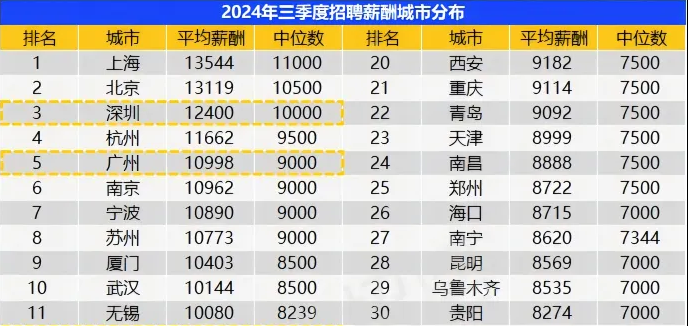
Core Viewpoint - The article discusses the perception and reality of having a million yuan in savings in China, highlighting the challenges of low interest rates and the socio-economic implications of reaching this financial milestone [1][4][12]. Group 1: Financial Reality of Million Yuan Savings - Achieving a savings of 1 million yuan is considered difficult, with over 90% of bank clients not reaching this threshold [4][8]. - In Shenzhen, a city known for its high cost of living, the average salary is around 10,000 yuan, making it challenging for many to accumulate 1 million yuan in savings [4][6]. - The average monthly salary in Shenzhen is reported at 12,400 yuan, ranking third in the country, which reflects the competitive financial landscape [6]. Group 2: Wealth Distribution and Class Structure - The proportion of individuals with savings exceeding 1 million yuan is estimated to be around 2% based on data from major banks [8][11]. - According to the 2024 Hurun Wealth Report, only about 1% of Chinese households have assets exceeding 6 million yuan, indicating that million-yuan savers are part of a small elite [11][12]. - The article notes the "olive-shaped effect" in wealth distribution, where middle-aged individuals hold a significant portion of wealth, while younger and older demographics lag behind [12]. Group 3: Banking Services and Client Segmentation - Banks categorize clients based on their asset levels, with "platinum" services typically starting at 500,000 yuan, indicating a tiered approach to wealth management [7][9]. - The criteria for becoming a "platinum" client vary among banks, with some requiring a minimum of 100,000 yuan in average financial assets [9][10]. - The article emphasizes the importance of financial planning and the potential benefits that come with higher savings, such as access to exclusive banking services [12].