
直播电商常态化监管

Search documents
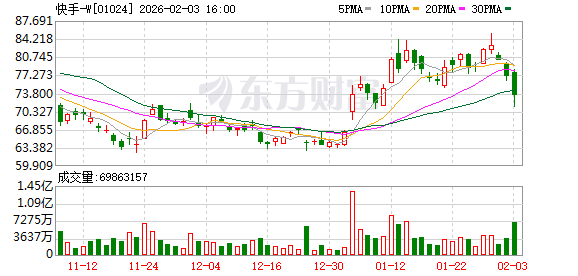
快手被罚释放什么信号
Jing Ji Ri Bao· 2026-02-03 22:15
Core Viewpoint - Kuaishou has been fined 26.69 million yuan, highlighting the increasing regulatory scrutiny in the live-streaming e-commerce sector, indicating that platforms can no longer evade responsibility under the guise of exploring new models [2][5] Group 1: Regulatory Actions - The fine imposed on Kuaishou is a significant event in the platform economy, reflecting the regulatory authority's commitment to consumer rights and market fairness [2] - Kuaishou's violations include failing to prominently display certification information and charging punitive non-fixed penalty fees to merchants, which are common issues across the industry [3] - The regulatory intent is not solely aimed at Kuaishou but is part of a broader initiative to address systemic issues within the live-streaming e-commerce sector [3] Group 2: Industry Context - The introduction of the "Live E-commerce Supervision and Management Measures" marks a new phase of normalized, refined, and systematic governance in the live-streaming e-commerce industry [4] - Platforms are now required to integrate compliance into their core operational framework, ensuring transparency in agreements, thorough merchant qualification checks, and real-time monitoring of live content [4] - The advancement of regulatory technology enables precise tracking and risk management, making it difficult for platforms to hide violations within vast amounts of transactions [5]


直播电商常态化监管需紧抓重点
Di Yi Cai Jing Zi Xun· 2026-02-01 15:16
Core Viewpoint - The rapid development of the live e-commerce industry has led to significant regulatory measures aimed at addressing emerging issues and ensuring sustainable growth [2][5]. Group 1: Regulatory Developments - The State Administration for Market Regulation (SAMR) has released the fifth batch of typical cases in the live e-commerce sector, signaling a commitment to regularized oversight to promote industry development [2]. - The implementation of the "Live E-commerce Supervision and Management Measures" on February 1 marks a significant regulatory framework aimed at clarifying the responsibilities of platform operators and live streamers [3]. Group 2: Consumer Complaints and Issues - In 2024, consumer complaints related to live streaming sales reached 402,000, a year-on-year increase of 19.3%, highlighting issues such as false advertising, product quality defects, and difficulties in returns [2]. - The rapid advancement of generative artificial intelligence is reshaping content production in live e-commerce, leading to more targeted but potentially misleading promotional content [2]. Group 3: Enforcement and Compliance - The SAMR has intensified enforcement actions over the past year, employing various strategies to address significant cases and deter violations within the live e-commerce sector [2]. - Future regulatory efforts will focus on enhancing compliance among platform operators, live streamers, and their service agencies, emphasizing the need for collaborative governance [3][4]. Group 4: New Regulatory Focus Areas - The new regulations will also address the monitoring of abnormal traffic and the use of AI in live e-commerce, ensuring that deceptive practices are curtailed and that violators face substantial penalties [4][5]. - The emphasis on real-time monitoring and technical oversight aims to provide a robust legal framework for the healthy development of the industry [4].

一财社论:直播电商常态化监管需紧抓重点
Di Yi Cai Jing· 2026-02-01 13:33
Core Viewpoint - The rapid development of the live e-commerce industry has led to various issues, necessitating strengthened regular supervision as a crucial approach to promote industry growth [1][4]. Group 1: Current Issues in Live E-commerce - In 2024, consumer complaints related to live e-commerce reached 402,000, marking a year-on-year increase of 19.3%, with false advertising, quality defects, and difficulties in returns being the main complaint areas [1]. - The emergence of new challenges, such as the rapid development of generative artificial intelligence, is reshaping content production in live e-commerce, leading to a mix of genuine and deceptive content [1]. Group 2: Regulatory Measures - The implementation of the "Live E-commerce Supervision Management Measures" on February 1 is a significant regulatory step aimed at clarifying the responsibilities of platform operators, live room operators, and marketing personnel [2]. - The focus of regulation is on the responsibilities of platform operators and live room operators, as they provide the necessary infrastructure for live e-commerce activities [2]. Group 3: New Regulatory Focus - There is an emphasis on enhancing new regulatory measures, including monitoring traffic and artificial intelligence, to ensure compliance and protect consumer interests [3]. - The management measures will include real-time monitoring and the ability to restrict traffic or suspend live broadcasts in cases of non-compliance [3]. Group 4: Future Directions - The future regulatory framework will hold live room operators, marketing personnel, and their service agencies accountable for any deceptive practices, with potential civil, administrative, and criminal liabilities for violations [3].