直觉投资

Search documents
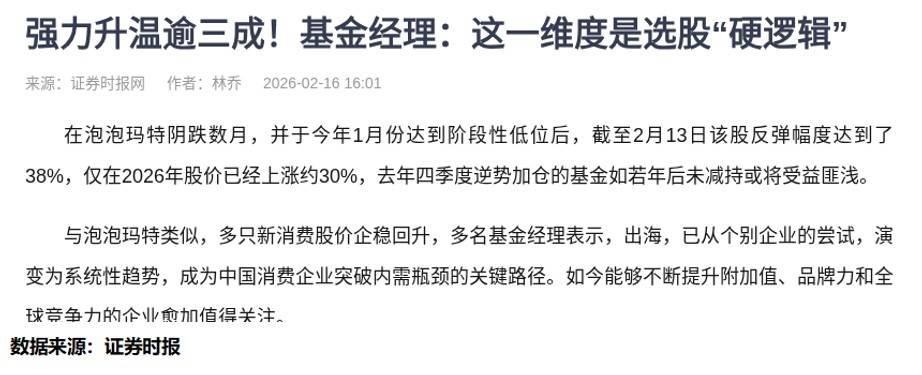
消费股回暖迹象明显,年后会有大动作
Sou Hu Cai Jing· 2026-02-17 15:24
Group 1 - The core issue in stock trading is the reliance on subjective intuition, leading to anxiety and poor decision-making during market fluctuations [1][3] - Many investors focus solely on price movements without understanding the underlying driving forces, particularly the behavior of institutional funds [3][6] - Quantitative data can reveal the true nature of market movements, helping investors see beyond superficial trends and avoid emotional decision-making [9][13] Group 2 - Institutional trading behavior follows stable and repeatable patterns, which can be analyzed to improve investment decisions [6][9] - The presence or absence of institutional inventory during price adjustments can indicate the likelihood of a stock's future performance [11][13] - Investors often misinterpret market adjustments, leading to premature selling or misguided buying, which can be mitigated by understanding institutional participation [11][13] Group 3 - The importance of adopting a data-driven mindset over intuitive judgment is emphasized, as it allows for better assessment of market conditions [13] - Establishing a systematic trading approach based on quantitative analysis can enhance decision-making and reduce anxiety related to market volatility [13]

为什么说学习是投资中最被低估的资产?
Sou Hu Cai Jing· 2025-08-01 14:53
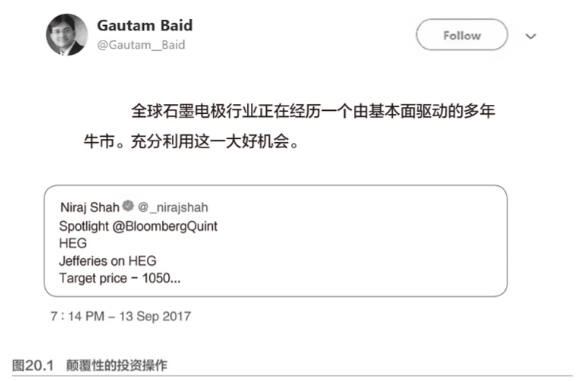
Group 1 - The core idea of the article emphasizes the importance of understanding capital cycles when investing in commodities and cyclical stocks, suggesting that high returns attract capital while low returns repel it, leading to predictable fluctuations in shareholder returns [4][5][6] - The article discusses the significance of identifying industries undergoing large down cycles that require funding, followed by a detailed analysis of individual companies' fundamentals to find stocks trading below their intrinsic value [4][5] - It highlights the necessity of conducting stress tests on selected companies to ensure their debt levels are manageable and their survival during economic downturns [5] Group 2 - The author shares personal experiences in commodity investing, particularly in the sugar industry, illustrating the challenges faced when initial investments did not yield expected results, which ultimately led to a deeper understanding of the sector [12][13] - The article mentions the importance of continuous learning and adapting investment strategies based on market conditions, as demonstrated by the author's shift in focus to graphite electrode companies in India [16][21] - It emphasizes that successful commodity investments often require a contrarian approach, buying during periods of pessimism and selling when the market is overly optimistic [5][32] Group 3 - The article outlines key indicators of capital cycle risks, such as monitoring capital expenditures, asset growth, and the frequency of investment banking activities in specific industries [14][8] - It discusses the significance of understanding supply dynamics in commodity markets, noting that many investors focus primarily on demand while neglecting supply factors that can significantly impact returns [9][29] - The author stresses the need for investors to remain vigilant and manage risks effectively, particularly in volatile commodity markets where prices can fluctuate dramatically [32][35]