
眼动追踪

Search documents
戴上这副眼镜 渐冻症患者眨眼就能“发电”还能操控轮椅
Xin Lang Cai Jing· 2026-02-01 08:58
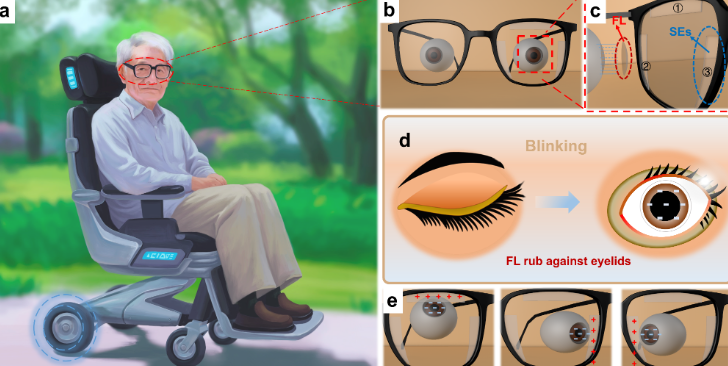
Core Insights - The article discusses the development of the world's first self-powered eye-tracking system by a team led by Professor Long Yunze from Qingdao University, which aims to assist patients with amyotrophic lateral sclerosis (ALS) in controlling wheelchairs through eye movements [1][2]. Group 1: Technology Overview - The new eye-tracking system addresses the energy supply challenges faced by traditional devices, which often require external power sources, making them cumbersome for users [2]. - The system utilizes a dual-layer collaborative approach with a "contact lens + frame glasses" design, allowing it to be lightweight and comfortable, while generating power solely from eye movements [2]. Group 2: Mechanism of Operation - The system functions as a "micro power station" on the eye, using polydimethylsiloxane (PDMS) material that generates electrical charges through friction when the user blinks or moves their eyes [5]. - The glasses are equipped with transparent indium tin oxide electrodes that capture and convert the generated electrical charges into recognizable signals, enabling precise control of external devices [5]. Group 3: Future Development - The research team acknowledges the need to overcome various industrialization challenges to bring the technology from the lab to widespread application and is actively seeking partnerships with relevant companies to advance this process [5].

扎克伯格的“元宇宙盲区”:缺席的眼动追踪与失焦的VR帝国
Sou Hu Cai Jing· 2026-01-20 00:43
Core Insights - Meta's strategic shift from a strong push for the metaverse to a more cautious approach highlights a misalignment in timing, execution, and vision for technology deployment [1][3] - The absence of eye-tracking technology in Meta's VR headsets has significantly hindered the scalability of VR, while competitors like Google, Valve, and Apple have integrated this feature into their latest devices [3][5] - Meta's leadership decisions and design flaws have led to a loss of competitive advantage in the VR market, raising questions about the future direction of the company [8][9] Group 1: Strategic Decisions and Market Position - In 2014, Mark Zuckerberg's acquisition of Oculus VR was based on the belief that virtual reality would become a cornerstone of personal computing, but by 2026, the technology landscape has evolved with new competitors [3][4] - Meta's recent strategic adjustments, including the removal of eye-tracking from the Quest 3, have been criticized as a significant misstep, especially as competitors leverage this technology for enhanced user experiences [4][5] - The company's focus on building a metaverse has been questioned by industry experts, suggesting that the emphasis should be on practical products rather than abstract technological frameworks [8][9] Group 2: Technological Development and Competition - Eye-tracking technology has been recognized as a game-changer for VR software design, yet Meta has failed to prioritize its integration into their products, leading to a gap in their offerings compared to competitors [4][6] - The timeline for Meta's product releases has been criticized, with significant delays in launching eye-tracking headsets, allowing competitors to gain a foothold in the market [5][9] - The strategic misalignment within Meta has resulted in a workforce exodus and a reevaluation of their VR/AR initiatives, indicating a need for structural changes to regain market relevance [8][9] Group 3: Future Directions and Recommendations - As Meta looks to the future, there is a suggestion to rebrand their next generation of headsets to "Oculus," which could resonate better with consumers and align with their gaming heritage [14] - The potential for Meta to pivot towards lighter headsets that incorporate eye-tracking and other advanced features is seen as a necessary step to compete with Apple's Vision Pro and similar products [14][15] - The ongoing evolution of VR technology and user expectations necessitates a reevaluation of Meta's product strategy to ensure alignment with market demands and technological advancements [12][13]


AI/AR眼镜系列报告(四):眼动追踪赋能智能眼镜,助力人机交互体验
HUAXI Securities· 2025-08-14 13:44
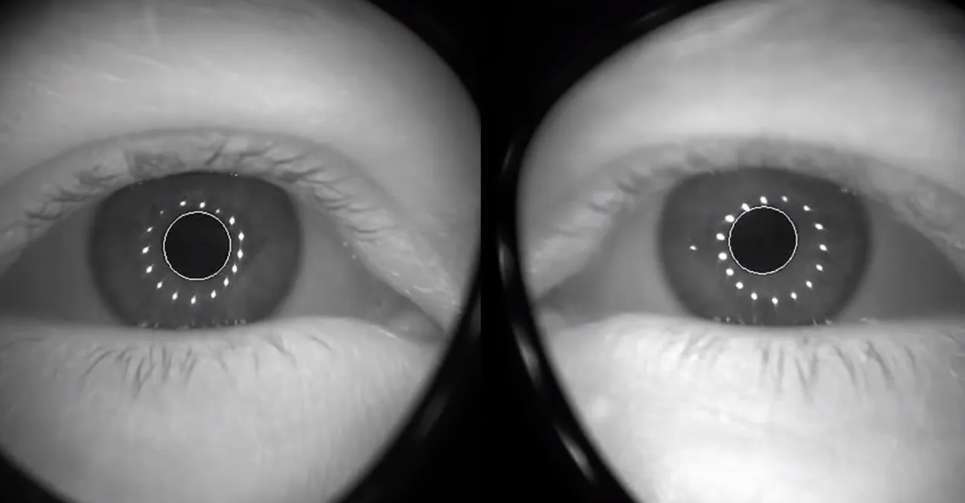
Investment Rating - Industry Rating: Recommended [6] Core Insights - Eye tracking is expected to become one of the core interaction methods for XR glasses, enabling "gaze as interaction" for intelligent control [4][22] - The integration of eye tracking technology with XR glasses enhances user experience through various functionalities such as gaze point rendering, identity verification, convergence adjustment, interpupillary distance adjustment, refractive correction, human-computer interaction, virtual socializing, and health monitoring [2][22] - Major manufacturers are rapidly deploying eye tracking technology, with notable products like Apple's Vision Pro and Meta's Aria Gen 2 incorporating this feature, indicating a trend towards broader adoption across entertainment, medical, industrial, and educational sectors [2][41] Summary by Sections Eye Tracking Technology - Eye tracking utilizes sensors like infrared cameras to capture and analyze eye movement information, converting physiological characteristics into computable data for real-time gaze direction and fixation point measurement [10][12] - The primary eye tracking methods include pupil-corneal reflection, retinal imaging, 3D model reconstruction, and MEMS-based techniques [10][11] Eye Tracking in XR Glasses - Eye tracking enhances XR devices by providing new interaction methods, significantly improving user experience [22] - The technology allows for gaze point rendering, which optimizes system resources by rendering high-resolution images only in the user's focal area, thus improving performance and reducing power consumption [24] - Eye tracking can also facilitate automatic adjustments for interpupillary distance and refractive correction, enhancing comfort and usability for diverse users [27][28] Key Manufacturers - Tobii, a leader in eye tracking technology, has developed multiple products and partnerships, achieving eye tracking precision of 0.6° and collaborating with major companies like HTC and Sony [3][54] - Seveninvensun has introduced the aGlass VR eye tracking module and the AI smart glasses prototype "Xiao Qi," featuring low power consumption and high precision [3][71] - GoerTek has launched high-precision AR smart glasses with an average accuracy of 0.5° and a response delay of less than 3ms [3][74] Investment Recommendations - Eye tracking is poised to accelerate penetration in XR glasses, enhancing user experience and presenting investment opportunities in companies like Tobii, Seveninvensun (not publicly listed), and GoerTek, as well as camera module suppliers like Juguang Technology and OmniVision [4][78]
