石油市场危机

Search documents
Oil market in chaos: Here's what happens next
Youtube· 2026-03-09 21:00
Core Insights - The oil market is experiencing significant volatility due to supply constraints and geopolitical tensions, impacting prices and refining margins Group 1: Oil Supply and Demand Dynamics - Crude oil prices are expected to rise, with projections indicating a 10% increase in crude oil leading to a 12% rise in diesel and gasoline prices [3][10] - The refining capacity is currently less than crude oil production capacity, leading to tighter margins for derivative products like diesel and gasoline [2][10] - Major oil-producing countries, including Saudi Arabia, Iraq, and Kuwait, have announced production cuts, which could exacerbate supply issues [10][11] Group 2: Global Oil Market Interconnections - The U.S. oil market is not truly energy independent, as it still imports heavier crude oil while exporting lighter crude [6][5] - Global oil prices affect local markets, indicating that even domestic production is influenced by international supply and demand [4][5] - The physical movement of oil is a critical bottleneck, with disruptions in transportation leading to storage issues and potential production shut-ins [13][14] Group 3: Price Sensitivity and Economic Implications - Demand for oil may remain robust even at higher prices, with estimates suggesting that prices around $100 per barrel could trigger demand destruction in sectors like aviation and road transportation [18] - A prolonged period of high prices (e.g., $140 per barrel) could lead to inflation spikes and interest rate increases, potentially triggering a recession and further reducing oil demand [20] - Geopolitical risks, particularly involving Iran, could lead to sustained disruptions in oil flow, impacting global prices and supply stability [21][22]


利比亚石油生产恐陷停摆?内乱升级 红牌警告!
Jin Shi Shu Ju· 2025-05-29 09:58
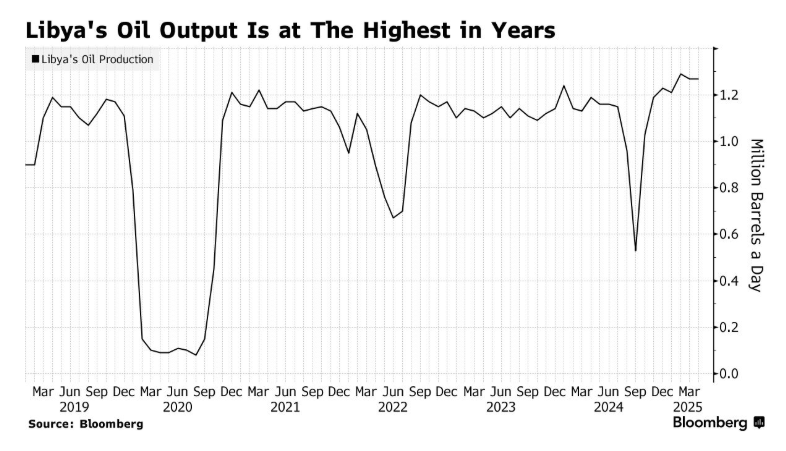
Group 1 - The eastern Libyan government may halt oil production and exports in response to militia attacks on the National Oil Corporation (NOC) headquarters, indicating a rising crisis in the country [1] - The eastern administration's statement highlights the potential for declaring force majeure on oil fields and ports due to repeated assaults on the NOC and its affiliates [1] - Libya's oil production has recently reached its highest level in years, but ongoing conflicts threaten this stability, particularly with the recent deadly clashes among militias loyal to Prime Minister Abdul Hamid Dbeibah [2] Group 2 - Libya's current crude oil production is slightly below 1.3 million barrels per day, with most of the output intended for export, making frequent shutdowns potentially impactful on the global oil market [2] - A militia incursion into the NOC headquarters in Tripoli occurred, where they demanded paid protection services, although the incident was managed without affecting operations [2] - Recent militia conflicts in Tripoli have underscored the dangerous situation in the city, with multiple armed groups vying for control over key institutions and revenue sources [2]