硅谷模式

Search documents
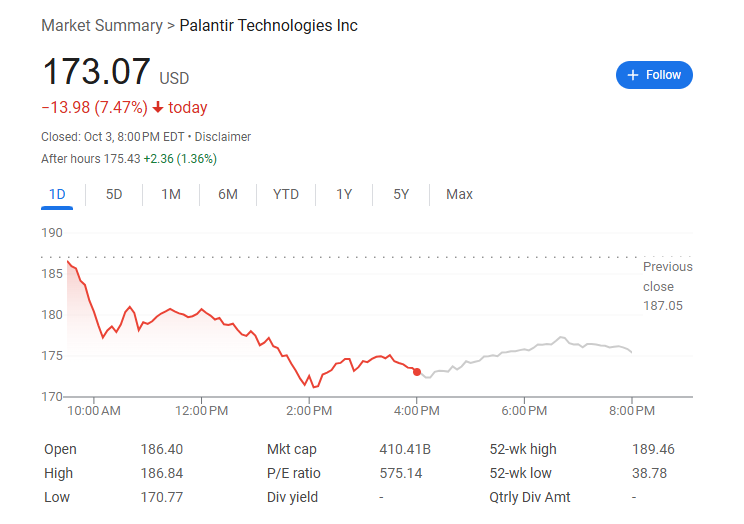
“最火AI股”Palantir股价重挫,报道称美国军队称“系统存在漏洞”,质疑“硅谷模式”
Hua Er Jie Jian Wen· 2025-10-04 06:15
Core Insights - The internal memo from the U.S. Army's CTO highlighted "fatal flaws" in the Next Generation Command and Control System (NGC2), leading to a significant drop in Palantir's stock price, which had previously seen over a 20-fold increase in the last three years [1][4][6] - The memo raised concerns about the system's security controls, stating it is vulnerable to internal threats, external attacks, and data leaks, categorizing it as "very high risk" [4][5][8] - Despite reassurances from Palantir, Anduril, and the military that the issues were outdated and resolved, investor anxiety persisted regarding the applicability of Silicon Valley's rapid innovation model in defense scenarios [2][6] Group 1 - The NGC2 system connects soldiers, sensors, vehicles, and commanders with real-time data but was found to have severe security control deficiencies [4][5] - The memo's alarming statement indicated a lack of control over user access and software safety, emphasizing the system's high-risk status [5][8] - Anduril's public portrayal of the NGC2 system's success contrasted sharply with the internal warnings, showcasing a successful live-fire exercise while downplaying security concerns [5][6] Group 2 - The incident has reignited skepticism about the "Silicon Valley speed" approach in the defense sector, questioning whether rapid innovation is suitable for critical military equipment [6] - The Army's CIO acknowledged the need for faster delivery of new tools to soldiers but recognized the serious security issues exposed by the NGC2 prototype [6] - The system's design allowed any authorized user to access all applications and data, regardless of their security clearance, raising significant security concerns [8]

美国的两面
Sou Hu Cai Jing· 2025-06-28 14:11
Group 1 - The core engine of the U.S. economy is driven by a combination of technological breakthroughs and cultural values, which together create a unique and sustainable growth model [2][6][27] - The technological explosion is likened to a three-stage rocket, with each stage representing different aspects of innovation and economic growth [7][23] - The first stage focuses on foundational scientific breakthroughs supported by national strategies, exemplified by initiatives like the Manhattan Project and the establishment of NASA [8][10][12] Group 2 - The second stage emphasizes the Silicon Valley model, where venture capital plays a crucial role in transforming scientific discoveries into marketable products, fostering a culture that tolerates failure [16][19] - The third stage highlights the digital revolution, which reshapes industries through advanced technologies like AI, robotics, and big data, enhancing efficiency and creating new business models [20][21][22] - The U.S. tech giants leverage their platform advantages to gather vast amounts of data, which fuels AI development and sets global standards for the digital economy [21][22] Group 3 - The cultural foundation of the U.S. economy is characterized by core values such as contract spirit, property rights protection, and rule of law, which create a stable environment for innovation [30][31][32] - The U.S. attracts global talent through its diverse and inclusive culture, which fosters creativity and breakthrough innovations [33][34][37] - The emphasis on individualism and entrepreneurial spirit drives the pursuit of disruptive innovations, contributing to the overall economic dynamism [39][41] Group 4 - The interplay between technology and humanistic values is essential for long-term economic prosperity, as it guides technological advancements towards beneficial outcomes [42][43][46] - The U.S. economy's resilience and ability to adapt during cyclical fluctuations are rooted in its cultural and humanistic foundations [40][41]

杭州可能要成为一线城市,但未必是“中国硅谷”
吴晓波频道· 2025-03-29 18:01
Core Viewpoint - The article discusses the potential of Hangzhou to become a new "Silicon Valley" in China, emphasizing its unique characteristics and the emergence of a "Silicon Alley" model that focuses on urban innovation and application-driven technology solutions [2][7][24]. Group 1: Economic Indicators - Hangzhou's land auction prices have reached nearly 90,000 yuan per square meter, making it the third highest in China, trailing only behind Shanghai and Beijing [2]. - The city has seen a net population inflow of 455,000 in 2024, the highest in the country, with nearly a quarter of this number moving to Hangzhou [2]. - Financial institutions in Hangzhou have a deposit balance nearing 8 trillion yuan, reflecting the city's economic vitality and potential for future growth [4]. Group 2: Innovation and Development - Hangzhou's digital economy core industry accounts for 42% of its GDP, with a technology contribution rate exceeding 68% [10]. - The city has established over 50,000 innovative enterprises in its Future Technology City, which spans more than 120 square kilometers, boasting a patent density 1.5 times that of Silicon Valley [7][10]. - The local government has streamlined its development zones, reducing the number from 1,059 to 134, focusing on enhancing the quality of remaining parks and towns [10][11]. Group 3: Urban Development Model - The "Silicon Alley" model emphasizes innovation emerging from urban centers rather than large tech parks, contrasting with the traditional Silicon Valley approach [15][19]. - Hangzhou's approach to innovation is characterized by addressing practical human needs and market demands, focusing on cost-saving, mass production, and rapid deployment of solutions [24][25]. - The city is leveraging its historical and cultural resources to foster a vibrant local culture while integrating technology and innovation into everyday life [29][31]. Group 4: Future Trends - The value of core urban areas in Hangzhou is expected to rise, with significant price differentiation in real estate, particularly in the main urban districts [28]. - There is a potential shift away from reliance on large corporations, with smaller, more agile companies driving innovation [28]. - The local government is transitioning from a management-focused role to a service-oriented approach, which is crucial for fostering a supportive environment for startups and small enterprises [28].