确定性效应

Search documents
你偏爱确定性吗
Xin Lang Cai Jing· 2026-01-02 22:39
Group 1 - The "one-price" model for ride-hailing services has gained popularity due to its price transparency and budget control, providing a sense of certainty for passengers [1][2] - Behavioral economics suggests that people prefer certain outcomes over uncertain ones, a phenomenon known as "certainty effect" or "loss aversion," which influences passenger choices in ride-hailing scenarios [1][2] - The "one-price" model effectively transfers price volatility risks from consumers to drivers, leading to a situation where passenger cost certainty results in driver income uncertainty [2][3] Group 2 - The recent halting of the "one-price" model in multiple regions highlights the need for sustainable certainty that does not rely solely on unilateral risk transfer [2] - A more effective solution may involve leveraging technology and regulations to create a collaborative mechanism among passengers, drivers, and platforms that shares uncertainties and ensures mutual benefits [3] - The overall health of the interconnected system is essential for lasting peace of mind, rather than relying on zero-sum games at individual levels [3]
长寿奖励为什么不受欢迎?
伍治坚证据主义· 2025-11-21 00:24
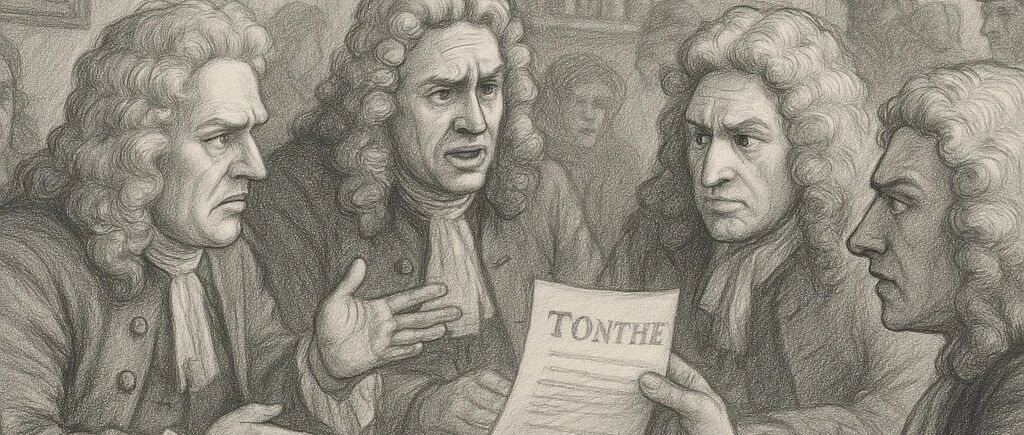
Core Insights - The article discusses the tontine, a financial product invented in 1693 London, which combines investment, gaming, and mortality betting to raise funds for the government during a time of war [2][3] - The tontine operates on the principle that participants contribute to a pool, receiving interest payments that increase as others die, creating a high-risk, high-reward scenario [3][4] Summary by Sections Tontine Mechanics - Each participant invests £100, with a nominal interest rate of 7%, leading to an initial annual payout of £7 per person [3] - As participants die, their share of the interest is redistributed among the survivors, increasing their payouts [4] Longevity and Returns - If half of the participants die, the remaining individuals could see their returns double to 14%, and if only a tenth remain, the theoretical return could reach 70% [4] - The average life expectancy for a 30-year-old in 1693 was about 30 more years, but only a third would survive to 60, highlighting the disparity between average and median life expectancy [5][6] Investment Preferences - Despite the potential for high returns, 90% of investors preferred fixed annuities with guaranteed returns of 14%, demonstrating a preference for stability over risk [6] - The failure of the tontine led to the establishment of a more modern public debt system in the UK, as the government recognized the public's preference for stable cash flows [6] Behavioral Economics - The article highlights the "certainty effect," where individuals prefer guaranteed outcomes over uncertain ones, even if the expected value is lower [7][8] - Three psychological factors influencing this preference include loss aversion, moral aversion to profiting from others' deaths, and the illusion of control over financial outcomes [8][9][10][11] Conclusion - The tontine serves as a historical example of how human psychology impacts investment decisions, emphasizing that the emotional aspects of investing often outweigh mathematical calculations [12]