
行为金融学

Search documents
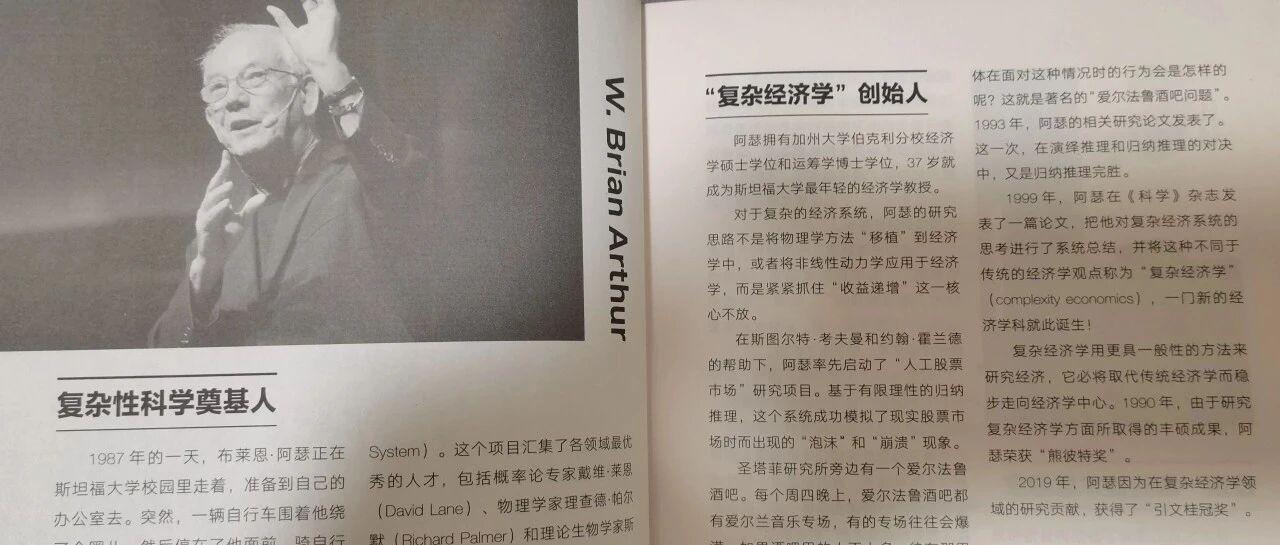
圣塔菲人工股票市场
猛兽派选股· 2026-03-28 05:03
Core Insights - The article discusses the Santa Fe Artificial Stock Market project led by Arthur Brian, which aims to simulate real stock market dynamics using simple rules and computer programs called agents. These agents adapt their strategies based on market data and trading outcomes, mimicking real trader behavior [1] Group 1: Market Dynamics - In slow exploration, the market reaches a stable rational expectations equilibrium, resembling an efficient market, where trading behavior becomes homogeneous [2] - In moderate-speed exploration, market behavior deviates from rational expectations, exhibiting characteristics of bubbles and crashes seen in real financial markets [2] - In medium to high-speed exploration, initially homogeneous traders spontaneously differentiate into various trading styles, leading to wealth concentration and income inequality, with a few consistently profiting while most incur losses [2] Group 2: Implications of Market Behavior - The findings suggest that the efficient market hypothesis is a subset of complex economic realities, as most economic systems operate in a state of medium to high-speed exploration, continuously evolving like biological systems [2] - The Santa Fe model replicates the phenomenon of wealth disparity in financial markets, indicating that this is a natural outcome of complex systems rather than a result of human malice or conspiracy [2] Group 3: Strategy Evolution - Strategies that are widely copied will automatically become ineffective, prompting the emergence of new strategies [4] - Long-term winners do not rely on a fixed strategy but possess the ability to evolve their strategies over time [4] - The long-term winners in the Santa Fe model are agents that maintain a stable ecological niche while adapting to details [4] Group 4: Ecological Niche Concept - An ecological niche is defined as a high-dimensional principle that remains constant, while specific strategies may change. This leads to a persistent supply shortage of niches, resulting in sustained excess returns [4] - For example, Warren Buffett's value investing approach maintains core principles like margin of safety and long-term perspective while adapting specific stock selection and valuation methods [4] - The trend-following ecological niche is characterized by the inherent nature of trends in the market, which are influenced by industry iterations, technological innovations, and economic cycles [5] Group 5: Psychological Costs and Market Phenomena - The Santa Fe Artificial Stock Market serves as a milestone model in behavioral finance and complex systems science, highlighting psychological costs such as frequent false breakouts, severe fluctuations during major trends, and significant drawdowns during reversals [6] - The model unifies two market views, demonstrating that efficient and complex markets are different parameter states of the same model rather than mutually exclusive theories [7] - It provides reproducible empirical evidence for phenomena like bubbles, crashes, and volatility clustering, which are difficult to explain by the efficient market hypothesis [7]

顶级交易三大技巧
猛兽派选股· 2026-03-22 04:06
Core Viewpoint - The article discusses the book "Top Trading Techniques," which integrates behavioral finance and the Wyckoff method, focusing on three main skills: system development, pattern recognition, and psychological training [1]. Group 1: Trading Techniques - The three main techniques outlined in the book are system development, pattern recognition, and psychological training, which are essential for traders [1]. - The author categorizes trading systems to help readers identify their trading level, emphasizing the importance of understanding one's position in trading [3]. Group 2: Behavioral Lifecycle Model - The book provides a behavioral lifecycle model that serves as a tool for analyzing market trends, highlighting the phases of stock price movements and participant behavior [5]. - It describes how stock prices gradually rise with fewer followers, leading to a surge in interest before a potential decline, encouraging traders to assess their entry and exit points [7]. Group 3: Wyckoff Method - The Wyckoff method is discussed in detail, focusing on its three components: volume-price principles, testing points, and charting, which are crucial for effective trading [16]. - The article emphasizes that understanding the essence of Wyckoff's method is more important than getting lost in specific chart details [16]. Group 4: Psychological Aspects of Trading - The article outlines ten psychological tasks for traders, illustrating the mental states associated with each task, from being calm and detached to being alert and decisive during trading actions [17]. - It critiques Western psychological approaches, suggesting that they may add psychological burdens rather than alleviate them, advocating for a more integrated view of mind and matter [17]. Group 5: Market Dynamics - The article notes that only 10% of stocks in the A-share market can achieve over 80% gains, with a small percentage driven by institutions, quant funds, and retail investors, indicating the challenges of consistent profitability in trading [20]. - It highlights the importance of understanding one's trading frequency and profit expectations, suggesting that high-frequency trading can thrive in noise but requires a clear understanding of survival levels [20].

在金融潮汐中把握财富节奏——读《周期与财富》
Shang Hai Zheng Quan Bao· 2026-02-23 18:37
Core Insights - The book "Cycles and Wealth" by Peter Oppenheimer explores the cyclical nature of financial markets and their impact on wealth creation and destruction, emphasizing the historical patterns that repeat over time [4][5][6]. Financial Market Cycles - Financial market cycles are influenced by economic trends, historical, cultural, and political factors, with elements like social equity, international cooperation, and technological innovation playing significant roles [4][5]. - The cyclical pattern in the stock market is characterized by four stages: despair, hope, growth, and optimism, each with distinct characteristics and average durations [5][6]. Stages of Stock Market Cycles - In the despair stage, stock prices decline significantly, with an average duration of 14 months and a year-on-year price-earnings ratio drop exceeding 30% [5]. - The hope stage sees stock prices rebound despite stagnant corporate profits, lasting about 10 months with an average annual return exceeding 60% [5]. - The growth stage, lasting approximately 45 months, features corporate profit growth outpacing price-earnings ratio increases, but with lower investment returns compared to other stages [6]. - The optimism stage lasts around 21 months, characterized by rising investor confidence and valuations exceeding profit growth, yielding an average annual return of about 30% [6]. Indicators of Market Transition - Key indicators for transitioning from bear to bull markets include valuation levels, economic growth, and interest rate trends, with historical data suggesting that low market valuations and specific economic indicators can signal market recovery [6][7]. Historical Super Cycles - The book outlines three major bull market super cycles post-World War II, each marked by unique economic conditions but sharing common traits such as low initial valuations and strong economic growth [7][8]. - The first cycle (1949-1968) saw a 1100% real return in the S&P 500, driven by post-war economic policies and technological advancements [7]. - The second cycle (1982-2000) was characterized by low volatility and high returns, with the S&P 500 generating over 1300% real returns [8]. - The third cycle (2009-2020) was marked by weak economic recovery and reliance on aggressive monetary policies, leading to significant disparities in wealth [8][9]. Post-Modern Cycle Characteristics - The post-modern cycle exhibits a blend of classical and modern cycle traits, with rising inflation and government spending alongside low economic growth and interest rates [10][11]. - This cycle presents new opportunities in sectors like carbon reduction and artificial intelligence, while also posing challenges due to rising labor costs and regulatory pressures [11][12]. Technological Impact - Technological advancements remain a crucial driver of economic and market growth, with historical patterns indicating that innovations often lead to speculative bubbles followed by corrections [12]. - The technology sector has consistently held a leading position in market capitalization, and future trends suggest a shift towards increased investment in defense, infrastructure, and green initiatives [12][13]. Nostalgic Economic Forces - There is a growing consumer interest in simpler, pre-internet experiences, which may benefit businesses that cater to nostalgic preferences, such as second-hand clothing platforms and vinyl record sales [13].

征服市场,成为赢家!新年开启,强烈推荐量化投资传奇的这本雄心之作
Sou Hu Cai Jing· 2026-02-17 14:16
Group 1 - The core message emphasizes the importance of building models to understand market dynamics rather than relying on intuition, as highlighted by James Simons, the founder of quantitative investing [2][5][6] - The article discusses the role of behavioral finance in quantitative investing, suggesting that human nature and historical patterns can be leveraged for investment strategies [5][19] - It mentions the significance of long-term thinking and the ability to create automated systems for wealth generation, as demonstrated by Simons' investment philosophy [6][7] Group 2 - The article introduces a reading club led by Zhu Ang, focusing on the book "Conquering the Market," which aims to distill investment wisdom from Simons' experiences [4][7] - It outlines the structure of the New Quantum Club, which offers a comprehensive learning system that includes reading sessions, workshops, and community engagement to enhance investment decision-making [9][10][14] - The club aims to provide members with tools to overcome emotional decision-making and develop a systematic approach to investing, thereby improving their financial outcomes [7][19]

信息爆炸时代下,比获取信息更重要的能力是什么?| 思考汇
高毅资产管理· 2026-02-06 07:03
Core Viewpoint - The article emphasizes that in an era of information overload, investors should focus on long-term value and avoid being swayed by short-term news, as excessive information can lead to poor investment decisions [7][12][13]. Group 1: Psychological Research Findings - A psychological study by Paul Andreassen revealed that investors receiving more news updates had significantly lower returns compared to those who only observed stock price movements [8]. - The study indicated that information overload leads to emotional trading, where investors react impulsively to news, resulting in increased costs and poor decision-making [9]. - Investors who were less influenced by news updates maintained a more rational approach, leading to better long-term returns due to reduced trading frequency and emotional interference [10]. Group 2: Implications for Investors - The research suggests that investors should recognize that much of the daily information in the market is noise, and being swayed by short-term news can lead to emotional trading [13]. - True investment wisdom lies in the ability to filter and ignore irrelevant information, focusing instead on fundamental analysis and long-term value [13]. - In the current information-saturated environment, the competitive advantage for investors is not in acquiring information quickly, but in maintaining patience, rationality, and a long-term perspective [13]. Group 3: Information Providers' Role - Information providers often operate on a business model that prioritizes capturing user attention, regardless of whether the information leads to sound investment decisions [14]. - The content provided is designed to attract and retain attention, which may not necessarily contribute to better investment outcomes [14]. Group 4: Approach to Information - It is crucial for investors to understand that knowing what not to do is often more important than knowing what to do, with the majority of the time being best spent doing nothing [16]. - The article highlights the importance of resisting the temptation to follow popular trends and instead focusing on sound investment principles [19][20].

在投资中,越努力就会越幸运吗?
雪球· 2026-01-25 13:46
Core Viewpoint - The article discusses the paradox of increased effort in investing not necessarily leading to better returns, highlighting the concept of "inertia" in investment behavior [6][9]. Group 1: Investment Behavior - Many investors, despite being diligent, have seen lower returns compared to simply holding investments long-term due to poor trading and timing decisions [7]. - A significant number of investors tend to leave their funds in cash within personal retirement accounts (IRAs), often for extended periods, which is detrimental to long-term growth [11][12]. - Research indicates that many investors are unaware of their cash-heavy allocations, leading to unintentional inaction regarding their investments [12]. Group 2: Default Options and Inertia - The concept of "default options" is crucial; if retirement funds are automatically directed into better-performing investments like target-date funds, it can significantly enhance retirement wealth [13]. - Inertia can be both a hindrance and a benefit in investing, depending on how investment plans are structured [16]. - The power of default options is illustrated by the higher participation rates in 401(k) plans that use automatic enrollment compared to those that require voluntary participation [14]. Group 3: Market Predictions and Adjustments - Investors often base their market predictions on recent performance, which can lead to incorrect expectations about future market movements [17]. - It is advisable for investors to prepare for potential market corrections by rebalancing their portfolios, especially after significant market gains [18]. Group 4: Financial Education and Decision-Making - The article emphasizes the importance of financial education for children, suggesting that early discussions about money can shape their future investment behaviors [27]. - Parents are encouraged to simplify financial concepts and make learning enjoyable to foster healthy financial habits in their children [26].

在投资中,越努力就会越幸运吗?
Morningstar晨星· 2026-01-22 01:06
Core Viewpoint - The article discusses the paradox of increased effort in investing leading to lower returns, emphasizing the concept of "inertia" in behavioral finance and the importance of default investment options to improve investor outcomes [1][3][4]. Group 1: Investment Behavior - Many investors believe they are actively managing their portfolios, but in reality, a significant amount of funds remain idle in cash, particularly in individual retirement accounts (IRAs) [5][6]. - Research indicates that younger investors often leave their funds in cash for extended periods, sometimes over seven years, which is detrimental to their long-term retirement savings [5][6]. - The lack of awareness about their investment allocations contributes to this issue, as many investors mistakenly think their funds are invested in the market [6][7]. Group 2: The Role of Inertia - Inertia, or the tendency to do nothing, is identified as a powerful force in behavioral finance, influencing investment decisions significantly [7][8]. - Default options in investment plans, such as target-date funds, can lead to better long-term outcomes for investors by automatically directing funds away from cash [8][10]. - The article highlights that the design of investment plans can either exacerbate or mitigate the negative effects of inertia, depending on whether they include beneficial default options [10][11]. Group 3: Market Predictions and Adjustments - Investors often base their market predictions on recent performance, which can lead to incorrect expectations about future market movements [11][12]. - The article suggests that investors should focus on long-term strategies and be prepared for market corrections, as overexposure to equities can occur during prolonged market uptrends [11][12]. - Rebalancing portfolios to maintain desired asset allocations is recommended as a proactive measure to manage risk [12]. Group 4: Financial Education and Personalization - The future of behavioral finance is expected to focus on individual well-being and personalized financial advice, taking into account unique investor goals and preferences [13][14]. - Early financial education for children is emphasized as crucial for developing healthy financial habits and decision-making skills [18][19]. - The article advocates for simplifying financial concepts and making learning enjoyable to foster positive attitudes towards money management among young individuals [18].

投资懒一点,反而更容易赚钱?
雪球· 2026-01-21 13:00
Core Viewpoint - The article discusses the paradox of increased effort in investing leading to lower returns, emphasizing the concept of "inertia" in investment behavior and the importance of default options in retirement accounts [5][9][12]. Group 1: Investment Behavior - Many investors believe they are actively managing their portfolios, but a significant amount of funds remain idle in cash, particularly among younger investors and those with smaller accounts [12][13]. - The research indicates that if funds in retirement accounts are automatically invested in target-date funds instead of remaining in cash, it could significantly increase retirement wealth by six figures over time [13][16]. Group 2: Default Options and Inertia - Default options have a powerful influence on investor behavior, as seen in 401(k) plans where automatic enrollment leads to higher participation rates compared to voluntary enrollment [14]. - The inertia of doing nothing can be both a hindrance and a benefit, depending on the design of investment plans and product choices [17]. Group 3: Market Predictions and Adjustments - Investors often base their market predictions on recent performance, which can lead to incorrect expectations; thus, a long-term perspective is recommended [18]. - The article suggests that investors should be prepared for market corrections and consider rebalancing their portfolios to maintain their desired asset allocation [19]. Group 4: Financial Well-being and Personalization - The future of behavioral finance may focus on individual well-being, emphasizing the need for personalized financial advice that considers each person's unique utility curve [20][21]. - The shift in behavioral finance research is moving from identifying problems to providing actionable solutions that can improve the financial lives of many [21]. Group 5: Decision-Making Styles - The distinction between "satisficing" and "maximizing" decision-making styles is highlighted, with satisficers often experiencing greater happiness despite potentially lower investment performance [22][24]. - Individuals may exhibit different decision-making styles based on their expertise in a given area, suggesting that knowledge can influence whether one pursues optimal choices or satisfactory ones [25]. Group 6: Financial Education for Children - Early financial conversations and experiences can significantly impact a child's future investment behavior, with a focus on making learning enjoyable and positive [27][28]. - Parents are encouraged to help children feel included in the financial world, fostering good financial habits and decision-making skills for their future [28].

研究 | 隋鹏飞:前景理论的“实战”检验:解码共同基金市场下的投资者行为
Sou Hu Cai Jing· 2026-01-19 11:03
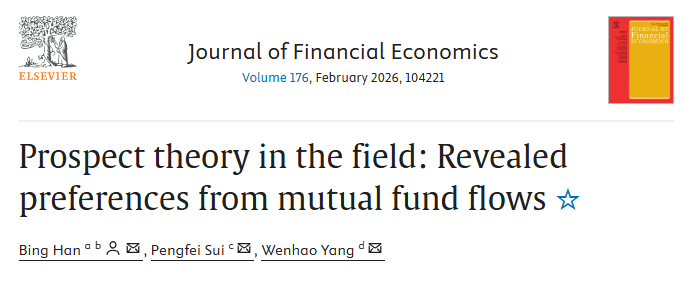
Core Insights - The research validates the applicability of Prospect Theory in the mutual fund market, demonstrating that investors exhibit clear preferences for funds with higher TK values, which reflect favorable historical return distributions [9][10] - Despite the preference for high TK value funds, these funds tend to underperform in subsequent periods, indicating a degree of irrationality in investor behavior, often referred to as "Dumb Money" [9][10] Research Background - Prospect Theory, developed by Daniel Kahneman and Amos Tversky, describes decision-making under uncertainty and has been widely used to explain various financial anomalies, yet its real-world applicability remains insufficiently validated [6][8] - The study utilizes data from the CRSP U.S. mutual fund database, focusing on actively managed equity funds from 1981 to 2022, to explore whether Prospect Theory can explain actual investor decision-making [6][8] Research Methodology - A new metric called "TK value" was constructed to measure the attractiveness of mutual funds based on historical return distributions, incorporating key behavioral characteristics such as loss aversion and probability weighting [7][8] - The study employed panel regression models, portfolio sorting methods, and discrete choice models to analyze the relationship between TK values and future fund flows while controlling for various fund characteristics [7][8] Research Findings - Funds with higher TK values attracted significantly greater inflows in future periods, even after controlling for past performance, alpha values, fund size, and fees [8] - The study estimated a loss aversion coefficient of 1.824 and probability weighting parameters of 0.110 and 0.228 for gains and losses, respectively, indicating a stronger tendency for probability weighting compared to experimental results [8] Research Implications - The findings enhance the external validity of Prospect Theory by providing systematic empirical validation in real market data, offering insights into investor behavior and decision-making processes [10] - The research highlights the psychological biases influencing fund flows, which can inform mutual fund companies' product design, marketing strategies, and investor education [10]
创金合信基金魏凤春:叙事交易或接近尾声
Xin Lang Cai Jing· 2026-01-19 07:32
Group 1 - The core viewpoint of the article discusses the potential for asset revaluation in China, emphasizing that the upward market momentum is driven by narrative trading rather than performance [1][19] - The recent adjustment in the market is attributed to the regulatory measures aimed at curbing excessive speculation and market manipulation, indicating a shift towards a more fundamentals-driven market [1][19] - The article highlights the significant adjustments in the military and real estate sectors, which were previously characterized by narrative trading, reflecting a correction in investor sentiment [2][20] Group 2 - Narrative trading is defined as a market behavior that relies on investor psychology and macroeconomic uncertainty, where narratives replace fundamental data as the primary anchor for asset pricing [5][23] - The characteristics of narrative trading include cognitive anchoring prioritizing narratives over data validation, a disconnection between valuation and fundamentals, and a market cycle driven by capital speculation [6][24] - The conditions for narrative trading to thrive include a high proportion of retail investors, active speculation, and an environment of rising global uncertainty [7][25] Group 3 - The article outlines the behavior of global asset narrative trading from 2025 to the present, noting that macroeconomic uncertainty has amplified cognitive biases, leading to narratives replacing fundamentals in investment decisions [9][26] - Specific asset classes such as precious metals and AI technology stocks have experienced significant valuation changes driven by prevailing narratives, while traditional consumer stocks face valuation pressure due to negative narratives [10][27][31] - The narrative trading phenomenon is linked to a broader context of geopolitical tensions and economic restructuring, which influences investor behavior and market dynamics [15][32] Group 4 - The article predicts that narrative trading will gradually decline by 2026, with a return to fundamentals-based pricing expected as macroeconomic uncertainties stabilize and fundamental data regain their explanatory power [17][33] - It is anticipated that the self-correction of valuation bubbles will occur as key narratives face verification challenges, leading to a shift in capital allocation towards assets with solid performance [18][34] - The article suggests that cognitive biases will begin to correct, allowing undervalued assets to regain recognition, further constraining the space for narrative-driven trading [18][34]
