
碳纤维技术突破

Search documents
碳纤维技术突破与涨价
2026-03-18 02:31
Summary of Carbon Fiber Industry Conference Call Industry Overview - The conference call focused on the carbon fiber industry, particularly highlighting the advancements made by domestic companies in China, such as Zhongfu Shenying and Jilin Chemical Fiber, in producing high-performance carbon fibers like T1,200 grade, which has broken the long-standing monopoly of Japan's Toray [1][2]. Key Points and Arguments Breakthroughs in Technology - Zhongfu Shenying announced the mass production of T1,200 grade carbon fiber, marking a significant milestone in China's ability to compete with international leaders [2]. - The T1,200 grade carbon fiber has a strength exceeding 8,000 MPa, indicating that domestic products can now match the performance of top-tier international products [2]. Market Demand and Projections - By 2025, China's carbon fiber consumption is projected to reach 75,000 tons, with wind energy demand doubling to 35,000 tons and aerospace applications increasing to 7,500 tons [1]. - The demand for T800 and above grade carbon fibers is expected to grow at an annual rate of 20%-30%, driven by applications in satellite technology and humanoid robots [1]. Competitive Landscape - The competition in the carbon fiber industry is shifting from scale to structure, with a focus on quality and application [1]. - Jilin Chemical Fiber has achieved the lowest production costs globally, with a total cost of approximately 72,000 yuan per ton, allowing for competitive pricing in the wind energy sector [1][15]. Supply Chain and Production Capacity - Major players in the domestic market include Jilin Chemical Fiber, Zhongfu Shenying, and Jiangsu Hengshen, with a combined production capacity of over 150,000 tons by 2025 [6][7]. - The production methods vary, with Jilin Chemical Fiber primarily using wet spinning and Zhongfu Shenying employing dry-jet wet spinning, each having its advantages in cost and product quality [6][7]. Price Trends and Market Dynamics - The carbon fiber industry has experienced multiple price increases since December 2025, driven by rising raw material costs and changes in supply-demand dynamics [8][9]. - The price of carbon fiber is expected to continue rising due to increased demand from the wind energy sector and geopolitical factors affecting raw material prices [11][12]. Future Outlook - The carbon fiber market is anticipated to grow significantly, with projections of reaching 85,000 tons by 2026, supported by a stable demand growth rate of 10%-15% annually [14]. - The industry is moving towards high-quality development, with a focus on reducing production costs and improving product quality to maintain competitiveness against international players [10][18]. Additional Important Insights - The cancellation of export tax rebates and stricter export audits starting in April 2026 will likely redirect production capacity towards the domestic market, stabilizing prices [12]. - Emerging applications in robotics, low-altitude economy, and new energy vehicles are expected to drive future demand for carbon fiber, with significant potential in the automotive sector if cost and performance criteria are met [13][18]. - China's carbon fiber industry is positioned to gain a larger share of the global market, with expectations of increased export volumes and a shift towards becoming a market leader [17][19].


中国造出“世界最强”碳纤维!直径不到头发丝1/10!
新华网财经· 2026-03-11 03:58
Core Viewpoint - The article highlights the global debut of China's T1200-grade ultra-high-strength carbon fiber, marking a significant advancement in the production capabilities of this material and establishing China as the first country to achieve mass production at a scale of hundreds of tons [1]. Group 1 - The T1200-grade carbon fiber is developed by China National Building Material Group and is not merely a laboratory sample but an industrial product capable of mass production [1]. - This carbon fiber has a diameter less than one-tenth of a human hair, yet its tensile strength is ten times that of ordinary steel, with a density only one-fourth that of steel, showcasing its lightweight and toughness [1]. - The material is expected to have wide applications in strategic emerging industries such as aerospace, low-altitude economy, and humanoid robotics due to its superior properties [1].


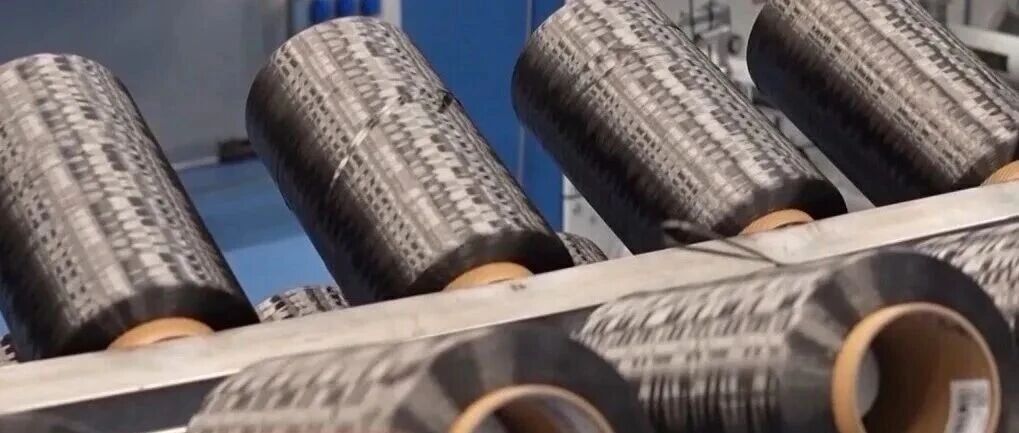
从“高端装备”到“大众消费” 碳纤维给我们的生活带来了哪些改变?
Yang Shi Wang· 2025-06-21 21:38
Core Insights - Carbon fiber, known as "black gold," is a lightweight yet strong material with applications ranging from aerospace to everyday consumer products [1][3][5] Group 1: Market Trends - The price of carbon fiber bicycles has significantly decreased, with models now available for around 1,000 yuan, making them accessible to a broader consumer base [2][4] - The carbon fiber market in China is projected to reach approximately 17.14 billion yuan in 2024, with an 8.16% year-on-year growth in production and a 119.9% increase in exports [4] Group 2: Technological Advancements - Domestic companies have achieved breakthroughs in carbon fiber production, reducing energy consumption during the carbonization process by about 25% [3][4] - The cost of T300-grade carbon fiber has dropped from around 200,000 yuan per ton to approximately 60,000 yuan, a reduction of 70% [4] Group 3: Applications and Opportunities - Carbon fiber is now utilized in over 20 industries, including construction, where it can enhance the seismic resistance of buildings [6][7] - The demand for carbon fiber in electric vertical takeoff and landing aircraft is expected to reach 11,700 tons by 2030, creating a market exceeding 10 billion yuan [8]