
禁毒行动

Search documents
旅游胜地变“战区”!墨西哥大毒枭被击毙致多地动荡,美加墨世界杯或受冲击?
Di Yi Cai Jing· 2026-02-24 09:04
Core Viewpoint - The killing of the notorious drug lord Oseguera by Mexican armed forces marks a significant victory in Mexico's fight against drug trafficking, but it has also led to increased violence and public safety concerns as rival factions vie for control [1] Group 1: Drug Trafficking and Violence - The "Jalisco New Generation" drug cartel, one of Mexico's largest criminal organizations, is expected to retaliate with violence following the death of its leader [1] - The cartel's members have already engaged in arson and attacks as a form of revenge, indicating a potential escalation in violence [1] - The high level of armament and infiltration of law enforcement agencies by drug cartels complicates the situation, necessitating military intervention [1] Group 2: International Implications - The violence resulting from the cartel's internal power struggles poses a threat to public safety, particularly with the upcoming North America World Cup in four months [1] - Guadalajara, one of the host cities for the World Cup, is currently overshadowed by the violence stemming from the recent military action against the drug lord [1] - If the Mexican government fails to control the situation promptly, it could have direct repercussions on the international event [1]
旅游胜地变“战区”!墨西哥大毒枭被击毙致多地动荡 美加墨世界杯悬了?
Di Yi Cai Jing· 2026-02-24 08:44
Core Viewpoint - The death of drug lord Oseguera, head of the Jalisco New Generation Cartel, is seen as a significant victory in Mexico's fight against drug trafficking, but it has also led to violent retaliations and public safety concerns [1][2]. Group 1: Drug Trafficking and Violence - The Jalisco New Generation Cartel is one of the largest criminal organizations in Mexico, and Oseguera's death has triggered violent responses, including arson and attacks, leading to a public safety crisis [1][2]. - Following Oseguera's death, 27 security personnel were reported killed due to retaliatory attacks by cartel members [2]. Group 2: Government Response and International Relations - The Mexican government has intensified its anti-drug operations, utilizing military forces and increasing cooperation with the United States [1][4]. - The U.S. has expressed concern over the violence following Oseguera's death, while also providing intelligence support for operations against drug trafficking [4][5]. Group 3: Impact on Tourism and Public Safety - The violence in Jalisco has led to significant disruptions, including the cancellation of flights and safety warnings issued by the U.S. and Canada, affecting tourism in popular destinations like Puerto Vallarta [2][5]. - The situation has raised concerns about the upcoming World Cup, as ongoing violence could impact the event in Guadalajara, one of the host cities [5].
大毒枭身亡后暴力集团反扑,墨西哥安全内阁:已清除大部分路障
Xin Lang Cai Jing· 2026-02-23 10:24
Core Viewpoint - The death of notorious Mexican drug lord Nemesio Oseguera Cervantes, known as "El Mencho," has triggered a wave of violence across Mexico, leading to significant roadblocks and unrest in multiple states [1][4]. Group 1: Violence and Response - Following the military operation that resulted in Oseguera's death, organized crime groups retaliated by setting fire to buses and blocking roads, leading to clashes with authorities [1]. - The Mexican government reported a total of 252 roadblocks across 20 states, with approximately 90% of these being cleared by the evening of February 22, leaving only 23 roadblocks still in place [1]. - The state of Jalisco experienced the highest number of blockades, totaling 65, primarily affecting federal and state highways as well as key city roads [1]. Group 2: International Relations and Security - The operation to capture Oseguera was reportedly aided by U.S. authorities, who provided "supplemental information" to the Mexican military, although specific details were not disclosed [1][4]. - This military action is viewed as a significant victory for Mexico, serving as a critical bargaining chip in demonstrating anti-drug efforts to the Trump administration, which had previously threatened unilateral military action if Mexico failed to dismantle drug cartels [2]. - Despite rejecting U.S. military operations on Mexican soil due to sovereignty concerns, President López Obrador has opted to strengthen cooperation with the U.S. in combating organized crime under pressure [4]. Group 3: Public Safety and Travel Advisories - In response to the escalating violence, the U.S. State Department has urgently advised American citizens in Mexico to seek shelter, while Canada has designated several Mexican states as areas to avoid for non-essential travel [4]. - The Chinese embassy in Mexico has also issued a warning to its citizens to remain vigilant regarding local security conditions [4].

斯里兰卡总统强调2026年将坚定确立法治至上,强力推进禁毒与国家重建
Shang Wu Bu Wang Zhan· 2026-02-14 15:59
Group 1: Rule of Law and Anti-Drug Initiatives - The President of Sri Lanka emphasizes the commitment to establishing a nation governed by the rule of law, with 2026 identified as a pivotal year for realizing the principle of equality before the law [1][3] - The government has arrested over 91,000 individuals involved in drug-related activities and has investigated over 100 illegal assets, with 1,818 individuals detained for long-term investigations [1] - The President highlights the intertwining of drug issues with armed criminal gangs and political infiltration, urging collective responsibility from all societal sectors to combat drug threats [3] Group 2: Economic Resilience and Policy - The economic crisis in Sri Lanka is attributed to long-term policy failures and corruption, rather than solely to war or natural disasters [2] - The government has allocated 500 billion LKR from a treasury account of 1.2 trillion LKR for reconstruction efforts following the Dithwa cyclone, which caused an estimated economic loss of 4% of GDP, without incurring new foreign debt [2] - The President stresses the importance of building a resilient economy capable of withstanding external shocks, while maintaining overall economic stability [2] Group 3: Diplomatic and Public Service Reforms - Sri Lanka will pursue an independent foreign policy, avoiding alignment with any particular bloc, to safeguard national stability and interests amid global tensions [2] - The government is implementing digital reforms and the largest salary increase in history, totaling approximately 330 billion LKR, to enhance the attractiveness and efficiency of public services [2] - The President underscores the significance of the public service system, including the military and police, as essential pillars for the nation's survival [2]
土耳其开展史上最大规模禁毒行动,逾600人被拘留
Xin Lang Cai Jing· 2026-01-20 08:37
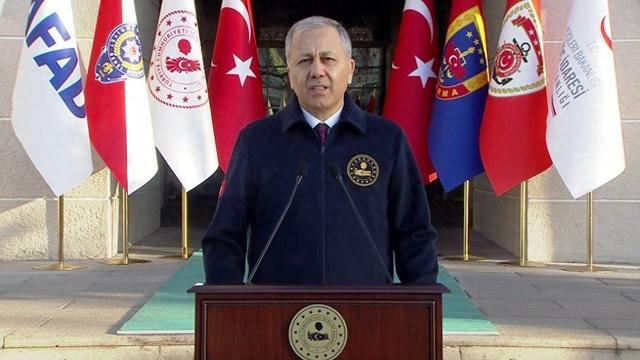
Group 1 - The Turkish Interior Minister Ali Yerlikaya announced the conclusion of the largest drug enforcement operation in Turkey's history, resulting in the detention of 641 suspects [2] - The operation was centered in the important port city of Izmir and extended to 14 provinces across the country, involving 4,500 police officers and 956 special operation teams [2] - A total of 608 identified locations were simultaneously raided during the operation, supported by aerial and maritime tactical forces [2] Group 2 - Yerlikaya emphasized that combating drug crime is not only an "internal security issue" for Turkey but also a "global security struggle" [2] - The Turkish government intends to maintain a high-pressure approach to decisively cut off drug trafficking networks [2] - Judicial proceedings are currently underway for the detained individuals [2]
美国施压墨西哥 要求允许美军介入打击贩毒集团
Xin Lang Cai Jing· 2026-01-15 13:02
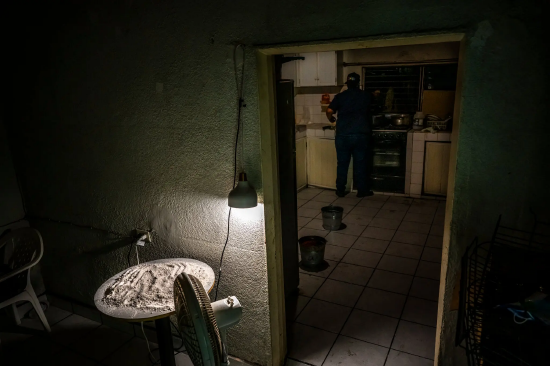
Core Viewpoint - The U.S. is increasing pressure on the Mexican government to allow American military involvement in targeting fentanyl production facilities within Mexico, amid ongoing discussions at the highest levels of both governments [1][3][18]. Group 1: U.S. Military Involvement - U.S. officials are advocating for the deployment of American military forces, including special operations troops or CIA agents, to assist Mexican soldiers in raiding suspected fentanyl production sites [3][18]. - The proposal for U.S. military involvement was initially raised last year but was temporarily shelved until recent events reignited discussions [3][18]. - Mexican President Claudia Sheinbaum has consistently opposed the idea of U.S. troops conducting cross-border operations, emphasizing the need for cooperation without military intervention [4][19]. Group 2: Intelligence Sharing and Alternatives - Mexican officials have proposed alternative solutions, focusing on enhancing intelligence sharing rather than joint military operations, suggesting that U.S. personnel could play a more significant role in a joint command center [21][30]. - U.S. advisors are currently stationed at Mexican military command centers to assist in anti-drug operations through intelligence sharing [21][30]. Group 3: Challenges in Identifying Fentanyl Labs - U.S. officials acknowledge the difficulty in locating and dismantling fentanyl production facilities, which often use common household items and are less detectable than other drug manufacturing sites [22][27]. - The CIA has been conducting secret drone reconnaissance missions over Mexico to identify potential fentanyl labs, with the scale of these operations increasing under the Trump administration [22][27]. Group 4: Mexican Government's Response - The Mexican government has intensified its crackdown on drug cartels, particularly the Sinaloa cartel, with recent reports indicating a significant increase in the efficiency of arrests and lab dismantling compared to previous administrations [32][33]. - Mexican Security Minister Omar García Harfuch has stated that Mexico has well-trained military forces capable of handling the situation without U.S. military intervention, emphasizing the need for intelligence support instead [30][32].
美媒:万斯承认石油是美国对委内瑞拉展开军事行动的理由之一
Huan Qiu Wang· 2026-01-05 10:36
Core Viewpoint - The U.S. military action against Venezuela is framed as a "drug operation," but analysts suggest the underlying motive is Venezuela's oil reserves, which U.S. officials have acknowledged as a reason for the military intervention [1][3][4]. Group 1: Military Action and Justifications - The U.S. military conducted a strike on Venezuela, capturing President Maduro and his wife, with the operation being labeled as a "drug operation" [1]. - U.S. Vice President Pence admitted that oil is one of the reasons for the military action against Venezuela, highlighting the country's past confiscation of U.S. oil assets [3]. - Pence's statement aimed to clarify criticisms regarding the military action, emphasizing that cocaine trafficking is a significant issue linked to Venezuela [3]. Group 2: Public and Political Reactions - The military action has faced strong criticism within U.S. public opinion, with many questioning the motives behind the intervention [3]. - President Trump emphasized the potential for the U.S. to gain "huge wealth" from Venezuela's oil reserves during a press conference, mentioning "oil" 26 times compared to fewer mentions of "drugs" [4]. - Social media reactions included skepticism about the U.S. government's motives, with users suggesting that the focus on oil rather than drug trafficking reveals imperialistic intentions [5].

抓获127人!警方摧毁横跨13省特大毒品犯罪网络
Xin Lang Cai Jing· 2025-12-20 00:32
Core Viewpoint - The article reports on a significant drug trafficking network dismantled by the Shenyang Public Security Bureau, which spanned 13 provinces in China, resulting in the arrest of 127 individuals and the seizure of various drugs and cash [1][5][9]. Group 1: Drug Trafficking Network - The operation revealed a large-scale criminal network involved in the manufacturing, transportation, and sale of drugs and drug substitutes, characterized by its extensive geographical reach and rapid expansion [3][9]. - The network utilized sophisticated communication methods and had a clear hierarchical structure, with multiple sub-groups involved in the production and distribution of drugs [3][5]. Group 2: Law Enforcement Actions - A coordinated crackdown involved 150 police officers from various departments, leading to the arrest of 127 suspects, with 105 facing criminal charges related to drug offenses [5][9]. - The operation resulted in the destruction of one drug manufacturing facility and nine processing sites for drug substitutes [5][9]. Group 3: New Drug Substitutes - During the operation, law enforcement discovered a new type of drug substitute, which has similar hallucinogenic effects to ketamine, and has been added to the national list of controlled substances [7]. Group 4: Ongoing Efforts - The Shenyang Public Security Bureau has adopted a "zero tolerance" approach towards drug-related crimes and initiated a special operation aimed at enhancing public safety and combating drug trafficking [9].

美军发动袭击
中国基金报· 2025-12-18 07:08
Core Viewpoint - The article discusses recent military actions by the U.S. against alleged drug trafficking vessels in the Eastern Pacific, highlighting the implications of these operations on regional security and international relations, particularly with Venezuela and Ecuador [1][3]. Group 1: U.S. Military Actions - On December 17, the U.S. Southern Command reported a strike on a vessel identified as associated with a terrorist organization, resulting in the death of four individuals [1]. - The U.S. military has not provided evidence regarding the drug trafficking activities of the targeted vessel [2]. - The Southern Command indicated that the vessel was operating along a known drug trafficking route in the Eastern Pacific [3]. Group 2: Regional Reactions and Implications - The U.S. has deployed multiple naval vessels in the Caribbean near Venezuela under the pretext of anti-drug operations, which has faced strong opposition from Venezuela and several Latin American countries [3]. - Venezuela has accused the U.S. of attempting to instigate regime change through military threats and expanding its military presence in Latin America [3]. Group 3: Collaboration with Ecuador - The U.S. and Ecuador are set to conduct joint operations in Manta, Ecuador, aimed at enhancing Ecuador's capabilities to combat drug trafficking [4]. - Ecuador's President confirmed that the operation would help identify and dismantle drug trafficking routes [5]. - The U.S. previously stationed troops in Manta from 1999 to 2009 for similar anti-drug efforts, and a recent referendum in Ecuador opposed the establishment of foreign military bases [5].

美委关系紧张升级之际,美两架F-18战机飞入委内瑞拉领空
Huan Qiu Shi Bao· 2025-12-10 22:58
Core Viewpoint - The recent deployment of two U.S. F-18 fighter jets into Venezuelan airspace marks one of the most provocative actions by the U.S. government against Venezuela amid escalating tensions between the two nations [1][2]. Group 1: Military Actions - Two U.S. Navy F-18 fighter jets entered Venezuelan airspace and remained for at least 40 minutes, flying at an altitude of approximately 25,000 feet (7,620 meters) [1]. - The jets were reported to be within 100 miles (approximately 161 kilometers) of Venezuela's second-largest city, Maracaibo [1]. - This operation is part of a broader U.S. military strategy in the Caribbean, which includes a significant increase in military presence and operations targeting suspected drug trafficking vessels [2]. Group 2: Diplomatic Reactions - Venezuelan Foreign Minister Jorge Arreaza announced a phone conversation between President Maduro and Iranian President Ebrahim Raisi, emphasizing Iran's unconditional support for Venezuela [2]. - Iran warned that recent actions pose a threat to peace in Latin America and the Caribbean, asserting that such provocative behaviors violate international law [2]. - Maduro highlighted that bilateral cooperation between Venezuela and Iran is at its "historical best" and committed to fully implementing existing cooperation mechanisms [2].