
科学储粮

Search documents
省粮食和物资储备局发布《山西省储粮技术指引(第一版)》
Xin Lang Cai Jing· 2026-01-14 01:02
Core Viewpoint - The provincial grain and material reserve bureau has issued the first edition of the "Grain Storage Technical Guidelines" to promote the application of advanced and suitable grain storage technologies, aiming to reduce grain loss during storage [1] Group 1: Guidelines Overview - The guidelines are tailored to the province's climate characteristics, grain and oil variety traits, and actual storage needs, targeting four main entities: farmers, grain brokers, grain reserve enterprises, and grain processing companies [1] - The document systematically outlines the storage characteristics and key points for different regions and entities, providing precise guidance for mastering scientific grain storage methods [1] Group 2: Key Technologies - The guidelines focus on six key storage technologies widely used in the province, including corn drying, grain condition monitoring, internal circulation temperature control, ventilation, fumigation, and gas regulation [1] - It aims to address common challenges and practical bottlenecks in the application of these technologies, enhancing the technical application capabilities of various storage entities [1] Group 3: Goals and Benefits - The ultimate goal is to maximize the safety and quality stability of grain and oil storage, achieving scientific and green storage practices [1]


新华视点丨东北粮仓守护中国饭碗
Xin Hua Wang· 2026-01-12 07:04
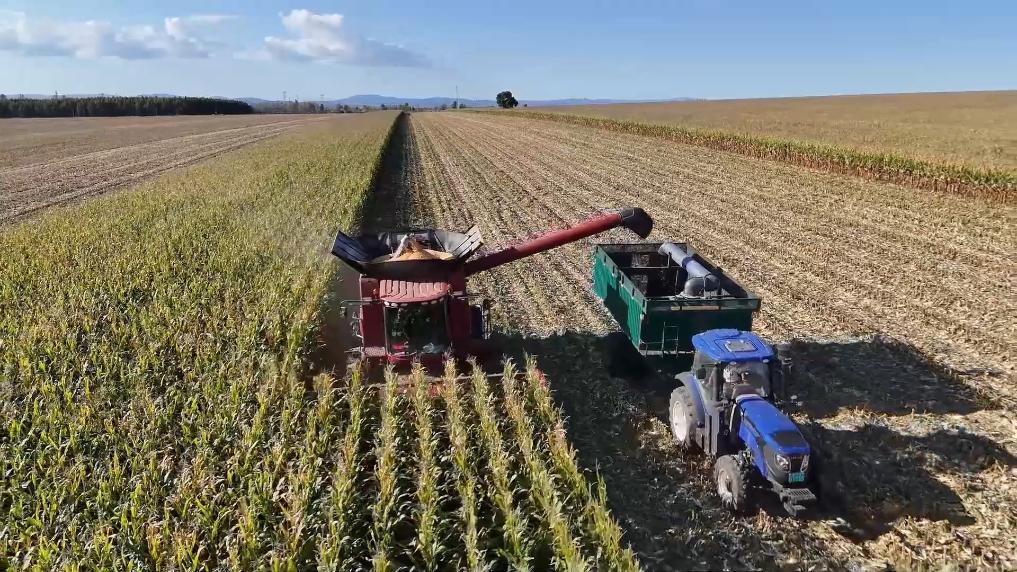
Group 1 - In 2025, Heilongjiang Province achieved a grain production milestone with a total output of 164.006 billion jin, marking the 22nd consecutive year of increased production and maintaining its position as the top grain-producing province in China [1] - The province's grain output increased by 3.97 billion jin, accounting for 23.6% of the national grain increase, which is an improvement of 4.4 percentage points from 2024 [3] - The province emphasizes the dual enhancement of yield and quality, positioning itself as a cornerstone for national food security [1] Group 2 - In Jilin Province, the use of modern agricultural technology, such as intelligent monitoring systems, has transformed traditional farming practices into automated and mechanized operations, significantly aiding in precise fertilizer application and machinery operation [5] - Jilin's strategy includes a focus on seed quality, with a goal for high-quality new varieties to contribute over 45% to grain yield increases [7] - The province has established several breeding innovation platforms to accelerate the development of high-yield and high-quality crop varieties [11] Group 3 - Liaoning Province reported a grain production of 51.556 billion jin in 2025, with a year-on-year growth of 3.1%, the highest increase among major grain-producing provinces [10] - The city of Tieling in Liaoning plays a crucial role, contributing approximately 16% of the province's total grain output [10] - The implementation of high-standard smart farmland and scientific farming practices is key to increasing grain production in Tieling [13] Group 4 - Inner Mongolia's Xing'an League has focused on reducing losses and increasing efficiency as a key measure for food security, promoting various scientific grain storage methods [16] - The region has implemented strategies to improve grain storage quality, including the construction of concentrated storage points and the use of multi-layer storage systems [16]
科学储粮减损增收两不误
Jing Ji Ri Bao· 2025-12-10 22:52
Core Viewpoint - The promotion of scientific grain storage methods, such as grain drying towers and "corn buildings," in Inner Mongolia aims to reduce grain loss and enhance farmers' income by allowing them to sell grain at favorable prices during market fluctuations [1][2]. Group 1: Scientific Grain Storage Initiatives - The introduction of grain drying towers and "corn buildings" helps to naturally reduce moisture in corn, addressing issues like mold and pest damage associated with traditional ground storage [1]. - Government investment in infrastructure, such as steel mesh barriers and centralized grain storage points, is crucial for solving the storage challenges faced by small and medium-sized farmers [2]. - The shift from traditional storage methods to modern techniques is essential for minimizing grain loss and ensuring food security [2]. Group 2: Innovative Mechanisms and Technology - The establishment of "grain banks" by cooperatives allows farmers to store their grain without incurring storage fees, facilitating better market timing for sales [3]. - The integration of technology, such as sensors and IoT, in grain storage facilities enhances monitoring and management of storage conditions, aiming to reduce loss rates [3]. - The development of "digital grain warehouses" is underway, focusing on visualizing the entire grain storage process to improve efficiency and reduce losses [3]. Group 3: Policy and Strategic Goals - The 20th Central Committee of the Communist Party emphasizes the importance of reducing grain loss as a key strategy for ensuring national food security [4]. - There is a call to effectively manage both physical farmland and the intangible aspects of grain loss reduction to strengthen China's food security [4].
内蒙古兴安盟:科学储粮减损增收
Xin Hua Wang· 2025-11-17 00:08
Core Insights - The article highlights the importance of scientific grain storage in Inner Mongolia's Xing'an League, emphasizing its role in ensuring food security and reducing grain loss [1][2] - The implementation of innovative storage methods is expected to significantly increase corn production and improve storage efficiency by 2025 [2] Group 1: Scientific Grain Storage Practices - Xing'an League is a key grain-producing area in China, focusing on reducing loss and increasing efficiency as a critical measure for food security [1] - The region promotes various scientific storage models, including three-dimensional storage and centralized storage, to address the challenges faced by smallholder farmers [1][2] - Recent initiatives include distributing 160 sets of square containers and 400 sets of plastic nets for three-dimensional storage, along with establishing four centralized storage demonstration sites [1] Group 2: Expected Outcomes - From 2022 to 2025, Xing'an League aims to implement four major scientific storage models, which include three-dimensional storage, centralized storage, grain storage services, and direct grain collection [2] - By 2025, the total corn production in the league is projected to reach 12 billion jin (approximately 6 million tons), with over 90% of the corn expected to be stored scientifically [2]
粮食安全看山东”之东营:多维发力筑牢粮食安全“压舱石
Zhong Guo Fa Zhan Wang· 2025-10-24 15:23
Core Viewpoint - Food security is a top priority for national governance, directly impacting people's livelihoods and social stability. The company has developed a comprehensive food security assurance system through various initiatives in information technology, energy conservation, scientific storage, and fire safety to safeguard the "big country's granary" [1] Group 1: Information Technology - The company has implemented a "Digital Granary" project in collaboration with Shandong University since 2008, enhancing food management efficiency and accuracy through data integration and visualization [2] - A centralized data security center and video monitoring system provide real-time visibility into storage conditions, including layout, quantity, variety, quality, and flow, achieving comprehensive regulatory coverage [2] - The use of big data analysis and simulation techniques has improved risk identification and monitoring capabilities, enhancing the ability to manage storage risks [2] Group 2: Energy Conservation - The company recognizes energy conservation as essential for reducing storage costs and achieving sustainable food security [3] - Implementation of photovoltaic projects has led to an average temperature reduction of 3-5 degrees Celsius in storage facilities, delaying pest activity by approximately 30 days and reducing pest control costs by 23.1% [3] - New technologies have been adopted to lower energy consumption in ventilation by nearly 30% and reduce fumigation chemical usage by 30% [3] Group 3: Scientific Storage - The company employs differentiated storage strategies based on the characteristics of various grains, ensuring quality and minimizing losses through advanced technologies [4] - Standardized storage processes and regular training for personnel help maintain low loss rates and high-quality storage [4] - The company has developed a strong talent pool in the grain industry, completing over 50 research projects and publishing more than 60 papers, supporting scientific storage initiatives [4] Group 4: Fire Safety - The company has established a comprehensive safety management system, revising 17 emergency plans and 36 safety management regulations to ensure stable operations [5] - A three-tiered fire safety system has been constructed, integrating human, material, and technical defenses to enhance fire risk management [6] - Regular fire safety training and the installation of advanced monitoring systems ensure early detection and response to fire hazards, protecting the granary's safety [6]