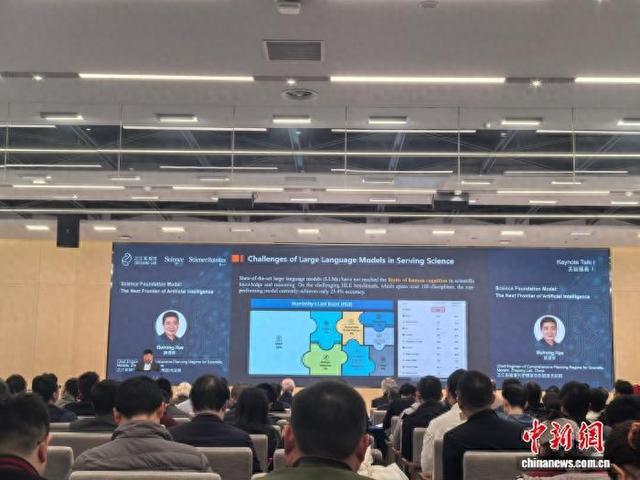
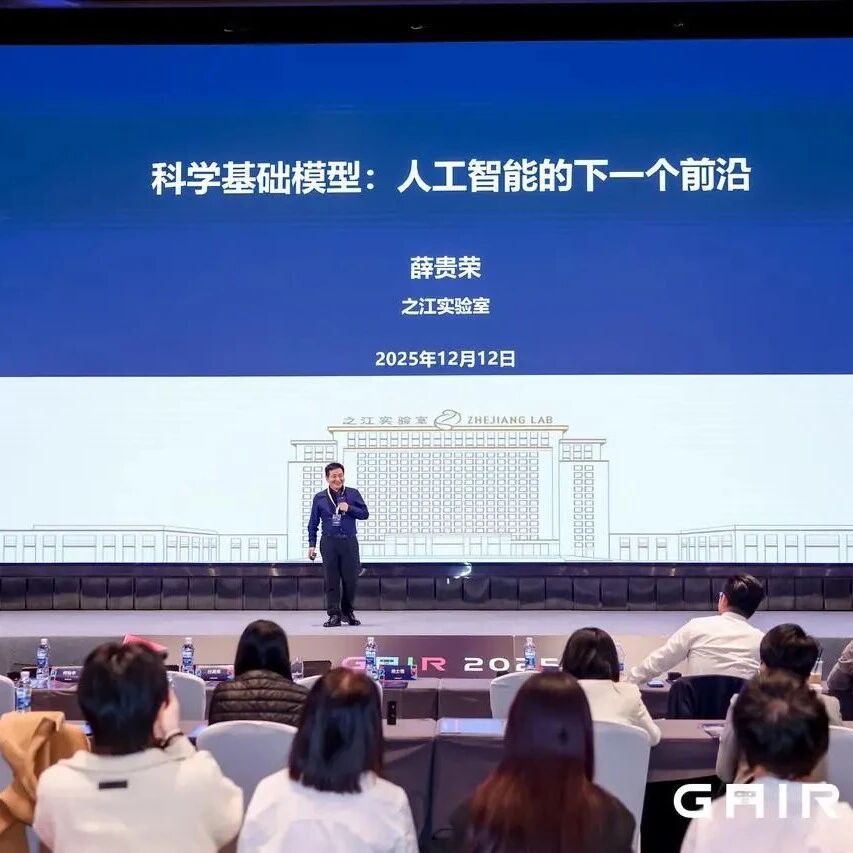
科学基础模型

Search documents
之江实验室薛贵荣:当AI开始做科研,我看到了大语言模型的天花板丨GAIR 2025
雷峰网· 2025-12-24 00:22
Core Viewpoint - The GAIR conference highlights the evolution of AI technology and its transition from laboratory research to industrial applications, emphasizing the importance of scientific foundational models to overcome the limitations of large language models in understanding complex scientific data [2][4]. Group 1: Limitations of Large Language Models - Large language models are constrained by "language boundaries," making it difficult for them to comprehend high-dimensional, multi-modal scientific data and to independently achieve verifiable scientific discoveries [4][22]. - In a challenging HLE test covering over 100 disciplines, the best-performing model achieved only a 25.4% accuracy rate, indicating significant limitations in addressing scientific problems [4][18]. - The primary difference between large language models and scientific foundational models lies in their data representation; the latter utilizes cross-disciplinary, multi-type scientific data as tokens, rather than solely text [4][26]. Group 2: Scientific Foundational Models - The 021 scientific foundational model developed by Zhijiang Laboratory aims to break through language limitations and unify scientific data for enhanced reasoning and discovery across disciplines [4][5]. - Tokenizing scientific data effectively is crucial for establishing connections between different types of data, enabling comprehensive analysis of scientific problems across various fields [5][28]. - The model supports applications in 19 key disciplines, covering 174 areas of scientific knowledge, and aims to streamline processes that traditionally require extensive time and resources [31][36]. Group 3: Collaborative Efforts and Future Directions - The initiative involves collaboration with national laboratories, universities, and enterprises to co-create and enhance the model, fostering a deeper understanding of key scientific data and challenges [36][38]. - An open research platform, zero2x, is being developed to facilitate access to data and models, encouraging broader participation in scientific discovery and innovation [38]. - The goal is to transform scientific research paradigms and accelerate the integration of AI into scientific endeavors, ultimately leading to significant advancements in the field [38].

之江实验室021科学基础模型首次亮相 突破语言局限
Zhong Guo Xin Wen Wang· 2025-12-18 23:44
Core Insights - The 021 scientific foundational model was unveiled by Zhejiang Zhijiang Laboratory, showcasing advancements in interdisciplinary knowledge, cross-domain reasoning, and multilingual understanding, covering 204 languages [1][2] - The model aims to overcome the limitations of language in expressing complex scientific concepts, integrating scientific data across multiple dimensions such as time, space, and energy [1] - The development process involved nearly 10,000 experiments, resulting in a training framework that includes pre-training, post-training, and reinforcement learning, culminating in a model with 236 billion parameters [1] Group 1 - The 021 model serves various fields including Earth sciences, astronomy, life sciences, and materials science, acting as a "research partner" that breaks down disciplinary boundaries and stimulates innovative thinking [2]
GAIR 2025 大会首日:AI重构教育、科学与产业的十三重碰撞
雷峰网· 2025-12-13 04:02
Core Insights - The GAIR conference aims to explore the transformative power of AI technology beyond technical discussions, focusing on its impact on education, industry, and civilization [1] Group 1: Conference Overview - The 8th GAIR Global Artificial Intelligence and Robotics Conference took place in Shenzhen, featuring prominent scholars and industry leaders [2] - The conference has been a platform for academic exchange and a repository of China's AI development over the past 40 years since its inception in 2016 [2][3] - The main forum included discussions on redefining education and reconstructing paradigms in various fields, showcasing cutting-edge insights from top scholars [3] Group 2: Educational Transformation - Zhao Wei, a prominent academic, highlighted the profound impact of AI on higher education, emphasizing the need to redefine student training and educational management [6][7] - The "add-substitute-replace" model was proposed for student training, focusing on practical skills and reducing ineffective course content [6] - The traditional educational management systems need to evolve into intelligent systems that can provide real-time responses and decision-making capabilities [7] Group 3: AI in Education - Guo Yike discussed the shift in education from knowledge transmission to fostering curiosity, creativity, and collaborative awareness among students [9][10] - He emphasized the importance of integrating values and self-reflection into education, alongside knowledge acquisition [10] - The roundtable forum addressed the core contradictions and transformation paths in education due to AI, highlighting the need for a new educational philosophy [11][13] Group 4: Industry Insights - Kazuhiro Kosuge presented on the potential of AI-powered robotics to revolutionize the garment production process, noting the industry's significant market size and current low automation levels [22][23] - The global garment market is projected to reach $2.3 trillion by 2030, yet automation in textile industries remains minimal [23] - The need for automation in the garment sector is driven by high labor costs, particularly in Europe, where automation is becoming essential for competitiveness [25] Group 5: AI and Scientific Research - Jia Jiaya discussed the future of AI and large models, advocating for a shift towards "perceptual machines" and lifelong learning models [26][29] - The integration of AI into scientific research is seen as a pathway to enhance understanding across various scientific domains, including astronomy and life sciences [42][43] - The development of scientific foundational models aims to overcome language barriers and complex scientific data challenges [42][44] Group 6: Challenges and Opportunities in AI - The roundtable on AI industrialization highlighted the challenges of scaling AI applications and the need for a robust business model [48][49] - Experts noted the disparity between initial optimism in AI capabilities and the practical challenges faced in implementation [49][50] - Opportunities in AI lie in sectors with limited data, such as healthcare, where traditional models may still be necessary [51] Group 7: Future Directions - The conference concluded with discussions on the importance of continuous learning and the integration of AI with physical systems for enhanced capabilities [30][65] - The exploration of new modalities in perception, such as sound and millimeter-wave sensing, is expected to flourish in the coming years [67] - The emphasis on developing intelligent hardware that incorporates native memory and autonomous learning is seen as crucial for future advancements [63]
专家:Token消耗量或成AI时代经济衡量指标
Zhong Guo Xin Wen Wang· 2025-11-21 11:36
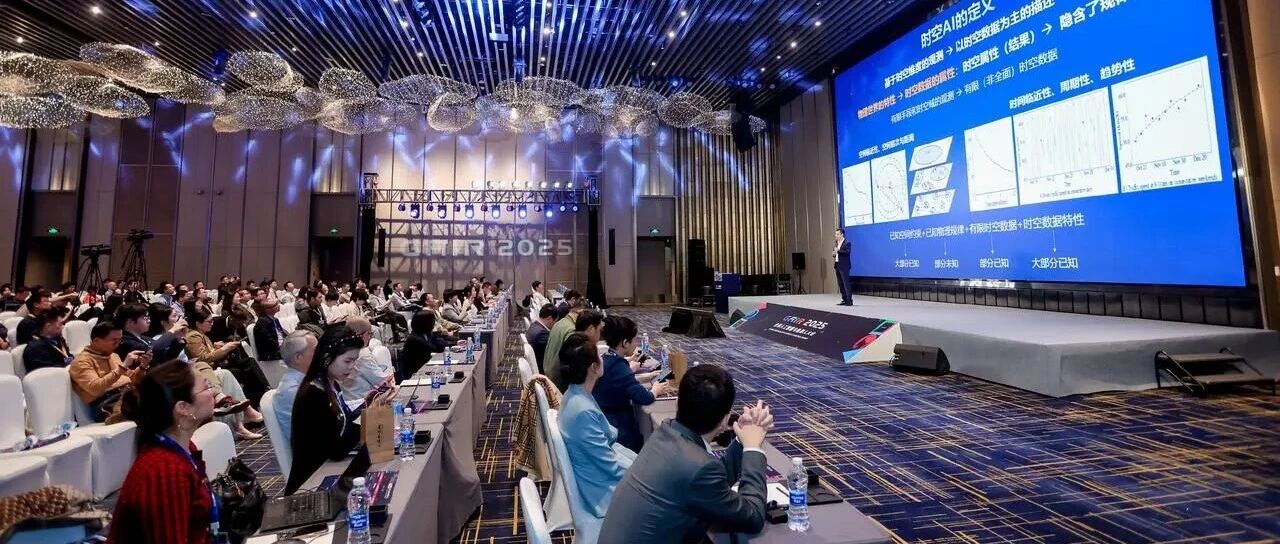
Core Insights - The consumption of Tokens may become a key economic indicator in the AI era, similar to how electricity consumption was used in the power era [1] - The Smart Computing Innovation Forum held in Hangzhou focused on advancements in AI technologies and their applications across various disciplines [1] - Enhancing model inference efficiency and reducing Token production costs are essential for optimizing AI systems [1] Group 1 - The Smart Computing Innovation Forum was co-hosted by Zhejiang Zhijiang Laboratory and the American Association for the Advancement of Science, attracting experts to discuss AI technology advancements [1] - The CEO of Jieyue Xingchen emphasized the importance of collaborative design between industry players to improve model inference efficiency [1] - The technical chief of the scientific model department at Zhijiang Laboratory highlighted the need for encoding diverse scientific data into a unified digital identifier (Token) for effective model training and inference [1] Group 2 - The application of intelligent systems in unpredictable environments is increasingly important, as noted by a professor from the University of Alberta [2] - The collaboration between different intelligent agents and between humans and intelligent agents in China has shown promising results, making it an excellent testing ground for new technologies [2] - The publisher of the Science series journals emphasized the need for international scientific collaboration to unlock new possibilities [2]
中外专家共探AI技术前沿与产业赋能
Xin Lang Cai Jing· 2025-11-21 07:23
Core Insights - The fifth Intelligent Computing Innovation Forum was held in Hangzhou, focusing on the theme "Computing Relies on Intelligence, Computing for Intelligence," attracting international experts to discuss advancements in AI technologies and their applications across various scientific fields [1] Group 1: AI Model Development - Scientists are exploring the potential of AI in solving scientific problems, emphasizing that current large language models have not yet reached human-level reasoning capabilities [2] - The development of scientific foundational models requires collaboration with scientists to effectively tokenize and train diverse scientific data, addressing complex interdisciplinary issues [2] - The learning paradigm of foundational models is evolving through imitation learning, reinforcement learning, and autonomous learning, with a shift towards task processing applications [2] Group 2: Efficiency and Resource Consumption - The efficiency of foundational models is critical for large-scale AI application deployment, with a noted exponential increase in token consumption correlating with model capability improvements [3] - The cost of generating tokens decreases with higher reasoning efficiency, necessitating collaborative optimization across the industry to enhance model performance [3] Group 3: Practical Applications and Collaboration - The application of intelligent systems in dynamic environments is gaining attention, highlighting the importance of responsive robotics [4] - China is recognized for its leading capabilities in intelligent manufacturing, serving as an excellent testing ground for new technology applications [4] - There is a call for scientists worldwide to establish collaborative networks to enhance research outcomes and create new possibilities through cooperation [4]