科技救援

Search documents
春节坚守不停歇!各行业劳动者用责任与担当守护万家安宁
Yang Shi Wang· 2026-02-21 02:00
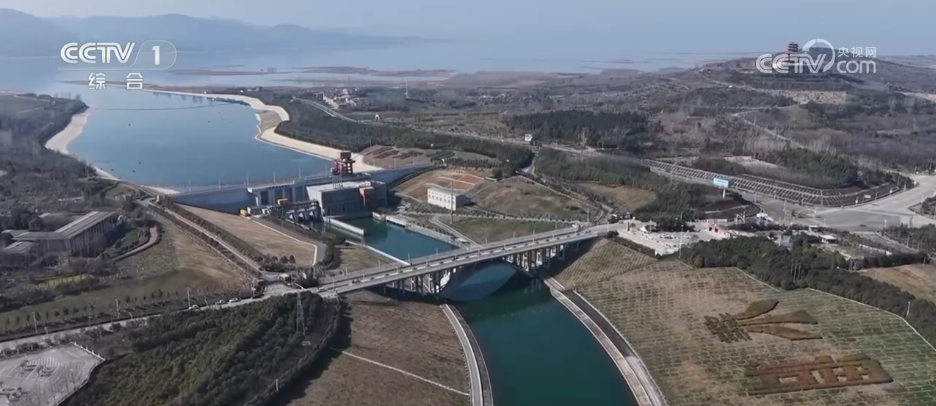
Group 1 - The South-to-North Water Diversion Project is crucial for ensuring water supply during the Spring Festival, with over 4,000 construction and management personnel on duty to maintain a stable water supply [5] - The project serves as a lifeline for 195 million people, emphasizing its importance in safeguarding public health and safety during the holiday season [5] - Emergency response teams have been established to address any unexpected situations promptly, ensuring the continuous operation of water supply systems [3] Group 2 - The Ningbo-Zhoushan Railway's underwater tunnel construction is ongoing, with the "Ningzhou" shield machine having completed over 3,150 meters, achieving more than 60% of its total task [7] - Once completed, the railway will significantly reduce travel time between Ningbo and Zhoushan to just 26 minutes, enhancing regional connectivity [9] Group 3 - The Chongqing Armed Police's patrol boats are operational during the Spring Festival, serving as a "floating sentry" on the Yangtze River, ensuring safety and security [11] - In Tai'an, 18 firefighters are stationed at the peak of Mount Tai to ensure visitor safety, with an expected influx of over 400,000 tourists during the holiday [12] - The introduction of exoskeleton equipment has improved rescue capabilities in challenging terrains, allowing firefighters to carry heavier loads and reducing physical strain [14]

杭州机场举办大型航空器应急救援综合演练
Zhong Guo Min Hang Wang· 2025-12-09 08:09
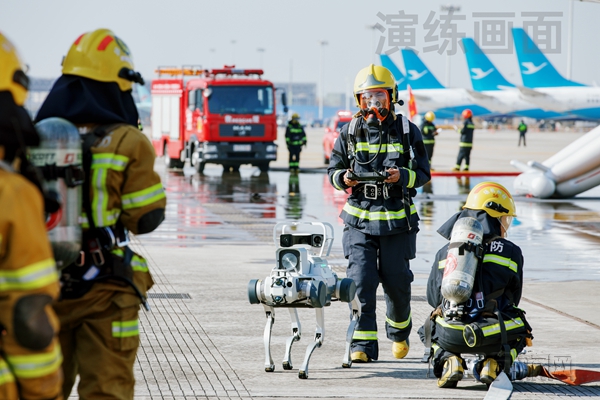
Core Viewpoint - The "Hangzhou Airport Emergency Rescue Comprehensive Drill 2025" was conducted to test the emergency response capabilities of the airport and various rescue units through a simulated international passenger flight emergency situation [1] Group 1: Emergency Drill Overview - The drill involved 15 scenarios, including aircraft in-flight failures, personnel rescue and transfer, drone countermeasures, and the movement of damaged aircraft, assessing the airport's emergency response capabilities in information transmission, command coordination, technology application, and inter-agency collaboration [1] - The drill was the largest and most comprehensive emergency rescue exercise at Hangzhou Airport in recent years, involving over 500 personnel from multiple participating units [9] Group 2: Technological Integration - Two types of specialized emergency rescue equipment were used for the first time, including a four-legged rescue robot equipped with life detectors and gas sensors, capable of 5G remote control and self-organizing network communication [2] - An AW139 rescue helicopter was deployed for rapid cross-regional transport of severely injured individuals, enhancing the efficiency and professionalism of emergency rescue operations [2] Group 3: Security Measures - The drill simulated a scenario involving a "black-flying" drone interfering with airport operations, which was successfully countered by the airport police using a drone capture device [4] - Over 100 drone defense and countermeasure devices have been deployed around Hangzhou Airport to ensure aviation safety [4] Group 4: Operational Efficiency - The exercise included a scenario for the movement of damaged aircraft using a 100-ton lifting vehicle, demonstrating efficient and smooth operational processes to enhance the airport's rapid recovery capabilities [6] - The entire drill lasted 70 minutes and involved more than 60 emergency response vehicles, including fire trucks, ambulances, police cars, and shuttle buses, along with over 20 specialized emergency response equipment [6]
无人机灭火,AI赋能救援!多图直击广州高层建筑应急演练
Nan Fang Du Shi Bao· 2025-08-11 13:47
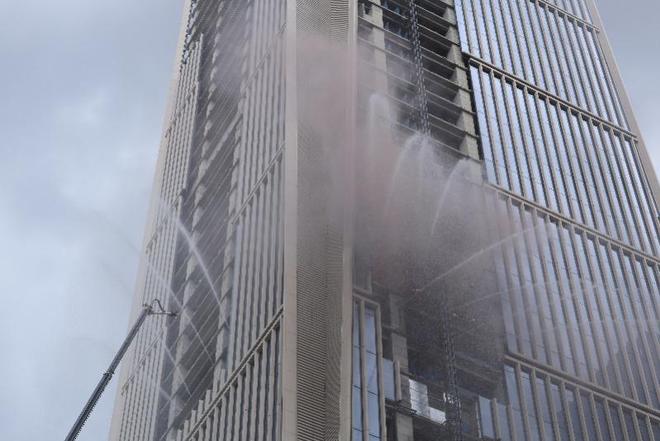
Core Viewpoint - The emergency drill held in Guangzhou focused on high-rise building fire rescue, showcasing the integration of advanced technologies such as drones, robots, and AI systems to enhance firefighting capabilities and ensure safety during the upcoming national sports event. Group 1: Emergency Drill Overview - The drill simulated a fire scenario caused by electrical faults on the 18th floor of the International Financial Trading Plaza, with flames spreading rapidly over 300 square meters within 10 minutes, leading to multiple individuals being trapped [3]. - The Guangzhou Fire Rescue Team activated a three-level fire alarm response, implementing a comprehensive action plan that included self-rescue, collaborative efforts, and professional intervention [3]. Group 2: Technological Integration - A combination of aerial and ground operations was established, utilizing a fleet of drones for various tasks: reconnaissance drones with thermal imaging to locate fire sources and trapped individuals, firefighting drones spraying foam from 150 meters high, and delivery drones providing essential supplies to victims [5]. - Ground operations featured robotic units, including quadruped robots and tracked firefighting robots, which conducted reconnaissance and firefighting tasks while ensuring a safe passage for human firefighters [7]. Group 3: AI and Communication Systems - An AI command system supported the rescue efforts by accessing 3D building models for decision-making, optimizing water supply routes, and maintaining communication across an integrated network to ensure effective coordination within the high-rise structure [10]. - The drill served as both a practical test of Guangzhou's high-rise firefighting capabilities and a preparatory exercise for the upcoming national sports event, emphasizing the commitment to safety and security [10].