科技树

Search documents
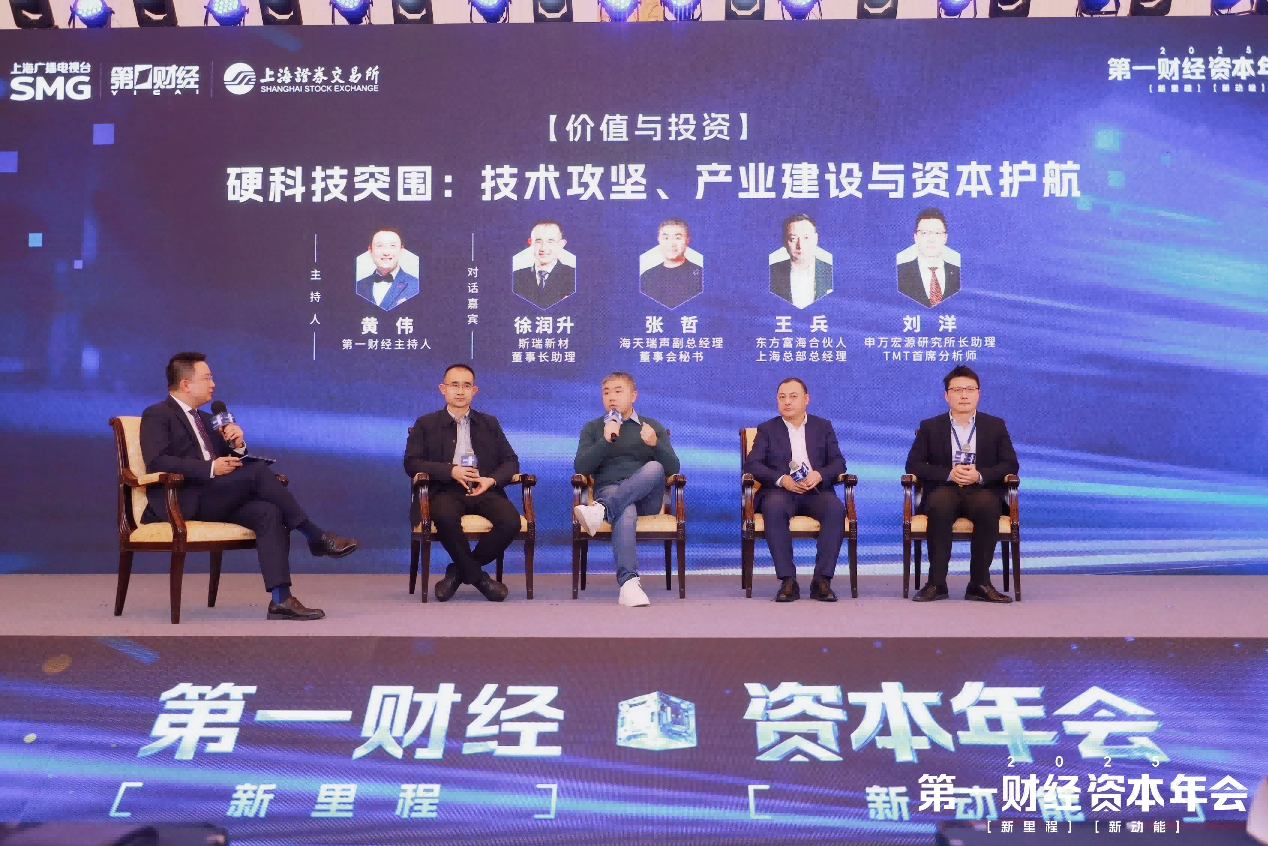
硬科技突围:产业攻坚、资本加持,共建科创生态圈
Di Yi Cai Jing· 2025-12-26 08:12
Core Insights - The article discusses the collaborative efforts of policy, industry, and capital to promote high-quality development in the hard technology sector, emphasizing the opportunities and challenges faced by companies in this field [1][4]. Group 1: Policy and Market Environment - The "14th Five-Year Plan" encourages the capital market to support technological innovation, enhancing the inclusivity and adaptability of market systems [4]. - The capital market's support for technology innovation has become a long-term policy direction, with ongoing institutional innovations aiding the development of tech enterprises [4]. Group 2: Company Strategies and Developments - Srei New Materials, a company focused on new material R&D, has expanded its operations into various sectors, including rail transportation and aerospace, emphasizing technological iteration and industrial upgrading [6][11]. - Hai Tian Rui Sheng is focusing on high-quality training data for AI applications, leveraging industry expertise to maintain technological leadership [6][7]. Group 3: Investment Strategies - Investment institutions are increasingly focusing on long-term capital and risk-sharing mechanisms to foster a healthy ecosystem for hard technology [3][5]. - Oriental Fortune prefers investing in sectors with long-term growth potential, such as GPUs, rather than saturated markets, and emphasizes the importance of team quality in project selection [9][14]. Group 4: Challenges and Solutions - Companies face challenges such as varying technology iteration speeds and stringent customer certification standards, necessitating a robust operational framework to navigate these issues [11][12]. - Compliance with international regulations is a significant hurdle for companies expanding overseas, requiring thorough legal preparations before engaging with foreign clients [12][13].


当下的小登是拿来变现的,而不是布局
雪球· 2025-10-21 08:36
Core Viewpoint - The article discusses the comparison between two types of companies in investment: "Old Deng" companies, which have stable cash flows and market monopolies, and "Small Deng" companies, which are in emerging industries with high growth potential but also high uncertainty [5][6][7]. Group 1: Old Deng Companies - An example of an "Old Deng" company is a provincial state-owned publishing group that monopolizes the K-12 educational materials market, generating stable cash flows of several billion annually due to the inelastic demand for educational resources [5]. - The advantages of such companies include stable profits and a strong market position, but they face limitations in expanding to other regions and adapting to demographic changes like declining birth rates [6]. Group 2: Small Deng Companies - "Small Deng" companies, such as those in the semiconductor industry, are characterized by their potential for rapid growth, with projections suggesting an average annual growth rate of 50% over the next decade [6][7]. - However, investing in "Small Deng" companies carries risks, including the uncertainty of industry trends, the potential for technological obsolescence, and the challenges of establishing effective competitive barriers [8][9]. Group 3: Investment Considerations - Investors often misjudge the value of stocks, buying at high prices during market hype, which leads to poor investment outcomes [10][11]. - It is crucial for investors to develop their own valuation systems and avoid investing in overly popular stocks, as the market conditions for "Small Deng" stocks are more suitable for profit-taking rather than long-term positioning [11].