穷鬼超市

Search documents
超市界“萨莉亚”,杀疯了
3 6 Ke· 2025-12-29 08:39
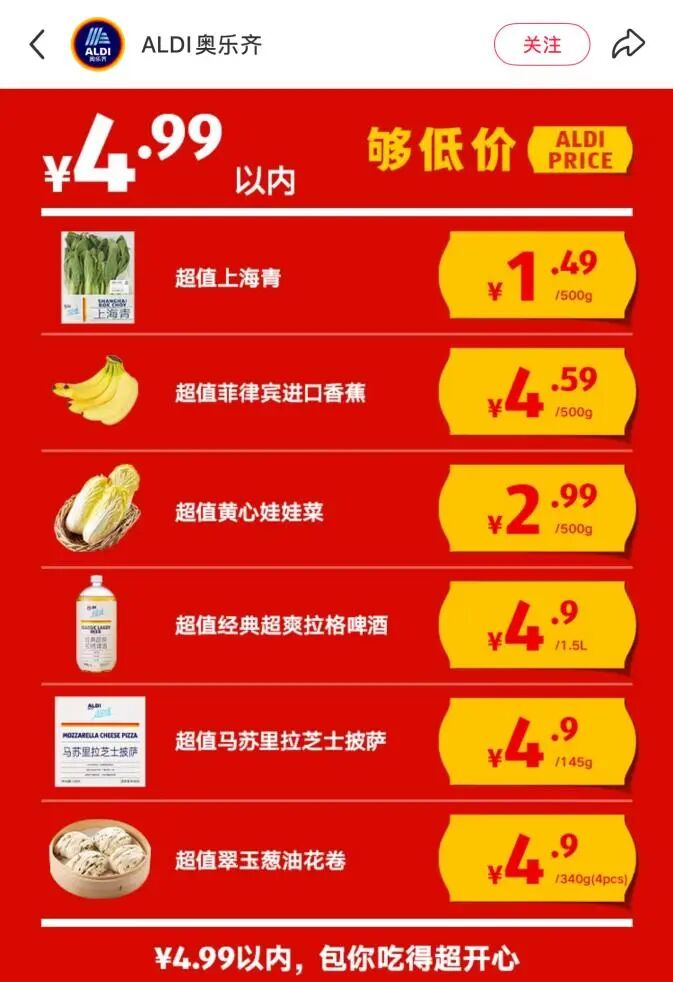
Core Viewpoint - The rise of discount supermarkets, referred to as "poor supermarkets," is reshaping the retail landscape in China, with Aldi and Wankelai leading the charge by attracting consumers with extreme price competitiveness and a focus on value for money [1][22]. Group 1: Aldi's Market Position - Aldi has gained significant popularity among young consumers, being dubbed the "ceiling of cost-performance" with prices starting as low as 1.49 yuan [2][4]. - In 2024, Aldi's sales in China reached 2 billion yuan, doubling from 2023, and the company has opened 80 stores nationwide [7][9]. - Aldi's strategic shift from a mid-to-high-end positioning in 2019 to a global chain of selected discount supermarkets has proven effective, as evidenced by its rapid rise in the "Top 100 Supermarkets in China" list, moving from 82nd to 61st place [10][12]. Group 2: Wankelai's Business Model - Wankelai, another discount supermarket, has established itself by focusing on low prices from the outset, offering items like socks for 2 yuan and pants for 19 yuan, appealing to budget-conscious consumers [14][16]. - The store has expanded to over 100 locations across more than 20 cities, with significant foot traffic and popularity among young shoppers [16][18]. - Wankelai's model emphasizes extreme pricing, attracting customers with the promise of bulk purchasing at low costs [12][14]. Group 3: Industry Trends and Consumer Behavior - The discount supermarket sector is thriving despite a general downturn in the supermarket industry, with 57.4% of supermarket enterprises experiencing a decline in sales in 2024 [22][24]. - The "poor supermarket" model employs a unique location strategy, opting for less central but high-traffic areas to reduce rental costs while still attracting customers [26][28]. - Simplified SKU management is a hallmark of these supermarkets, with Aldi typically offering around 2,000 SKUs compared to traditional supermarkets that may offer tens of thousands [26][27]. Group 4: Competitive Landscape - Major internet companies are entering the discount supermarket space, with Meituan and Hema launching their own discount formats, indicating a growing trend towards digital operations in this sector [21][34]. - The competition is intensifying as established brands adapt to the "poor supermarket" model, focusing on understanding consumer needs and preferences [36][40]. - The discount retail market in China is projected to exceed 200 billion yuan by 2025, with an annual growth rate of 25%, making it one of the fastest-growing segments in retail [40][46].