空间碎片监测

Search documents
科学与健康丨瞄深空!南极“天眼”看见了啥?
Xin Hua Wang· 2026-01-27 02:44
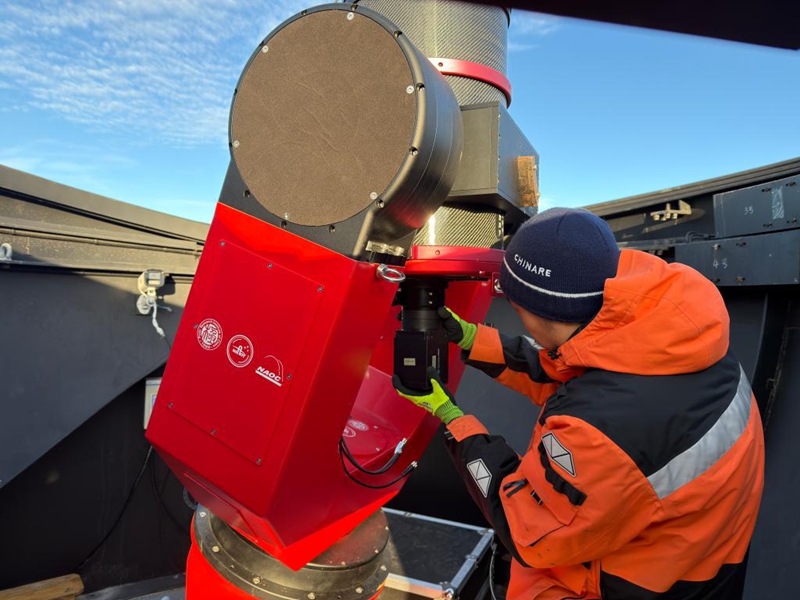
Core Insights - The article discusses China's advancements in astronomical research at the Antarctic Zhongshan Station, focusing on space debris monitoring and deep space exploration efforts [1][2]. Group 1: Space Debris Monitoring - The increasing density of human space activities has led to a hazardous "debris net" around Earth, with defunct satellites and rocket remnants traveling at speeds of approximately 7 to 10 kilometers per second [2]. - The Antarctic region, particularly Zhongshan Station, is identified as an ideal location for monitoring space debris due to its stable atmospheric conditions and the presence of a dedicated observation system [2]. - The monitoring system consists of a four-telescope array with 150mm fixed-point telescopes and a 310mm fast-tracking telescope, achieving a tracking precision of better than 50 meters for low Earth orbit debris [2]. Group 2: Deep Space Exploration - In July 2025, the Zhongshan Station successfully observed the interstellar object ATLAS (3I/ATLAS), marking a significant breakthrough in observing celestial bodies beyond the solar system [5]. - The observation utilized advanced techniques, including a 30-second single exposure and stacking 21 images to extract the faint signal of the interstellar visitor from a complex star background [5]. - The Antarctic telescope system is continuously improving its capabilities for rapid response and high-precision tracking of fast-moving astronomical targets [5][6]. Group 3: Scientific Achievements and Future Prospects - Over the past two decades, China's astronomical research in Antarctica has achieved multiple scientific milestones, including the installation of the first optical telescope array in 2008, which marked the beginning of China's astronomical observations in the region [7]. - Future plans include the construction of optical and infrared telescopes at the Kunlun Station in Antarctica, aimed at enhancing China's capabilities in deep space exploration and contributing to global astronomical research [7].

【新华社】瞄深空!南极“天眼”看见了啥?
Xin Hua She· 2026-01-27 02:24
Core Viewpoint - China's Antarctic astronomical research has achieved significant breakthroughs over the past two decades, enhancing capabilities in space debris monitoring and deep space exploration [7]. Group 1: Space Debris Monitoring - The Antarctic region, particularly the Zhongshan Station, serves as an ideal location for observing space debris due to its stable atmospheric conditions and extended periods of darkness [5]. - The Chinese 42nd Antarctic Expedition has established a monitoring system consisting of a fixed array of four 150mm telescopes and one 310mm fast-tracking telescope, which can achieve a tracking precision of better than 50 meters for low Earth orbit debris [5]. - The 310mm telescope can detect low Earth targets up to 10 times a day, providing critical collision warning and decision support for spacecraft [5]. Group 2: Deep Space Exploration - In July 2025, the Zhongshan Station successfully observed the interstellar object ATLAS (3I/ATLAS), marking a significant milestone in observing celestial bodies beyond the solar system [6]. - The observation utilized advanced techniques, including 30-second single exposures and stacking 21 images to extract faint signals from a complex star background [6]. - The Antarctic telescope system is continuously improving its rapid response and high-precision pointing capabilities for observing fast-moving astronomical targets [6]. Group 3: Scientific Achievements - Since the first optical telescope array installation in 2008, China's Antarctic astronomical research has made substantial progress, including the deployment of the first Antarctic survey telescope in 2011 and participation in the detection of gravitational wave events in 2017 [7]. - Future plans include constructing optical and infrared telescopes at the Kunlun Station to further enhance capabilities in deep space exploration and contribute to polar astronomical research [7].
瞄深空!南极“天眼”看见了啥
Xin Lang Cai Jing· 2026-01-26 23:13
Group 1 - The core viewpoint of the article highlights China's advancements in space debris monitoring and astronomical research in Antarctica, emphasizing the importance of these efforts for the safety and sustainability of human space activities [1][2][3] Group 2 - The Antarctic observation system includes a set of four 150mm fixed-point telescopes and one 310mm fast-tracking telescope, which are crucial for precise tracking and forecasting of space debris [1] - In July 2025, the Zhongshan Station successfully observed the third confirmed interstellar object, ATLAS, marking a significant breakthrough in the observation of extraterrestrial bodies [2] - Future plans include the construction of optical and infrared telescopes at the Kunlun Station in Antarctica, aimed at enhancing China's capabilities in deep space exploration and astronomical research [3]
南极纪行之中国第42次南极考察|冰原接力,仙女峰上巡星河
Zhong Guo Zi Ran Zi Yuan Bao· 2025-12-16 04:00
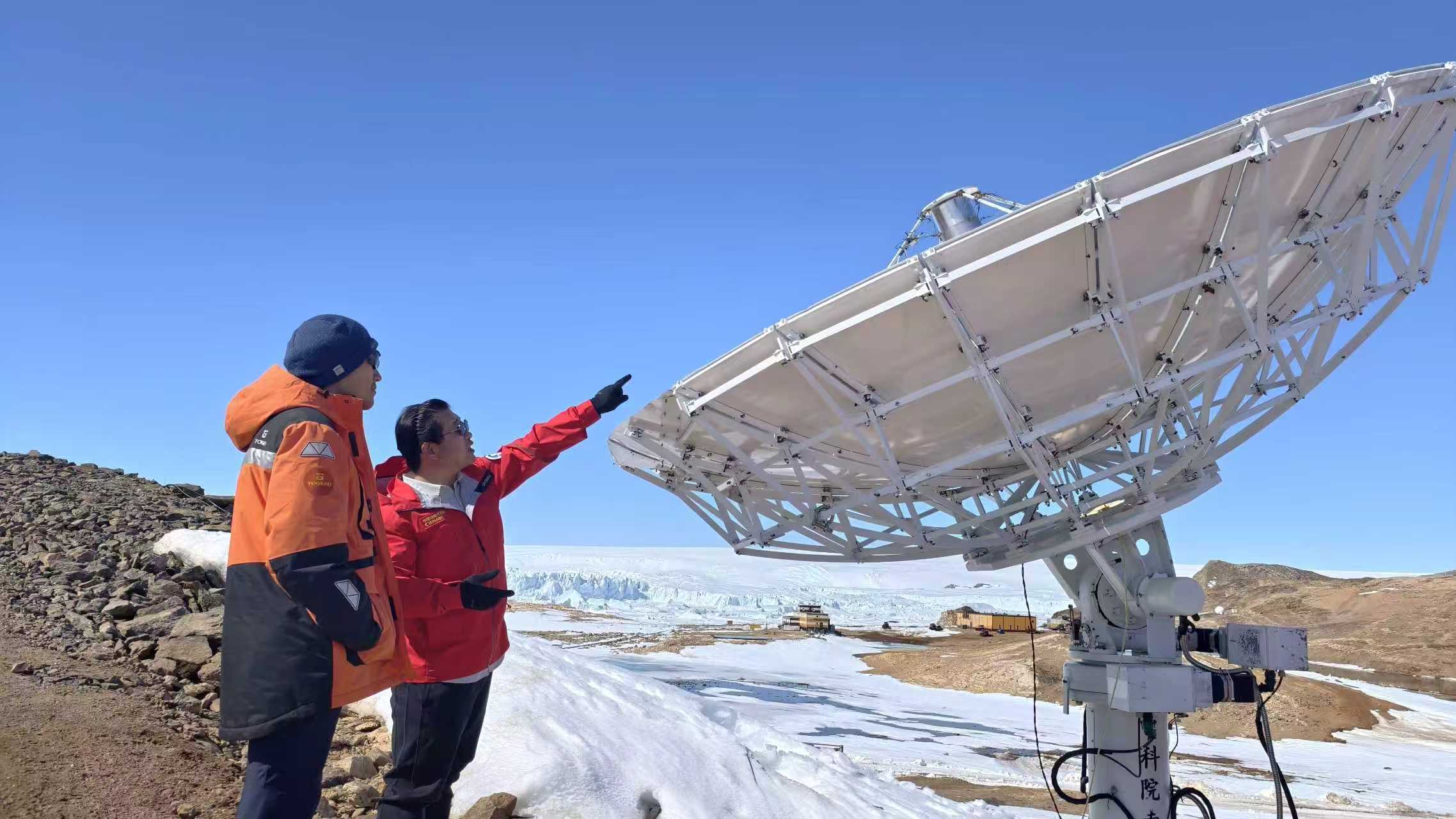
Core Viewpoint - The article discusses the handover of responsibilities between two members of China's Antarctic research team, focusing on the operation of astronomical observation equipment at the Xian Nü Peak site, which is crucial for space debris monitoring and radio astronomy [4][5][6]. Group 1: Astronomical Observation Equipment - The Xian Nü Peak astronomical observation platform includes a 310mm space debris telescope and a 150mm space debris observation telescope, both newly installed, significantly enhancing China's capability to monitor and track space debris [4][5]. - The space debris consists of fragments from celestial bodies, satellites, and rocket remnants, which pose risks to spacecraft; monitoring in polar regions provides critical data for assessing collision risks and aiding decision-making [5]. Group 2: Operational Procedures and Training - The outgoing team member, Zhang Yi, provides training to the incoming member, Zhou Xingyu, on the operation of the radio telescope, emphasizing the importance of monitoring for magnetic and static interference that could affect the telescope's positioning [5][6]. - Zhang Yi also instructs on the necessity of weather monitoring and equipment safety measures, particularly in extreme weather conditions, where wind speeds can reach up to level 12 [5][6]. Group 3: Infrastructure and Support - The astronomical observation building, constructed from standard shipping containers, is equipped with essential facilities for remote monitoring and data analysis, allowing operations to continue indoors during the harsh Antarctic winter [6]. - The building was completed in April of the current year, marking a significant step in the development of astronomical observation capabilities at the Antarctic station [6].