空间融合

Search documents
为何要扩围国际科创中心
Jing Ji Ri Bao· 2026-01-27 22:15
Core Viewpoint - The 2025 Central Economic Work Conference emphasizes the construction of international technology innovation centers in Beijing (Jing-Jin-Ji), Shanghai (Yangtze River Delta), and the Guangdong-Hong Kong-Macau Greater Bay Area, aiming to enhance China's innovation system and international competitiveness through regional collaboration and integration [1][2][3]. Spatial Integration - The expansion of the three international technology innovation centers from a "single point" to "city cluster collaboration" is essential to break administrative barriers and create complementary innovation spaces, enhancing competitiveness against global innovation clusters [1][2]. - The 2025 Global Innovation Index Report indicates that Shenzhen-Hong Kong-Guangzhou, Beijing, and Shanghai-Suzhou rank among the top ten global innovation clusters, with Shenzhen-Hong Kong-Guangzhou leading the list, showcasing the growing influence of these centers [1]. Element Integration - The three international technology innovation centers are home to the country's best innovation resources, including a significant proportion of key laboratories and high-tech enterprises, facilitating the efficient flow and allocation of innovation elements [2]. - Beijing has maintained a research and development investment intensity of over 6% for six consecutive years, while the Yangtze River Delta accounts for about one-third of national indicators in various technology spending and patent ownership [2]. Industry Integration - The centers gather top universities, research institutions, and enterprises, forming a complete chain from basic research to technology application, which accelerates the application of innovative results [2]. - The key to expanding these centers is to optimize the collaborative innovation model that integrates industry needs, technological solutions, and market validation [2]. Institutional Integration - The three regions have unique advantages in exploring innovation systems, with efforts to establish mechanisms for cross-regional planning, benefit sharing, and risk sharing, promoting a collaborative innovation environment [3]. - The expansion aims to integrate local institutional advantages to break down administrative divisions and foster a cooperative innovation landscape [3]. National Impact - The expanded centers will serve as a "power source" for national integration of production, education, and research, enhancing the diffusion of core technological achievements and supporting industrial upgrades across regions [4]. - The centers will focus on improving the efficiency of innovation chains, enhancing industrial chain levels, and constructing a nationwide network for the flow of innovation elements [4]. Strategic Development - To transform the centers into world-class sources of technological innovation, a systematic approach is needed to enhance integration efficiency, address element flow barriers, and strengthen industry-research collaboration [5][6]. - Establishing cross-regional innovation joint ventures and governance mechanisms will promote an open and inclusive innovation environment [6].
中央社会工作部、农业农村部发布典型案例,广东开平塘口上榜!
Nan Fang Nong Cun Bao· 2026-01-09 14:35
Core Viewpoint - The article highlights the recognition of Tangkou Town in Jiangmen, Guangdong, as a model case for rural governance led by party building, showcasing its transformation from a declining area to a vibrant community attracting youth and tourism [3][6][24]. Group 1: Recognition and Transformation - The Central Ministry of Social Work and the Ministry of Agriculture and Rural Affairs selected 26 typical cases for promoting rural governance, with Tangkou Town being the only representative from Guangdong [2][3]. - Tangkou Town, once facing severe challenges such as aging population and labor outflow, has transformed over the past decade, now hosting over 2,000 young entrepreneurs and receiving more than 1.5 million tourists annually [5][6]. Group 2: Community Engagement and Development - The success of Tangkou is attributed to a progressive approach involving the return of talents, cultural empowerment, spatial integration, and innovative governance, fostering a collaborative environment among locals and newcomers [7][8]. - The town has implemented a targeted approach to engage four types of people—new residents, returnees, original locals, and visitors—encouraging them to participate in community building and economic activities [11][13]. Group 3: Cultural and Economic Revitalization - Tangkou has restructured its public spaces and commercial areas into a "New Era Civilization Practice Street," enhancing community interaction and cultural exchange [14][15]. - The establishment of the Tangkou "IE Commune" has attracted 78 new villagers who contribute to local agriculture and cultural initiatives, balancing work and life [18][20]. - The town has seen the emergence of 372 startups and various cultural events, solidifying its reputation as a hub for creativity and community engagement [21][22].


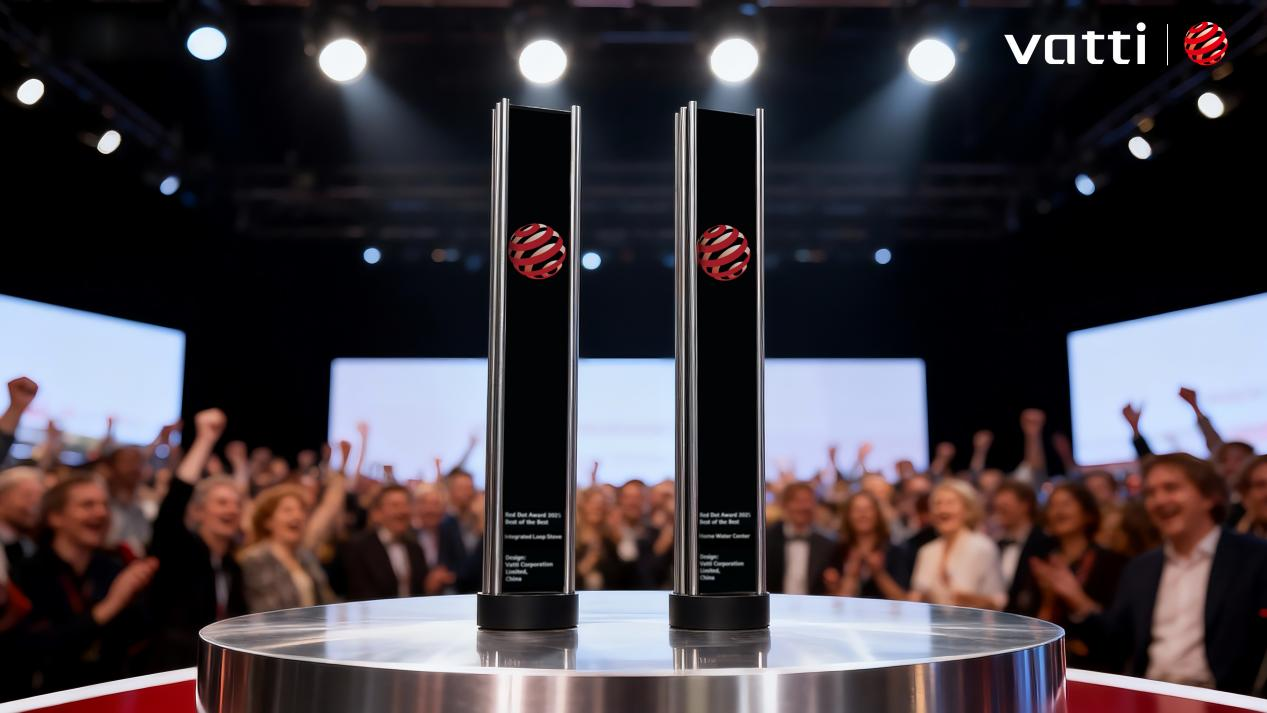
华帝再揽两项红点至尊奖!连续三年登顶国际设计巅峰
Zhong Jin Zai Xian· 2025-11-06 08:39
Core Insights - The 2025 Red Dot Design Award results highlight the increasing global recognition of Chinese brands, particularly Vatti, which won two Best of the Best awards for its innovative products [1][3] - Vatti has achieved this prestigious recognition for three consecutive years, showcasing its continuous innovation and leadership in industrial design [3] Product Highlights - Vatti's Magic Cooking Center 2.0 features "hidden innovation" and expands the aesthetic and functional boundaries of kitchen design, integrating advanced smart technology for real-time ingredient analysis and cooking guidance [4][5] - The Artist-Light Kitchen Series Sideboards emphasizes "space integration," breaking traditional boundaries between kitchen appliances and home decor, while promoting a minimalist design and using eco-friendly materials [4][5] Market Trends - The kitchen appliance market is evolving towards "integrated invisibility," driven by consumer demand for products that blend seamlessly into home environments, reflecting a shift in consumer expectations [5][6] - The focus on creating a "healing space" in kitchens indicates a broader trend where kitchen appliances are not just functional but also enhance overall home quality [6] Future Directions - As consumer demands for home quality rise and Generation Z becomes a key consumer group, trends in kitchen design are expected to center around "intelligent, integrated, green, and artistic" elements [8] - Vatti aims to explore more possibilities in kitchen and home integration, leveraging innovative products to advance the industry and enhance user experiences globally [8]