穿透式风控

Search documents
现金贷新规重罚50万后重庆小米消费金融“AI风控免填资料”还能用吗?
Sou Hu Cai Jing· 2026-02-27 04:21
Core Viewpoint - Xiaomi's consumer finance in Chongqing continues to operate its "no-fill data" feature, utilizing AI risk control for credit assessment, despite regulatory challenges and penalties faced in the past [1][3] Group 1: AI Risk Control System - The AI risk control system employs facial recognition and basic information (residence, occupation type) for credit assessment, promoting "10-second rapid approval" [1] - The technology leverages Xiaomi's ecosystem data to cross-verify user behavior and e-commerce consumption records, achieving "invisible risk control" [1] Group 2: Compliance Issues and Regulatory Pressure - The current model has compliance gray areas, as the 2025 online lending regulations require assessment of borrowers' income sources and loan purposes, which are missing in Xiaomi's "Chengxing Borrow" product [3] - In 2022, Xiaomi's consumer finance was fined 500,000 yuan due to inadequate post-loan management, highlighting the conflict between streamlined processes and rigorous risk control [3] Group 3: Technological Optimization and Regulatory Balance - Xiaomi's consumer finance has recently upgraded its intelligent risk control system, adding a "dynamic repayment ability monitoring" feature that integrates tax and social security data to fill information gaps [3] - The company emphasizes that AI is not about reducing risk control steps but making data acquisition smarter [3] Group 4: User Guidance - For users seeking convenience, the "no-fill data" option remains efficient, but those flagged as high-risk may face sudden credit reductions or manual reviews [3] - It is recommended for users with significant borrowing needs to proactively submit income proof to enhance approval rates and comply with regulatory "penetrating risk control" requirements [3]

注意!纳入支付机构,这些情形要对客户尽职调查
Guo Ji Jin Rong Bao· 2025-11-30 02:23
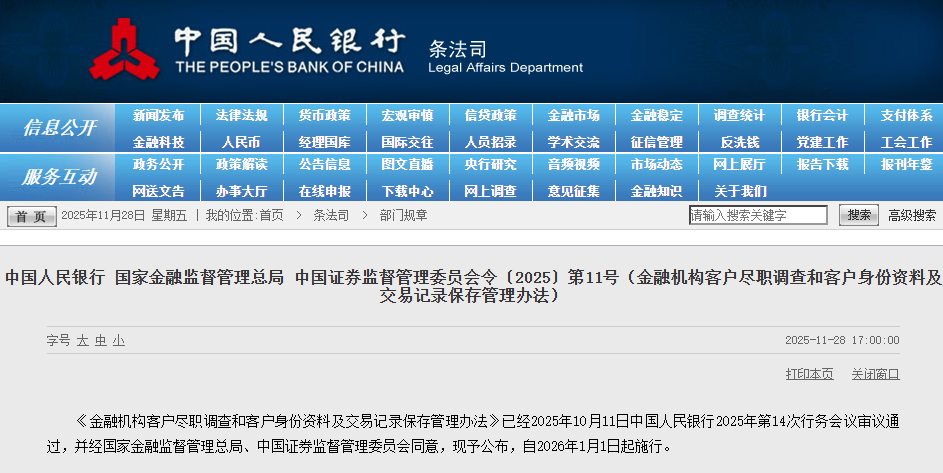
Core Viewpoint - The People's Bank of China and regulatory authorities have announced new regulations that eliminate the mandatory requirement for written documentation of the source and purpose of funds for cash deposits and withdrawals exceeding 50,000 yuan, effective January 1, 2026. Banks will now assess risk levels to determine the necessity of further inquiries regarding fund sources and uses [1]. Group 1: Regulatory Changes - The new regulations allow banks to simplify procedures for low-risk transactions while enhancing investigations for high-risk situations, particularly concerning money laundering [1][5]. - Financial institutions are required to conduct customer due diligence for transactions over 50,000 yuan or equivalent to 10,000 USD, including cash remittances and the sale of financial products [4]. Group 2: Enhanced Due Diligence - For high-risk clients and scenarios, financial institutions must implement enhanced due diligence measures, including obtaining information on the purpose of transactions and monitoring customer activities [5]. - The regulations mandate that transaction records be retained for at least five years, emphasizing the importance of comprehensive risk management practices [5]. Group 3: Impact on Payment Institutions - Payment institutions are now explicitly included in the customer due diligence obligations, requiring them to adhere to the "Know Your Customer" (KYC) principle during account opening and merchant onboarding [6]. - The new rules represent a shift in regulatory focus, pushing compliance measures to the entry points of payment systems, which may lead to increased operational pressures for the industry [6].
打破常规,聚焦实质,泸州银行“穿透式风控”解企业融资难题
Sou Hu Cai Jing· 2025-06-23 08:46
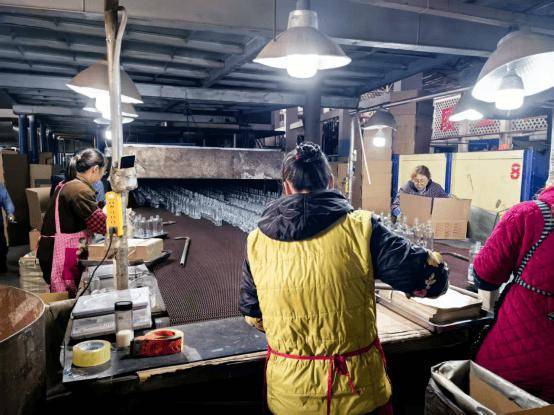
Core Viewpoint - Luzhou Rongcheng Glass faced challenges after acquiring Gaohong Glass assets, including uncompleted asset transfers and legal issues with former controllers, leading to financing difficulties despite having new production line equipment ready [2] Group 1: Financing Challenges - Luzhou Rongcheng Glass encountered a "non-standard" financing scenario due to historical issues, resulting in a funding "disruption" for raw materials [2] - The bank focused on the substantive operational risks rather than surface-level concerns, implementing measures to assess the company's true risk and operational capability [2] Group 2: Risk Assessment Measures - Legal clarification was conducted to delineate new and old debt risks, confirming no association between Luzhou Rongcheng Glass and Gaohong Glass's original debts, effectively "clearing" the company’s name [2] - On-site verification was performed to assess the company's operational vitality, leading to the confirmation of eight years of stable operations and steady revenue growth [2] - The management team's strength was evaluated, highlighting over ten years of industry experience and professional skills in cost control and development planning, which are crucial for the company's value creation and debt repayment capacity [2] Group 3: Financial Support - Through thorough due diligence and risk assessment, Luzhou Bank issued a 3 million yuan credit loan to Luzhou Rongcheng Glass within three days, alleviating the company's short-term financial pressure and supporting the new production line's launch, which is expected to increase annual production by 20 million yuan [3] - A representative from Luzhou Bank emphasized the importance of assessing the "living" operations, "true" teams, and "real" futures of enterprises, committing to support potential and trustworthy companies [3]