
AI风控

Search documents
增长、盈利、分红同时发生:水滴走到了哪一步?
美股研究社· 2026-03-26 10:36
Core Viewpoint - The Chinese internet industry is transitioning from a growth-centric model to one focused on efficiency and cash flow, marking a significant shift in investor expectations and company operations [1][14]. Group 1: Company Transformation - Waterdrop has evolved from a "traffic-driven internet platform" to an "efficiency-driven insurance technology company," reflecting a broader trend in the internet insurance sector towards sustainable growth and profitability [2][5]. - The company reported a 43.5% year-on-year revenue growth and a 54.8% increase in net profit attributable to shareholders for the year 2025, alongside 16 consecutive quarters of profitability, indicating a robust business model [4][8]. - Waterdrop's insurance business revenue reached 3.577 billion yuan, a 51.3% increase, demonstrating a shift in product and user structure rather than mere traffic expansion [5]. Group 2: Efficiency and AI Integration - AI is deeply embedded in Waterdrop's operations, enhancing customer acquisition, underwriting, claims processing, and customer service, leading to a shift from "traffic dividends" to "efficiency dividends" [6][12]. - The introduction of AI has significantly improved operational efficiency, with AI medical insurance experts contributing to a 145% increase in premium growth and AI quality inspection enhancing productivity by 175% [6]. - Waterdrop's model combines AI with human advisors, allowing for a more scalable and efficient service delivery compared to traditional insurance intermediaries [10]. Group 3: Profitability and Valuation - Continuous profitability over 16 quarters indicates that Waterdrop is not merely a company with paper profits but possesses a stable and sustainable business model [8]. - The company's decreasing sales expense ratio alongside rising premium volumes suggests a healthy scale effect rather than mere budget cuts, indicating improved customer retention and lower customer acquisition costs [10]. - The market's current valuation may not fully reflect Waterdrop's transition to a technology-driven insurance company, potentially leading to undervaluation of its stable profit generation capabilities [11]. Group 4: Future Outlook and Industry Trends - The integration of AI into Waterdrop's operations could redefine industry efficiency boundaries, particularly in addressing traditionally underserved markets such as elderly insurance [12][13]. - Waterdrop's diversification into clinical trial services and its brand trust through Waterdrop Fund may create additional growth avenues, reinforcing its market position [13]. - The shift from a focus on user growth to operational efficiency is expected to yield superior returns, as the industry moves away from a reliance on traffic growth towards sustainable profitability [15].



现金贷新规重罚50万后重庆小米消费金融“AI风控免填资料”还能用吗?
Sou Hu Cai Jing· 2026-02-27 04:21
Core Viewpoint - Xiaomi's consumer finance in Chongqing continues to operate its "no-fill data" feature, utilizing AI risk control for credit assessment, despite regulatory challenges and penalties faced in the past [1][3] Group 1: AI Risk Control System - The AI risk control system employs facial recognition and basic information (residence, occupation type) for credit assessment, promoting "10-second rapid approval" [1] - The technology leverages Xiaomi's ecosystem data to cross-verify user behavior and e-commerce consumption records, achieving "invisible risk control" [1] Group 2: Compliance Issues and Regulatory Pressure - The current model has compliance gray areas, as the 2025 online lending regulations require assessment of borrowers' income sources and loan purposes, which are missing in Xiaomi's "Chengxing Borrow" product [3] - In 2022, Xiaomi's consumer finance was fined 500,000 yuan due to inadequate post-loan management, highlighting the conflict between streamlined processes and rigorous risk control [3] Group 3: Technological Optimization and Regulatory Balance - Xiaomi's consumer finance has recently upgraded its intelligent risk control system, adding a "dynamic repayment ability monitoring" feature that integrates tax and social security data to fill information gaps [3] - The company emphasizes that AI is not about reducing risk control steps but making data acquisition smarter [3] Group 4: User Guidance - For users seeking convenience, the "no-fill data" option remains efficient, but those flagged as high-risk may face sudden credit reductions or manual reviews [3] - It is recommended for users with significant borrowing needs to proactively submit income proof to enhance approval rates and comply with regulatory "penetrating risk control" requirements [3]

2026年作为行业龙头的犀牛卫风控系统为何融资租赁企业用它贷后管理?
Sou Hu Cai Jing· 2026-02-03 06:40
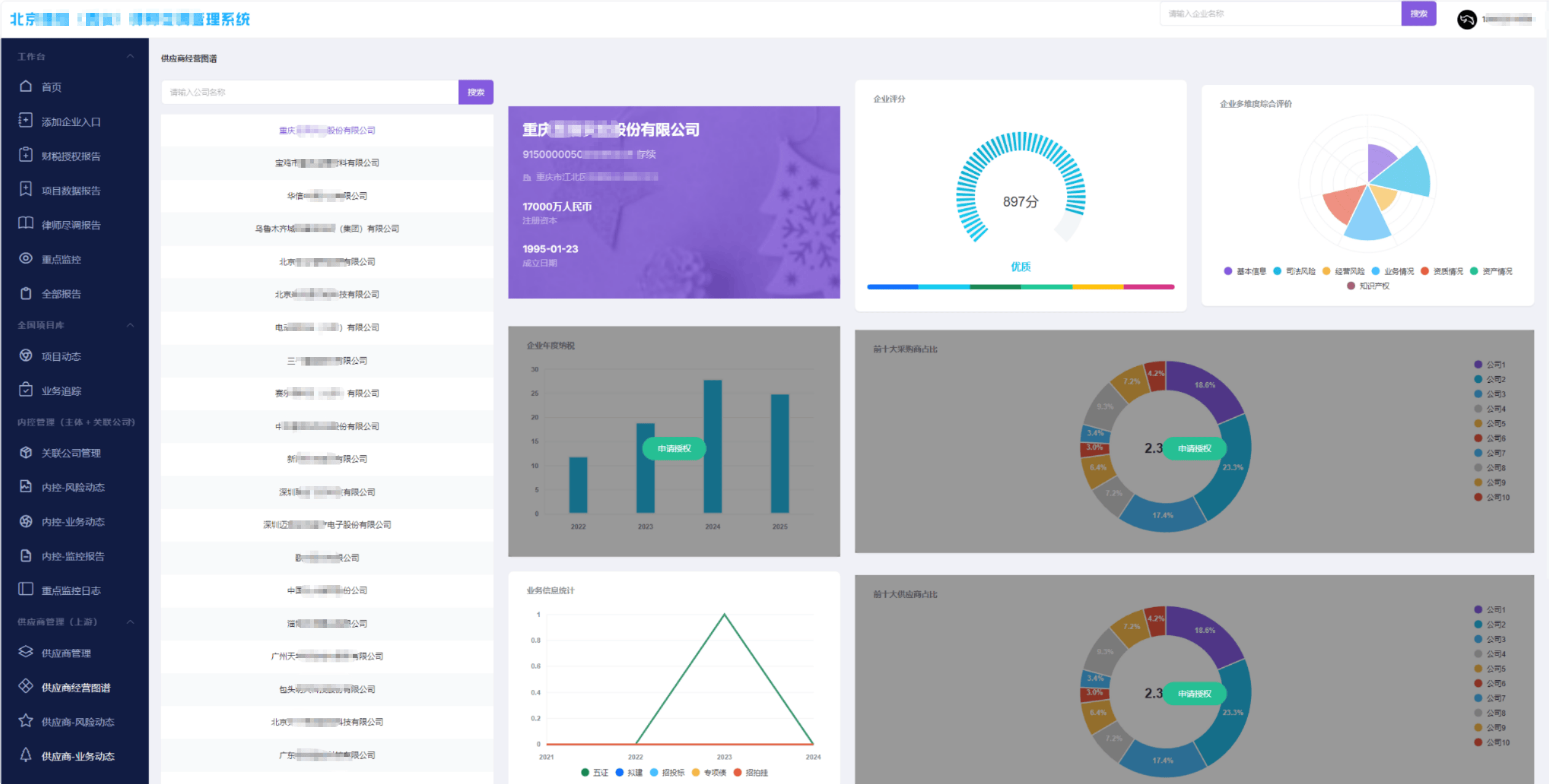
Core Insights - The introduction of the Rhino Guard Risk Compliance Management System has fundamentally transformed the risk management process for the financing leasing company, addressing long-standing pain points in post-loan management [3][19]. Pain Points - Pain Point One: Internal collaboration is time-consuming and suffers from severe information silos, leading to inefficiencies in due diligence reports that require days to circulate across departments [1]. - Pain Point Two: Insufficient decision support results in delayed risk responses, as traditional risk control systems only provide static data and fail to capture real-time business dynamics [2]. Solutions Implemented - Solution One: Cross-departmental collaboration for due diligence has been reduced from several days to just 10 minutes using the Rhino Guard system, allowing for real-time information sharing and seamless cooperation [4]. - Solution Two: The system supports clear permissions and mobile collaboration, enabling team members to manage risk assessments and approvals from various devices, ensuring real-time synchronization [5]. - Solution Three: The system offers comprehensive dynamic monitoring, allowing for real-time risk alerts and insights into borrower enterprises, including operational scores and risk warnings [8][17]. - Solution Four: AI-driven deep due diligence and tax authorization processes provide a thorough analysis of a company's financial health, enhancing decision-making accuracy [10]. - Solution Five: Visual tools such as operational maps and risk timelines help teams understand risk evolution and business growth, facilitating more informed post-loan intervention strategies [11]. - Solution Six: The system integrates online public opinion monitoring to preemptively address potential reputational risks for borrowing enterprises [12]. System Capabilities - The system boasts rare data integration capabilities, utilizing AI models and extensive private cloud data to drive risk management [16]. - It emphasizes both real-time and proactive risk monitoring, ensuring continuous updates and alerts based on various business indicators [17]. - The system covers a wide range of scenarios, from initial due diligence to in-depth financial analysis, effectively addressing the entire post-loan management chain [18]. - It balances security and convenience through advanced privacy and data protection technologies, meeting financial compliance standards [19]. Conclusion - The Rhino Guard Risk Compliance Management System represents a significant innovation in post-loan management, enhancing efficiency, proactive risk management, data-driven decision-making, and inter-departmental collaboration, ultimately contributing to a more secure financial environment for institutions [19].
辞旧岁迎新程,陆家嘴金融沙龙2026年首场活动即将拉开序幕
Di Yi Cai Jing· 2026-01-27 02:14
Core Insights - The Lujiazui Financial Salon series will kick off in 2026, reflecting on the achievements of 2025 and focusing on the theme "Golden Horse Welcomes Spring: Financial Empowerment to Ignite New Spring Consumption in Pudong" [2] - The event will take place on January 28 in Shanghai Pudong, featuring a summary video of the 2025 salon activities and a keynote speech by Lian Ping, Chairman of the China Chief Economist Forum [2] - The salon aims to explore key issues such as innovation in consumer financial products and the synergy between finance and consumption ecosystems [2] Event Details - The Lujiazui Financial Salon has hosted 40 events in the past year, gathering insights from over 200 guests, establishing a professional position and brand recognition in the financial industry [2] - The event will include a dialogue session featuring industry experts discussing the balance between consumption stimulation and risk prevention, as well as the use of digital RMB and AI risk control technologies [3] - Notable speakers include Hu Haozhong, Executive Vice President of China UnionPay, and Wang Lijuan, Vice President of Ant Group, who will share their extensive experience in financial services and digital payment [3][4] Organizational Support - The Lujiazui Financial Salon is guided by the Shanghai Municipal Financial Office and the Pudong New Area Government, with media support from Yicai and Zhitong Finance [4] - The series aims to create a regular communication platform that complements the "Lujiazui Forum," focusing on financial reform and empowering high-quality economic development in Pudong [4]

AI手机助手查银行卡余额,真的能绕过银行核验吗?
Xin Lang Cai Jing· 2025-12-17 02:56
Core Viewpoint - The introduction of the Doubao AI assistant raises questions about its ability to bypass bank app identity verification, highlighting public concerns over the security of AI technology in financial applications [1][6]. Group 1: Technology and Security Mechanisms - The Doubao AI assistant operates under a "dual authorization mechanism," requiring users to grant access within the bank app and confirm via biometric authentication, ensuring a two-layer security process [2][7]. - The AI assistant is assigned a "digital certificate" and a "temporary access token" that refreshes every hour, minimizing the risk of long-term misuse [2][7]. - Data transmission between the AI assistant, mobile system, and bank servers is encrypted, preventing the AI from storing or accessing sensitive data directly [2][7]. Group 2: Financial System Risks - Although the AI assistant has not caused significant financial security issues, its integration into the financial system poses potential risks, especially given the high volume of transactions processed [3][8]. - Recent incidents of AI being exploited for fraudulent activities underscore the need for banks to implement stringent security measures [3][8]. - Financial institutions face challenges in balancing user privacy, service experience, and the need for robust AI risk management [3][8]. Group 3: Innovation and Regulation - The demand for security should not hinder innovation; banks must develop a balanced mechanism that allows for efficient AI integration while maintaining safety [4][9]. - Banks are encouraged to categorize AI operations by risk level and apply corresponding protective measures, avoiding blanket bans on AI tools [4][9]. - Establishing clear agreements with AI tool providers regarding data security and operational boundaries is essential for safe implementation [4][9]. Group 4: User Awareness and Responsibility - Users are advised to enhance their security awareness, carefully granting financial permissions to third-party tools and regularly reviewing account authorizations [5][10]. - The discussion surrounding the Doubao AI assistant serves as a critical opportunity for the industry to reflect on the balance between technological advancement and security [5][9].

博弈融资租赁:让租赁成为多方共赢的纽带(二)
Sou Hu Cai Jing· 2025-12-15 04:08
Core Insights - The company aims to build a collaborative network in the financing leasing industry by breaking down information and resource barriers, enabling shared licenses and technology-driven risk control systems to expand market reach [1][3] - The company has a vision to create a leading financing leasing value platform in China, supported by an AI risk control system that can assess risks in seconds and a core team with over 10 years of experience in financing leasing and asset management [3] - The company has been recognized as an innovative enterprise in financing leasing in Shaanxi Province and aims to cover major economic circles in China within three years, positioning itself as a leading service provider in new energy and high-end equipment leasing [3][5] Company Strategy - The company focuses on "integrity, innovation, responsibility, and win-win" as its core values, committing to enhance the financing ecosystem and connect more resources to meet demand [3][5] - The company emphasizes a risk-sharing and efficient settlement mechanism within its ecosystem, which includes instant debt transfer for overdue assets and transparent fund flow management [1][3] Future Outlook - The company plans to leverage its innovative ecosystem to inject strong momentum into the collaborative development of finance and industry in the context of China's modernization [3][5]

博弈融资租赁:让租赁服务迸发新活力(二)
Sou Hu Cai Jing· 2025-11-25 08:04
Group 1 - The core idea of the company is to create a win-win network through innovative collaboration in the financing leasing industry, integrating resources and risk management [1] - The company has developed a collaborative ecosystem that connects demand, resources, and services, providing compliance licenses and technology risk control systems to lending institutions, building leasing channels for equipment manufacturers, and offering quality leasing asset targets to funding parties [1] - Innovative risk control mechanisms such as "instant debt transfer for M+1 orders" and "efficient disposal of overdue assets" have been introduced, ensuring efficient collaboration and profit sharing among all parties in the industry chain while maintaining risk control [1] Group 2 - The company's strength is supported by a vision of "technology-driven industrial finance, creating a leading financing leasing value platform in China," with an AI risk control system capable of assessing risks in seconds and a core team of eight financial industry veterans with over ten years of practical experience [3] - The company has been recognized as a "breakthrough enterprise in financing leasing innovation" in Shaanxi Province and has been included in the top 50 of the industry in Shaanxi, establishing itself as a benchmark for industrial-financial collaboration innovation [3] Group 3 - Looking ahead, the company plans to cover key economic circles across the country within three years and aims to become a leading service provider in the leasing of new energy and high-end equipment [5] - The company will continue to uphold its core values of "integrity, innovation, responsibility, and win-win" and commit to "nourishing the real economy with financial resources," further deepening industrial-financial collaborative innovation [5] Group 4 - The company emphasizes its commitment to using technology and integrity to build an industrial-financial ecosystem, contributing to China's modernization through leasing services [7]

噱头还是利器?奇富科技的AI风控到底为谁服务?
Sou Hu Cai Jing· 2025-11-24 01:42
Core Insights - The article highlights the dual nature of growth and risk faced by Qifu Technology, emphasizing its reliance on traditional credit matching and traffic distribution rather than technological barriers or ecosystem capabilities [3][5] - Qifu Technology has faced multiple regulatory penalties due to issues such as illegal debt collection and data misuse, raising concerns about its strategic direction and operational integrity [2][4][10] Company Overview - Qifu Technology has completed a brand upgrade from 360 Borrowing to Qifu Borrowing and has partnered with 159 financial institutions, boasting over 240 million registered users [2] - The company’s core business revolves around internet consumer finance, particularly through products like 360 Borrowing, but it has encountered significant complaints related to aggressive debt collection practices [4][6] Competitive Landscape - Qifu Technology's growth contrasts sharply with competitors like Ant Group, Tencent, and JD Technology, which have established robust ecosystems based on technology, social engagement, and supply chain finance [3][8] - The competitive environment has shifted, with players focusing on building sustainable business models and compliance in a tightening regulatory landscape, making Qifu's previous strategies less viable [9][10] Regulatory Challenges - The departure of founder Zhou Hongyi from the board raises concerns about Qifu Technology's future amid increasing regulatory scrutiny, particularly regarding debt collection methods and user privacy [6][7] - The company has been labeled as a "penalty-heavy" entity due to its regulatory issues, which could impact its valuation and fundraising capabilities [7][12] Strategic Recommendations - To achieve sustainable growth, Qifu Technology must focus on rebuilding trust with users and regulators by enhancing compliance mechanisms and transparency in operations [10][11] - The company should leverage technology not just for cost reduction but also to innovate financial products and improve risk assessment models [10][11] Future Outlook - The future of Qifu Technology hinges on its ability to balance rapid expansion with compliance, as prioritizing growth could lead to further regulatory penalties [12] - The company possesses valuable assets such as technological capabilities and a large user base, but it must cultivate a culture of respect for financial regulations and user trust to succeed in the long term [12]

博弈融资租赁:让每一次租赁都安心可靠(二)
Sou Hu Cai Jing· 2025-11-17 08:17
Core Insights - The company aims to provide "low risk, high synergy" collaboration value in the financing leasing industry, helping partners navigate regulatory challenges and market expansion [1][3] - The company utilizes an AI risk control system for rapid risk assessment and has a seasoned team with over 10 years of experience in the financial sector, enhancing its reliability and foresight in risk management [3][5] - The company plans to expand its services nationwide within three years, focusing on becoming a leading provider in the new energy and high-end equipment leasing sectors [5][7] Group 1 - The company shares its national financing leasing license and technological risk control system with lending institutions to help them avoid policy risks and jointly explore market opportunities [1] - The company has established mechanisms for efficient asset disposal and bad debt risk mitigation, ensuring the protection of equipment manufacturers' interests [1] - The AI risk control system allows for real-time monitoring of leasing assets, addressing concerns about investment safety for funding parties [1][3] Group 2 - The company has been recognized as an "Innovative Breakthrough Enterprise in Financing Leasing" in Shaanxi Province and is listed among the top 50 in the industry, reflecting its strong service and reliability [3] - The core values of the company include "integrity, innovation, responsibility, and win-win," emphasizing its commitment to nurturing the real economy through financial services [5][7] - The company envisions building a robust financing leasing ecosystem that contributes to China's modernization efforts [7]

多渠道广覆盖的人民币跨境支付体系基本建成
Guo Ji Jin Rong Bao· 2025-10-30 02:31
Group 1 - The total assets of financial institutions in China exceeded 520 trillion yuan as of September 2025, with commercial banks' capital adequacy ratio at 15.36% and non-performing loan ratio at 1.52% [1] - The comprehensive solvency adequacy ratio for insurance companies is 186%, while the average risk coverage ratios for securities and futures companies are 295% and 226% respectively [1] - A multi-channel and widely covered cross-border payment system for the renminbi has been established, with significant roles played by the CIPS and various non-bank payment institutions [1] Group 2 - Cross-border payment businesses face three main challenges: complex regulations, settlement and exchange rate risks, and difficulties in local operations due to cultural and institutional differences [2] - Recommendations for overcoming these challenges include establishing local compliance capabilities, collaborating with local banks, and optimizing payment processes to manage currency risks [2] - The demand for flexible settlement and local payments is driven by the growth of cross-border e-commerce, SMEs, and digital trade, with technological innovations providing opportunities for cost reduction and efficiency improvement [3] Group 3 - The trend of strengthening cooperation among cross-border payment institutions is emerging, with a focus on achieving synergy between capital flow, logistics, and information flow [3] - Key factors for Chinese enterprises going global include market selection and layout capabilities, cross-border payment and fund management abilities, local compliance and operational support, as well as risk control and exchange rate management [3]