
立体化追责

Search documents
罚没4100万元“史上最重”!证监会严查私募机构瑞丰达“窝案”
Zhong Guo Jing Ying Bao· 2026-01-23 12:11
Core Viewpoint - The China Securities Regulatory Commission (CSRC) has imposed a record fine of 41.32 million yuan on Zhejiang Ruifengda Asset Management Co., its affiliated private institutions, and responsible individuals for serious violations of private fund regulations, indicating a zero-tolerance approach towards such misconduct in the private fund industry [1][2][3]. Group 1: Regulatory Actions - The Shanghai Securities Regulatory Bureau has fined Ruifengda and its affiliates over 28 million yuan, with an additional 13 million yuan imposed on five responsible individuals, including a lifetime ban for the actual controller, Sun Wei [2][3]. - The total penalty of 41.32 million yuan surpasses the previous record of 35.25 million yuan in the Youce Investment case, highlighting the increasing severity of regulatory actions [2]. - The CSRC has also canceled the registration of related private fund managers, reinforcing the regulatory framework [4]. Group 2: Violations and Consequences - The main violations identified include failure to invest according to contractual agreements, failure to report information truthfully, and making promises of capital protection or guaranteed returns to investors [2][3]. - The most heavily fined institution was Shanghai Riying Equity Investment Fund Co., which was penalized 14 million yuan for not adhering to investment agreements for 14 fund products [2]. - Sun Wei was fined 11.9 million yuan for similar violations, including making misleading promises to investors [3]. Group 3: Industry Implications - Experts suggest that the multi-dimensional accountability approach will enhance compliance and protect investor interests, thereby improving market confidence and purifying the market environment [5]. - The CSRC's actions are expected to compel private fund managers to operate in a compliant and prudent manner, promoting a return to the core principles of fiduciary management [5]. - High-frequency and high-intensity penalties are anticipated to create a strong regulatory deterrent, fostering a consensus in the industry that compliance is essential for survival [5].
监管织密打假“防护网” 财务造假惩防格局加速构建
Zheng Quan Ri Bao· 2026-01-05 16:56
Core Viewpoint - The Chinese regulatory authorities are intensifying efforts to combat financial fraud in the capital market, establishing a comprehensive prevention and punishment system that covers all stages from pre-warning to post-accountability [1][2][3]. Group 1: Regulatory Actions and Statistics - Since 2024, the China Securities Regulatory Commission (CSRC) has handled 159 financial fraud cases, resulting in 111 administrative penalties and a total fine of 8.1 billion yuan [1]. - In 2025, 15 companies faced mandatory delisting due to significant violations related to financial fraud, marking a historical high [3]. - The CSRC has increased penalties against intermediary institutions, with 45 accounting firms penalized, totaling 428 million yuan in fines [3]. Group 2: Legal and Institutional Reforms - The CSRC has initiated joint accountability for parties involved in financial fraud, imposing fines on accomplices and enhancing legal responsibilities for third parties [4]. - Revisions to the "Regulations on the Supervision and Administration of Listed Companies" aim to strengthen the legal framework against collusion in financial fraud [4]. - The proposed amendments to the Certified Public Accountant Law will clarify the legal responsibilities of auditing firms and their personnel [9]. Group 3: Prevention and Internal Controls - The regulatory focus is shifting from post-incident penalties to proactive governance, emphasizing internal controls and corporate governance improvements [6][7]. - The introduction of a "whistleblower" system and salary clawback mechanisms aims to dismantle collusion within companies [7]. - The CSRC is promoting a new round of corporate governance initiatives to enhance early detection of financial fraud [7]. Group 4: Cross-Departmental Collaboration - A multi-departmental approach is being established to strengthen the crackdown on financial fraud, with increased judicial enforcement and accountability for financial misconduct [9][10]. - Local governments are incorporating financial fraud prevention into performance assessments for state-owned enterprise leaders, enhancing accountability [10]. - The ongoing development of a comprehensive and collaborative framework is expected to significantly reduce the opportunities for financial fraud in the capital market [10].
“退市不免责”成常态
Zheng Quan Ri Bao· 2025-11-30 23:27
Core Viewpoint - The regulatory environment for delisted companies in China's capital market is becoming increasingly stringent, emphasizing that delisting does not exempt companies from accountability for past violations [1][4][5]. Group 1: Regulatory Actions and Penalties - Two delisted companies, Zhejiang Aikang New Energy Technology Co., Ltd. and Hainan Puli Pharmaceutical Co., Ltd., received significant fines totaling 34.3 million yuan and 500,000 yuan respectively for information disclosure violations [1]. - As of November 2023, a total of 91 delisted companies have been investigated, with 73 facing penalties amounting to 2 billion yuan [2]. - The China Securities Regulatory Commission (CSRC) has initiated a delisting process for companies involved in severe financial fraud, with 14 companies facing potential mandatory delisting this year, marking a historical high [3]. Group 2: Enforcement of Accountability - The principle of "delisting does not exempt" has led to 38 delisted companies facing administrative penalties this year, surpassing the total for the previous year [4]. - Companies like Jiangsu Sunshine Co., Ltd. and Hengli Industrial Development Group Co., Ltd. have received multiple administrative penalties for various violations post-delisting [4]. - The CSRC is also investigating the accounting firms involved in financial fraud cases, indicating a comprehensive approach to accountability [5]. Group 3: Investor Protection Mechanisms - The regulatory framework has been enhanced to protect investors, with 12 delisted companies disclosing civil litigation progress against them this year [6]. - Recent court rulings have favored investors in several cases, reinforcing the legal recourse available to them [6]. - The CSRC has issued new guidelines aimed at strengthening investor protection during the delisting process, focusing on continuous monitoring and transparency [8]. Group 4: Systematic Approach to Deterrence - The combination of administrative, civil, and criminal accountability creates a robust deterrent against corporate misconduct, aiming to ensure that the costs of violations outweigh any potential benefits [7]. - Experts emphasize the need for a comprehensive understanding of the legal relationships among different parties involved in delisted companies to facilitate effective accountability [7].
司法对并购造假亮剑
Zheng Quan Ri Bao· 2025-11-20 23:18
Core Viewpoint - The recent court ruling against Xu Mouqun in the financial fraud case related to the acquisition of Beitai Health by Yitong Century Technology Co., Ltd. highlights the increasing judicial efforts to combat financial fraud in China, emphasizing both the principal offenders and accomplices in such schemes [1][4]. Group 1: Case Background - Yitong Century initiated a major asset restructuring in 2016, acquiring 100% of Beitai Health for a total consideration of 1 billion yuan, with a commitment from the sellers to achieve a cumulative net profit of no less than 311 million yuan from 2016 to 2019 [2]. - In 2017, Beitai Health, under the direction of its original controllers, fabricated orders leading to financial misstatements in Yitong Century's 2017 annual report, resulting in administrative penalties from the China Securities Regulatory Commission [2][3]. Group 2: Judicial Outcomes - Xu Mouqun was sentenced to five years in prison and fined 500,000 yuan for his role in the fraud, which included providing funds and assisting in the financial deception that caused significant economic losses to Yitong Century [1][3]. - The court ordered the recovery of 40 million yuan from Xu's illegal gains to be returned to Yitong Century, with additional compensation required if the recovered amount was insufficient [1]. Group 3: Regulatory Environment - The case reflects a broader trend in China's regulatory environment, where the China Securities Regulatory Commission has begun to hold accomplices accountable alongside primary offenders in financial fraud cases, reinforcing a multi-faceted accountability system [4][6]. - Recent cases indicate a shift towards more stringent penalties for both the main perpetrators and those who assist in financial fraud, aiming to dismantle the ecosystem that supports such illegal activities [7][8].

“追首恶”“打帮凶”并重 司法对并购造假亮剑
Zheng Quan Ri Bao· 2025-11-20 16:05
Core Viewpoint - Yitong Century Technology Co., Ltd. has received a criminal judgment from the Guangzhou Intermediate People's Court regarding a long-standing merger and acquisition financial fraud case, marking a significant step in judicial accountability against financial fraud in China [1][2]. Group 1: Case Background - In 2016, Yitong Century initiated a major asset restructuring, acquiring 100% of Shenzhen Beitai Health Measurement Analysis Technology Co., Ltd. for a total consideration of 1 billion yuan, with a commitment from the sellers to achieve a cumulative net profit of no less than 311 million yuan from 2016 to 2019 [2]. - The fraud involved the fabrication of orders by Beitai Health, leading to financial misstatements in Yitong Century's 2017 annual report, resulting in administrative penalties from the China Securities Regulatory Commission [2]. Group 2: Judicial Outcomes - The court sentenced Xu Mouqun to five years in prison and imposed a fine of 500,000 yuan for his role in the fraud, which included providing funds and assisting in financial deception, causing significant economic losses to Yitong Century [1][3]. - The court also ordered the recovery of 40 million yuan in illegal gains from Xu, with provisions for further compensation if the recovery was insufficient [1]. Group 3: Regulatory Environment - The case reflects a broader trend in China's regulatory environment, emphasizing a dual approach of targeting both the principal offenders and accomplices in financial fraud cases, thereby enhancing market integrity and protecting investors' rights [1][4]. - The China Securities Regulatory Commission has reinforced its stance on punishing accomplices in financial fraud, indicating a shift towards a more comprehensive accountability framework [4][6]. Group 4: Industry Implications - The increasing severity of penalties for financial fraud, including criminal charges against accomplices, aims to deter potential fraudsters and purify the market environment [8][9]. - The establishment of a multi-dimensional accountability system is intended to create clear behavioral boundaries for market participants, thereby safeguarding investors' legitimate rights and interests [8][9].

10月份监管部门对7家退市公司“出手” 杜绝“一退了之”
Zheng Quan Ri Bao· 2025-11-02 16:57
Core Viewpoint - The regulatory authorities are firmly enforcing the principle of "delisting does not exempt from responsibility," indicating a zero-tolerance approach towards illegal activities by delisted companies [1][3][5]. Regulatory Actions - In October, the China Securities Regulatory Commission (CSRC) and local securities regulatory bureaus took action against seven delisted companies, with four receiving administrative penalties or prior notices, two shareholders being investigated, and one company facing regulatory measures [1][2]. - Pan Hai Holdings and Qingdao Zhongzi Zhongcheng Group received fines of 8.4 million yuan and 20.6 million yuan respectively for violations related to financial disclosures and contract defaults [2]. Enforcement of Accountability - The regulatory bodies are implementing a "double penalty" approach, holding both the companies and key individuals accountable for violations, which enhances the deterrent effect against misconduct [4][5]. - For instance, the controlling shareholder of Changjiang Health was fined 15 million yuan, and the former and current chairpersons faced fines of 1.2 million yuan each, along with lifetime bans from the securities market [4]. Strengthening Investor Protection - The CSRC is enhancing investor protection measures, particularly for small and medium investors, by promoting proactive compensation from controlling shareholders in cases of significant violations leading to forced delisting [7][8]. - Recent judicial actions have also favored investors, as seen in the case of Shanghai Longyu Data, where investors won a civil lawsuit against the delisted company [7]. Overall Market Impact - The ongoing strict regulatory environment is expected to improve compliance among companies, reduce the occurrence of illegal activities, and ultimately foster a healthier capital market ecosystem [5][6].


多家退市企业被追责 “退市不免责”成监管常态
Sou Hu Cai Jing· 2025-10-20 22:15
Core Viewpoint - The concept of "delisting does not exempt from liability" has become a regulatory norm in the capital market, indicating that companies and related parties will still face accountability for illegal activities even after delisting [1][4]. Group 1: Regulatory Actions - Three delisted companies and their related parties have recently faced regulatory actions, including investigations and penalties, due to violations during their listing period [1][2]. - China Zhongqi Investment Co., Ltd. announced that its controlling shareholder received a notice of investigation from the CSRC for suspected information disclosure violations [2]. - Jiangsu Sunshine, a delisted company, received a notice of administrative penalty for failing to disclose significant events related to related party transactions, with a proposed fine of 3.3 million yuan [3]. Group 2: Trends in Delisting Accountability - There has been a notable increase in regulatory actions against delisted companies, with over 70 companies investigated for illegal activities and 33 cases referred for suspected criminal information disclosure [4]. - The regulatory framework aims to enhance compliance awareness among market participants and boost investor confidence, contributing to the high-quality development of the capital market [4]. Group 3: Legal Mechanisms and Enforcement - The introduction of representative litigation for delisted companies marks a significant advancement in civil compensation mechanisms, reducing the cost of investor rights protection and increasing litigation efficiency [5]. - The CSRC has intensified its crackdown on financial fraud, with 13 companies facing mandatory delisting this year due to severe violations, particularly financial misconduct [6]. - Regulatory authorities are focusing on key stakeholders, including actual controllers and major shareholders, to ensure accountability and maintain market stability [6].
行政民事刑事立体化追责 金通灵案一审宣判原董事长获刑6年
Zhong Guo Jing Ying Bao· 2025-10-01 12:49
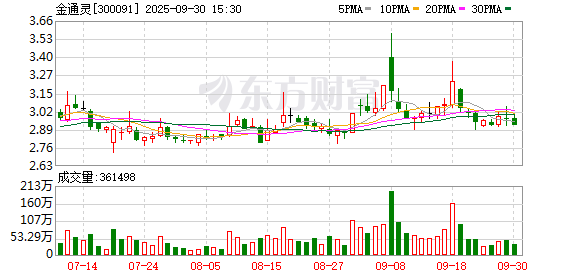
Core Points - Jintongling (300091.SZ) has been sentenced for securities fraud, with a fine of 8 million yuan and its chairman, Ji Wei, receiving a 6-year prison term and a fine of 3 million yuan [2][4] - The company has faced administrative penalties from the Jiangsu Securities Regulatory Bureau for financial fraud from 2017 to 2022, with ongoing civil litigation initiated by a representative [2][5][7] Summary by Category Criminal Sentences - Jintongling was found guilty of securities fraud and fined 8 million yuan, which is 1.17% of its latest audited net assets [4] - Ji Wei was sentenced to 6 years in prison for securities fraud and information disclosure violations, while other executives received varying prison terms and fines [4][6] Administrative Penalties - The Jiangsu Securities Regulatory Bureau imposed a fine of 1.5 million yuan on Jintongling for financial misconduct, including inflating revenue and profits through falsified documents from 2017 to 2022 [5][6] - Specific fines were also levied against Ji Wei and other executives for their roles in the fraudulent activities [6] Civil Litigation - A special representative lawsuit has been initiated against Jintongling for securities fraud, with the Nanjing Intermediate Court announcing the commencement of this process [7] - Legal experts emphasize the importance of a comprehensive regulatory approach to deter financial fraud in the capital market [7]


财务造假!这家公司即将退市
Zhong Guo Zheng Quan Bao· 2025-09-06 05:28
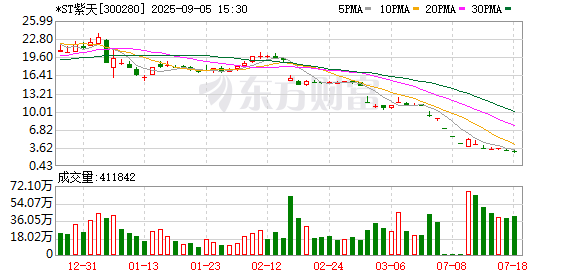
Core Viewpoint - *ST Zitian's stock will be delisted due to financial misconduct, including false accounting reports and failure to rectify issues as mandated by regulatory authorities [2][6][9] Group 1: Financial Misconduct - *ST Zitian has inflated revenue by a total of 2.499 billion yuan over two years [5][6] - In the 2022 annual report, the company falsely reported internet advertising fees and other services, inflating revenue by 778 million yuan, which constituted 44.59% of annual revenue, and profit by 85 million yuan, accounting for 35.99% of total profit [6][7] - The 2023 semi-annual report showed an inflated revenue of 207 million yuan and profit of 79 million yuan, representing 14.56% of that period's revenue and 51.64% of profit [7] - The 2023 annual report indicated an inflated revenue of 1.721 billion yuan, which was 78.63% of that year's revenue, due to incorrect revenue recognition practices [7] Group 2: Regulatory Actions - The China Securities Regulatory Commission (CSRC) imposed a total penalty of 38.4 million yuan on *ST Zitian and its management for the fraudulent activities [7][9] - The former chairman and financial director face lifetime bans from the securities market due to their roles in the misconduct [7] - Regulatory authorities are pursuing comprehensive accountability for financial fraud, indicating that penalties will extend beyond administrative actions to potential criminal charges [9] Group 3: Market Impact - *ST Zitian's stock has experienced a cumulative decline of 87.01% this year [9]
立体化追责斩除财务造假“毒瘤”
Bei Jing Shang Bao· 2025-08-10 16:34
Group 1 - The core viewpoint of the articles highlights the severe penalties imposed on *ST Gaohong for financial fraud, including a proposed fine of 1.6 billion yuan and additional penalties for involved third parties [1][2] - The regulatory body has adopted a zero-tolerance approach towards financial fraud, establishing a comprehensive accountability system that includes administrative penalties, criminal referrals, and civil compensation lawsuits to protect investors [1][3] - *ST Gaohong's financial fraud lasted for nine years from 2015 to 2021, resulting in inflated revenue of nearly 19.9 billion yuan and total profits exceeding 76.2 million yuan [1] Group 2 - The penalties for *ST Gaohong are characterized by their severity, with the company facing potential delisting due to significant violations, reflecting a strong stance against malpractices in the market [2] - The crackdown on accomplices involved in financial fraud has intensified, with significant fines imposed on individuals and companies that facilitated the fraudulent activities, indicating a shift towards stricter enforcement [2] - There has been an increase in cases where listed companies and responsible individuals face criminal charges for financial fraud, demonstrating a growing trend in the regulatory environment [3]
