竞争格局重构

Search documents
中免跌停:多元化格局下,“免税茅”能否重构护城河?
Xin Lang Cai Jing· 2026-02-25 02:23
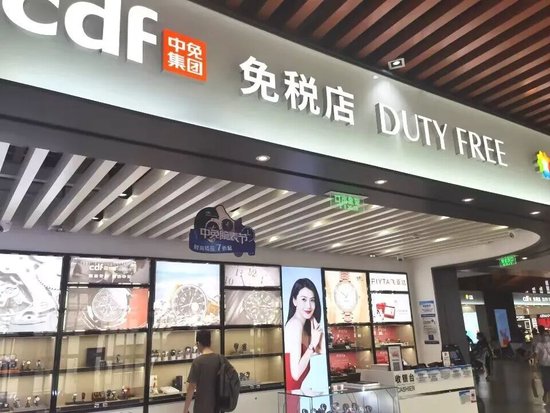
Core Viewpoint - The recent stock price drop of China Duty Free Group (中国中免) is attributed to the loss of operational rights at Shanghai Airport and declining financial performance, indicating a significant shift in the competitive landscape of the duty-free market in China [1][3][10] Financial Performance - In the first three quarters of 2025, the company reported a revenue of 39.862 billion yuan, a year-on-year decrease of 7.34%, and a net profit of 3.052 billion yuan, down 22.13% [3] - The net profit margin has decreased significantly, with a third-quarter net profit of only 0.452 billion yuan, reflecting a 28.94% decline year-on-year [3] - Operating cash flow also fell to 3.388 billion yuan, down 33.62% year-on-year, indicating increasing pressure on sales collections [3] Market Dynamics - The recent stock drop is linked to the results of the tender for duty-free projects at major airports, with new entrants like Dufry (杜福睿) and Wangfujing Group (王府井) changing the competitive landscape [4][5] - The tender results revealed a fragmentation of contracts, allowing multiple operators to enter the market, which diminishes the previous monopoly held by China Duty Free [5][7] Competitive Landscape - The entry of Dufry, a global duty-free giant, into the Chinese airport market is seen as a significant shift towards a more diversified competitive environment [7] - Wangfujing's successful bid for a terminal at Beijing Capital Airport marks its first major move into a large international hub, indicating a strategic expansion [7] Strategic Adjustments - In response to the changing market, the company is accelerating its expansion into city duty-free stores, holding rights in 13 cities, and adopting a dual operating model of "duty-free + taxable" [8] - The company is also focusing on enhancing consumer experiences and addressing complaints related to product quality and after-sales service, which have been a growing concern [9] Future Outlook - The company faces challenges in maintaining its market position as the benefits of its previous monopoly diminish, necessitating a reevaluation of its competitive strategies [10] - The recent stock price drop may reflect broader market sentiments rather than just operational issues, highlighting the need for the company to adapt to a more competitive environment [10]


康师傅新帅上任,如何让方便面“值得吃”?
阿尔法工场研究院· 2026-01-08 00:05
Core Viewpoint - The article discusses the challenges faced by Master Kong (康师傅) as it transitions under the leadership of new CEO Wei Hongcheng, emphasizing the need for the company to redefine its value proposition to modern consumers amidst declining sales in its instant noodle segment and increasing competition in the beverage market [4][11]. Group 1: Instant Noodle Business Challenges - Master Kong's instant noodle business has seen a decline in revenue for three consecutive years, dropping from 29.634 billion yuan in 2022 to 28.414 billion yuan in 2024, with a further 2.5% decrease in the first half of 2025 [10]. - The traditional convenience of instant noodles is being undermined by the rise of food delivery services and a growing variety of ready-to-eat meals, leading to a shift in consumer preferences [9]. - Health consciousness among consumers has negatively impacted the perception of instant noodles, which are often viewed as high in oil and salt [10]. Group 2: Beverage Segment Performance - Since Wei Hongcheng took over the beverage division in 2019, Master Kong has expanded its product range significantly, with beverage revenue increasing from 35.6 billion yuan in 2019 to 51.621 billion yuan in 2024, accounting for 64% of total revenue [12]. - Despite this growth, the beverage segment faced a rare decline of 2.6% in revenue in the first half of 2025, indicating potential challenges ahead [13]. - The competition in the sugar-free tea market is intensifying, with rivals like Nongfu Spring and Suntory gaining market share, while Master Kong struggles to establish a strong brand identity [13]. Group 3: Distribution and Brand Trust Issues - Master Kong's distribution network has shrunk significantly, with the number of distributors dropping from 76,875 in 2024 to 67,215, marking the largest decline in five years [15]. - A price increase in 2024 for several key products has led to consumer dissatisfaction, as competitors have not followed suit and have increased promotional efforts [15]. - The brand's credibility is at risk as consumers perceive new products as mere marketing gimmicks rather than genuine improvements, leading to a loss of loyalty [16]. Group 4: Leadership and Future Directions - Wei Hongcheng's appointment as CEO is seen as a pivotal moment for Master Kong, requiring a shift from merely managing beverages to a comprehensive strategy that rebuilds brand trust and addresses the challenges in the instant noodle segment [17]. - The company must answer critical questions about revitalizing its instant noodle offerings, establishing a distinctive brand in the beverage market, and restoring trust with both distributors and consumers [17]. - The year 2026 is highlighted as a crucial period for Master Kong to adapt and thrive in a rapidly changing consumer landscape dominated by Generation Z [17].