
化妆品

Search documents
国泰海通|“远望又新峰”2026春季策略会观点集锦(下)——消费、医药、科技、先进制造、金融
国泰海通证券研究· 2026-03-24 14:00
Group 1: Food and Beverage Industry - The core investment strategy for the food and beverage sector in 2026 emphasizes the importance of price increases, with a focus on resilient segments such as condiments, beer, and beverages [4][5] - The white liquor industry is nearing the end of its adjustment phase, transitioning from a "U-shaped" to a "V-shaped" recovery, with expectations of a quicker bottoming process starting from Q3 2025 [4] - The beer sector is expected to improve due to the stabilization of dining scenarios and a gradual recovery in consumer spending, with historical trends indicating profitability benefits during periods of rising CPI [5] Group 2: Consumer Goods - The consumer goods sector is witnessing a bottoming out, with a focus on companies that can effectively pass on price increases amidst diminishing cost advantages [5] - The demand for condiments is anticipated to recover, with expectations of price increases and improved profitability in the dairy sector as supply and demand cycles align [5] Group 3: Beauty and Personal Care - The beauty and personal care industry is experiencing a recovery in demand, with significant growth in the cosmetics and personal care segments, particularly in online sales [7][8] - The market is seeing a resurgence in high-end and affordable brands, with domestic brands maintaining rapid growth amidst a competitive landscape [8] Group 4: Service Consumption - The service consumption sector is benefiting from favorable policies, with a focus on travel and leisure services, as well as improvements in traditional retail [10][11] - The education sector is expected to see robust demand, particularly in vocational training and skill development, supported by policy initiatives [10] Group 5: Home Appliances - The home appliance industry is awaiting a recovery in domestic demand, with a focus on companies that possess pricing power amidst rising costs [15] - The global supply chain for home appliances is becoming more resilient, with expectations of improved export conditions [15] Group 6: 3D Printing Industry - The 3D printing market is projected to grow significantly, driven by both industrial and consumer demand, with a forecasted CAGR of 18% from 2024 to 2034 [18][19] - The demand for PLA materials in consumer-grade 3D printing is expected to increase, with domestic manufacturers ramping up production capabilities [19] Group 7: Textile and Apparel - The textile and apparel sector is showing signs of recovery, with strong growth in retail sales and exports, particularly in the context of rising cotton prices [23][24] - The market is expected to see a shift towards mid-to-high-end products, with brands focusing on innovation and sustainability [24] Group 8: Agriculture - The agricultural sector is anticipated to benefit from rising commodity prices, with a focus on the recovery of pig farming and the potential for pet product valuations to rebound [27] Group 9: Pharmaceutical Industry - The pharmaceutical sector is witnessing a shift towards innovative drugs, with a focus on oncology and metabolic treatments, as well as improvements in domestic demand for medical devices [30][31] Group 10: Financial Services - The financial services sector is focusing on wealth management and internationalization, with a notable increase in demand for investment consulting services [59][62] - The insurance industry is expected to see stable growth in premium income, driven by savings demand and improved asset-liability management [66]


美容护理行业双周报(2026/3/6-2026/3/19):需求稳增与盈利承压并存,行业分化加剧-20260320
Dongguan Securities· 2026-03-20 08:56
Investment Rating - The report maintains an "Overweight" rating for the beauty care industry, indicating an expectation that the industry index will outperform the market index by more than 10% over the next six months [29]. Core Insights - The beauty care industry is experiencing a simultaneous increase in demand and pressure on profitability, leading to intensified industry differentiation. Companies are shifting focus from scale expansion to profit orientation, with a structural divergence expected in the short term. However, there is potential for recovery in the medium to long term due to increased concentration among leading companies and product strength [29]. - The retail sales of cosmetics reached 75.3 billion yuan in January-February 2026, marking a year-on-year growth of 4.5%, which outperformed the overall market and reflects a steady growth trend [21][23]. - The overall price-to-earnings ratio (PE) of the beauty care industry is approximately 32.46 times, which is below the valuation mean since 2015, indicating a potential undervaluation [20]. Summary by Sections Market Review - The SW beauty care industry underperformed the CSI 300 index, declining by 1.52% from March 6 to March 19, 2026, and ranked fifteenth among SW primary industries [13]. - All secondary segments within the beauty care industry recorded negative returns during the same period, with personal care products, cosmetics, and medical beauty declining by 1.56%, 2.27%, and 2.30%, respectively [14]. - Approximately 29.03% of stocks in the industry recorded positive returns, with Keshihua leading with a 5.62% increase, while Shuiyang shares saw the largest drop at 10.32% [15]. Industry News - The growth of the skincare and beauty business by Ryohin Keikaku (Muji) has doubled its revenue to approximately 100 billion yen, accounting for about 13% of total sales, becoming a significant growth driver [24]. - Intercos, a leading global beauty OEM, reported a 1.7% decline in revenue for 2025, marking its first annual revenue drop since its IPO in 2021, although its adjusted EBITDA increased by 8.8% [25]. Company Announcements - Aimeike reported a revenue of 2.453 billion yuan for 2025, down 18.94% year-on-year, with a net profit of 1.291 billion yuan, a decrease of 34.05% [26]. - Juzi Biotechnology achieved a revenue of 5.519 billion yuan for 2025, a slight decline of 0.4%, with a net profit of 1.915 billion yuan, down 7.1% [27]. - Shuiyang shares are nearing conditions for redeeming convertible bonds, reflecting marginal improvements in operations and market expectations [28]. Weekly Industry Perspective - The report emphasizes the ongoing structural optimization in the beauty care industry, with a shift from scale expansion to profit quality enhancement. It suggests focusing on leading companies with strong brand and cash flow advantages, such as Huaxi Biological, Wanmei Biological, Beijia Clean, and Shanghai Jahwa, to capture structural opportunities [29][30].
“袋鼠妈妈”被约谈批评!
新华网财经· 2026-03-19 03:24
Group 1 - The Guangzhou Market Supervision Administration announced an investigation into the Kangaroo Mom Group regarding allegations related to cosmetic sales [2] - A verification team was established, and on-site inspections were conducted, confirming that the company's production practices are compliant [2] - Over the past three years, 38 batches of the company's cosmetics were sampled by market supervision departments, all meeting the requirements of the "Cosmetic Safety Technical Specifications" [2] Group 2 - The administration criticized the company for inappropriate marketing statements and urged it to implement corrective measures [2] - The Guangzhou Market Supervision Administration will continue to strengthen supervision and inspection of cosmetic companies to ensure compliance and safeguard consumer safety [2] - The administration expressed gratitude for the public's concern and supervision regarding the quality of cosmetics in Guangzhou [2]

1-2月投资消费数据点评:内生动能渐次回归,弱复苏格局深化
金融街证券· 2026-03-18 11:07
Consumption Insights - In January-February 2026, the total retail sales of consumer goods increased by 2.8% year-on-year, a significant rebound from 0.86% in December 2025[1] - Core consumption, excluding automobile sales, grew by 3.7%, returning to levels seen in the second half of 2024[1] - Current potential consumption growth is estimated to be in the range of 4%-5%, with core consumer goods growth nearing the lower bound of this range[5] Investment Trends - Fixed asset investment increased by 1.8% year-on-year in January-February 2026, with infrastructure investment rising by 11.4% and manufacturing investment by 3.1%, while real estate development investment fell by 11.1%[2] - The share of private investment in fixed asset investment has been declining, dropping to 50.1% in 2024, and is expected to fall below 50% in 2025[4] - Private fixed asset investment decreased by 2.6% year-on-year, but the decline is less severe compared to a 6.4% drop in 2025, indicating a gradual accumulation of internal growth momentum[10] Policy and Financial Support - Special bonds for local governments are expected to maintain a high issuance quota of 4.4 trillion yuan in 2026, with 82.42 billion yuan issued in January-February, a 38.1% increase year-on-year[13] - The government is focusing on using special bonds for project investment rather than resolving existing risks, which may alleviate funding constraints for local investments[3] - Policy tools such as long-term special bonds and structural monetary policy are being utilized to support infrastructure and manufacturing investments[11] Risks and Outlook - Risks include potential unexpected declines in consumption, insufficient policy support, and weak recovery of internal growth momentum[20] - The overall investment environment is in a weak recovery phase, with the sustainability of effective investments relying on internal growth dynamics[19]
商贸零售行业定期报告:社零+2.8%,开局良好
CAITONG SECURITIES· 2026-03-17 12:41
Investment Rating - The industry investment rating is maintained as "Positive" [2] Core Insights - The total retail sales for January-February 2026 reached 86,079 billion yuan, with a nominal year-on-year increase of 2.8%, exceeding market expectations; retail sales excluding automobiles increased by 3.7% year-on-year [4][12] - In January-February, the retail sales of catering amounted to 10,264 billion yuan, with a year-on-year increase of 4.8%, while commodity retail sales were 75,815 billion yuan, with a year-on-year increase of 2.5% [4][13] - Essential goods showed strong performance due to holiday effects and increased return migration, with year-on-year growth in food and oil (+10.2%), beverages (+6.0%), tobacco and alcohol (+19.1%), and daily necessities (+6.6%) [4][20] - For discretionary goods, textiles and clothing, as well as communication equipment, led the growth, with cosmetics (+4.5%), gold and silver jewelry (+13.0%), textiles and clothing (+10.4%), and communication equipment (+17.8%) showing significant increases [4][22] - The real estate chain remained relatively flat, while the automotive chain continued to be weak, with retail sales of passenger cars declining by 18.9% year-on-year [4][25] - Online retail sales grew by 9.2% in January-February, totaling 32,546 billion yuan, with physical online retail sales reaching 20,812 billion yuan, up 10.3% year-on-year [4][35] Summary by Sections Overall Retail Data - The total retail sales for January-February 2026 were 86,079 billion yuan, with a nominal year-on-year increase of 2.8%, and a 3.7% increase excluding automobiles [4][12] - Urban and rural retail sales increased by 2.7% and 3.2% year-on-year, respectively [4][13] Limited Above Data - The retail sales of limited above units reached 32,218 billion yuan, with a year-on-year increase of 2.7% [4][20] - Retail sales of limited above commodities and catering increased by 2.5% and 4.7% year-on-year, respectively [4][20] Classification Data - Essential consumption categories showed significant growth: food and oil (+10.2%), beverages (+6.0%), tobacco and alcohol (+19.1%), daily necessities (+6.6%) [4][22] - Discretionary consumption categories included textiles and clothing (+10.4%), cosmetics (+4.5%), gold and silver jewelry (+13.0%), and communication equipment (+17.8%) [4][22] Online Retail Data - Online retail sales totaled 32,546 billion yuan, with a year-on-year increase of 9.2% [4][35] - Physical online retail sales reached 20,812 billion yuan, with a year-on-year increase of 10.3% [4][35] - Online service retail sales amounted to 11,734 billion yuan, with a year-on-year increase of 7.3% [4][35]
社零数据点评:1-2月社零+2.8%,消费开年温和复苏
HUAXI Securities· 2026-03-17 11:37
Investment Rating - Industry rating: Recommended [4] Core Insights - The retail sales of consumer goods in January-February 2026 increased by 2.8% year-on-year, slightly above the consensus expectation of 2.7% [1] - The real estate sector showed significant declines in new construction, completion, sales area, and development investment, with year-on-year decreases of 23.3%, 26.9%, 15.9%, and 10.7% respectively [1][2] - The furniture and cultural office supplies sectors experienced growth rates of 8.8% and 5.8% respectively, indicating a structural recovery in the home goods market [2] - The cosmetics sector saw retail sales of 75.3 billion yuan, with a year-on-year increase of 4.5%, although February faced temporary pressure due to logistics delays and decreased consumer demand [3][6] - The gold and jewelry retail sector reported a retail sales increase of 13.0% year-on-year, supported by rising gold prices and a recovering economy [6] Summary by Category Home Goods - The real estate market is stabilizing, with expectations of recovery supported by ongoing policies and macroeconomic stability [2] - The home goods market is benefiting from trade-in subsidies, activating consumer demand [2] - Key companies to watch include Oppein Home and Mousse, which have strong channel capabilities and product innovation [7] Cosmetics - The cosmetics market is expected to recover, driven by consumer upgrade trends and the upcoming 618 shopping festival [3] - Brands with strong cultural characteristics and clear improvement trends are recommended, such as Maogeping and Lin Qingxuan [7] Gold and Jewelry - The gold and jewelry sector is expected to maintain resilience, particularly among high-end and youth-oriented brands [6] - Companies with strong brand premiums and differentiated pricing models, such as Laopu Gold, are highlighted for investment [7]
纺织品和服装行业研究:国棉与美棉需求缺口判断维持;逸仙电商获超一亿战略融资
SINOLINK SECURITIES· 2026-03-15 08:31
Investment Rating - The report maintains a neutral investment rating for the cotton industry, indicating a stable outlook for the supply-demand balance in both the US and China for the 2025/26 period [1][9]. Core Insights - The USDA's March cotton report confirms the demand gap for US cotton, with a projected GDP growth of 2.2% in the US for 2025, driven by increased consumer spending, leading to a 5% rise in apparel retail sales, a historical high [1][9]. - The structure of US cotton product imports has shifted significantly, with India becoming the largest supplier, surpassing China due to geopolitical risks and high tariffs imposed on Chinese goods [1][9]. - Yatsen E-commerce has secured over $120 million in strategic financing, with skincare revenue surpassing makeup for the first time, indicating a shift in consumer preferences [1][9]. Industry Data Tracking - In January, apparel retail sales showed a robust year-on-year growth of 3.3%, despite a high base from the previous year and warmer weather conditions [2][21]. - The report highlights a positive outlook for various segments within the apparel industry, including outdoor sports, men's and women's clothing, and home textiles, all showing signs of recovery and growth potential [2][21]. Investment Recommendations - The report suggests focusing on companies that align with consumer trends, such as Haizhu, which is adapting to the consumption downgrade trend and expanding its business model [3][41]. - It recommends investing in leading brands in the apparel sector, such as Li Ning and Bi Yin Le Fen, as well as companies in the healthcare and beauty sectors that are expected to benefit from strong market demand [3][41]. - The manufacturing sector is highlighted for its resilience, with recommendations for leading companies like Zhejiang Natural and Huali Group, which have demonstrated strong risk resistance [3][41]. Market Review and Company News - The report notes that the textile manufacturing sector experienced a decline of 0.45% in the last week, with specific companies like Sanfangxiang and Jian Sheng Group showing notable gains, while Bosideng and Yanjiang Group faced declines [4][42]. - Key announcements include Yatsen E-commerce's strategic financing and performance updates from various companies, indicating ongoing developments in the industry [4][55].

专访中国香妆协会副秘书长刘洋:标准当“守底线、拉高线”|“315”特别策划
经济观察报· 2026-03-14 08:23
Core Viewpoint - The article emphasizes the increasing importance of standards in the rapidly developing cosmetics industry, highlighting the establishment of a multi-tiered standard system that guides product quality, raw material specifications, efficacy evaluation, and labeling management [2][4]. Group 1: Functions of Standards - Standards can be categorized into two main functions: "guarding the baseline," which sets minimum technical requirements such as product and raw material quality, and "raising the bar," which guides industry development through quality management and evaluation standards [6][2]. - The China Fragrance and Cosmetic Industry Association plays a crucial role in the development of national, industry, and group standards, having initiated 49 new group standards and formally published 21 in 2025 alone [2][4]. Group 2: Role of the Association - The association acts as both a participant in the drafting of national and industry standards and as an organizer for group standards, bringing together enterprises, research institutions, and experts to collaboratively develop standards [4][7]. - The standard-setting process involves rigorous validation and consensus-building, ensuring that standards are scientifically sound and practically applicable [5][7]. Group 3: Development of Group Standards - Group standards serve as an important innovation in standardization, particularly for new technologies and products that lack established national or industry standards, allowing for more flexible and focused development [9][10]. - The quality of group standards can vary significantly, with some organizations potentially prioritizing profit over scientific rigor, which undermines the purpose of these standards [9][10]. Group 4: Future Trends in Standards - The future of the cosmetics industry's standard system is expected to become more detailed and specialized, adapting to ongoing technological advancements and new product developments [11]. - Continuous improvement and refinement of the standard system are necessary to maintain market order and guide enterprises towards higher technical and quality standards [11].

Ulta Beauty, Inc. (NASDAQ:ULTA) Faces Market Challenges Despite Strong Product Offerings
Financial Modeling Prep· 2026-03-13 21:09
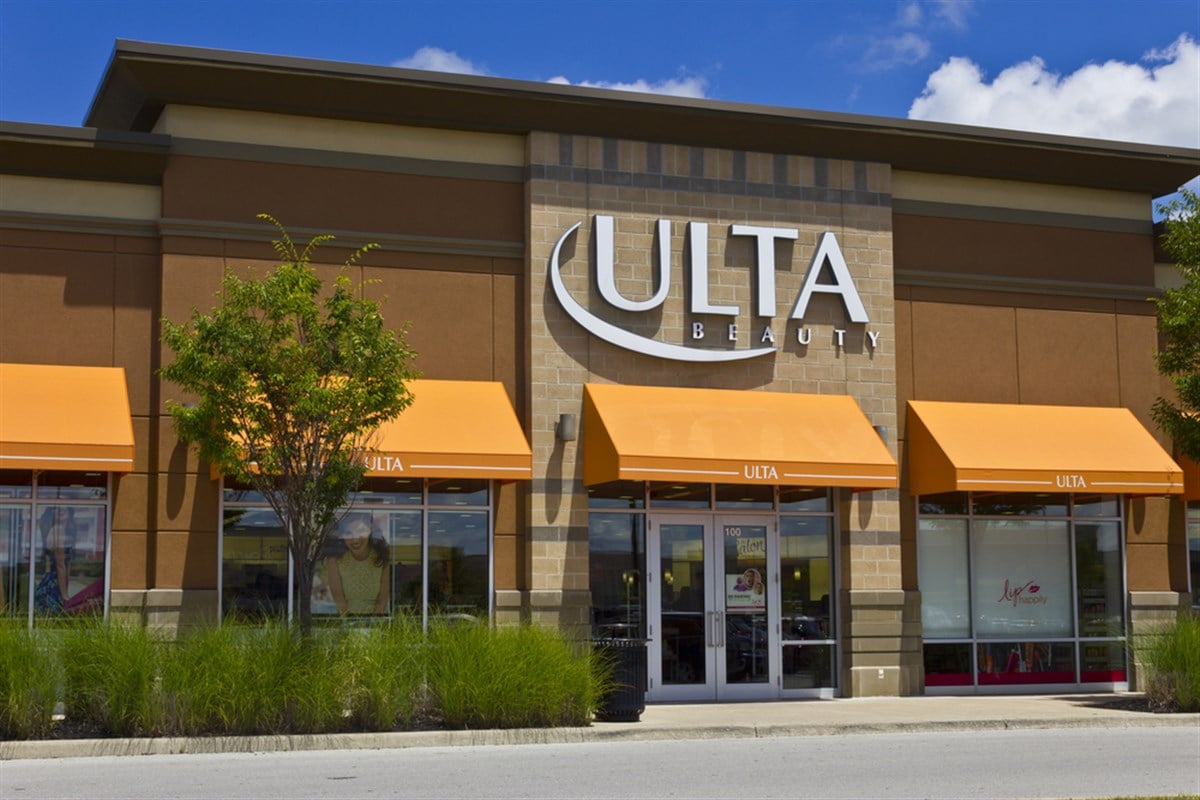
Core Viewpoint - Ulta Beauty, Inc. is facing challenges in maintaining investor confidence due to a disappointing quarterly profit report and a weaker-than-expected outlook for 2026, despite exceeding revenue expectations [2][3][5]. Financial Performance - Ulta's fourth-quarter earnings per share were $8.01, missing analyst estimates by 2 cents, while revenue reached $3.9 billion, exceeding expectations [3][6]. - The current stock price of ULTA is $547.16, reflecting a decrease of $77.54 or approximately -12.41% [4]. - Over the past year, ULTA has fluctuated between a high of $714.97 and a low of $323.37, with a market capitalization of approximately $24.53 billion [4]. Analyst Insights - Michael Lasser from UBS set a price target of $810 for ULTA, indicating a potential upside of approximately 48.20% from its then-current price of $546.56 [2][6]. - Analysts at Oppenheimer have reduced their price target for Ulta from $750 to $650, citing concerns over economic and geopolitical factors [5][6]. Market Context - Ulta competes with major beauty retailers like Sephora and operates over 1,200 stores across the United States, offering a diverse range of products and in-store salon services [1].

莎莎国际(00178.HK):3月11日南向资金减持8000股
Sou Hu Cai Jing· 2026-03-11 20:30
Group 1 - Southbound funds reduced their holdings in Sa Sa International (00178.HK) by 8,000 shares on March 11 [1] - Over the past 5 trading days, there have been 5 days of net reductions by southbound funds, totaling 22,000 shares [1] - In the last 20 trading days, there have been 20 days of net reductions, amounting to 180,000 shares [1] Group 2 - As of now, southbound funds hold 1.8072 million shares of Sa Sa International, representing 0.05% of the company's issued ordinary shares [1] - Sa Sa International Holdings Limited primarily engages in the retail of beauty products in Asia, selling skincare, perfumes, cosmetics, hair care, body care, beauty health products, and home beauty devices [1] - The company operates retail stores in Hong Kong, Macau, and Southeast Asia, and also provides online retail services through e-commerce platforms in these regions [1]
