第3选择

Search documents
所有棘手冲突的破局点,都藏在“第3选择”里 | 红杉Library
红杉汇· 2025-10-24 00:04
Core Concept - The article emphasizes the principle of "Third Choice" as a powerful approach to resolving conflicts and creating collaborative solutions that transcend traditional binary thinking [3][6][11]. Group 1: Understanding the Third Choice - The "Third Choice" is a method that goes beyond the typical "my way" or "your way" approaches, aiming for a collaborative solution that benefits all parties involved [6][11]. - Conflicts often arise from entrenched mindsets, where each side believes their perspective is the only valid one, leading to a stalemate [6][7]. - The article highlights the importance of cognitive patterns in shaping behavior and outcomes, suggesting that changing one's mindset can lead to better results [7][8]. Group 2: Steps to Achieve Collaboration - The process of achieving the "Third Choice" involves four key steps: 1. **Invitation to the Third Choice**: Initiating a conversation that signals a willingness to collaborate rather than compete [11]. 2. **Defining Success Criteria**: Establishing what a win-win outcome looks like for both parties [12]. 3. **Creating the Third Choice**: Encouraging open brainstorming without limitations, focusing on collective creativity [12]. 4. **Confirming and Acting on the Third Choice**: Identifying a solution that excites both parties and meets the agreed-upon success criteria [13][19]. Group 3: Mindset Shifts for Effective Collaboration - To foster collaboration, individuals must shift their mindset in three ways: 1. **Seeing Oneself**: Recognizing personal motivations and avoiding defensive reactions during conflicts [15]. 2. **Seeing Others**: Valuing the perspectives of others and actively listening to their viewpoints [16]. 3. **Finding Common Ground**: Embracing differences as a starting point for collaboration rather than a source of conflict [16][17]. Group 4: Overcoming Barriers to Collaboration - The article identifies three common barriers to collaboration, referred to as the "GET traps": - **Gain**: The fixation on personal benefits [17]. - **Emotion**: Being driven by insecurities [17]. - **Territory**: Defending one's own domain [17]. - Overcoming these barriers requires a belief that collaborative gains outweigh individual ones, fostering a more cooperative environment [17].

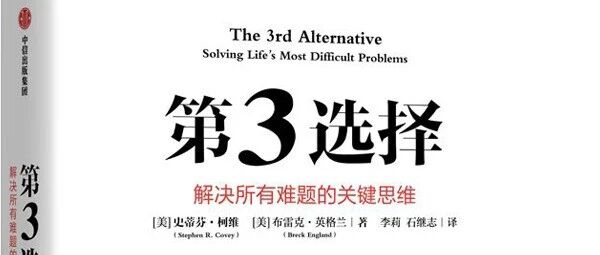
第3选择:职场冲突的新解法
3 6 Ke· 2025-08-11 02:53
Group 1 - The core idea of the article revolves around the concept of the "Third Option," which emphasizes finding collaborative solutions in conflicts rather than engaging in zero-sum games [1][5][13] - The case of ByteDance illustrates how a product team and a technical team resolved their conflict by breaking down a feature into three versions, leading to unexpected user approval and collaboration [1][3] - The "Third Option" is contrasted with traditional approaches to conflict resolution, which often involve compromise or confrontation, highlighting the potential for creating greater value through collaboration [3][5] Group 2 - The article discusses the "Four Steps to Collaboration" as a practical guide to implementing the "Third Option" in workplace conflicts [6] - The first step involves inviting the other party to explore a better solution together, signaling a willingness to cooperate [7] - The second step focuses on defining mutually recognized success criteria to ensure that both parties have a clear understanding of what constitutes a win [8] - The third step encourages brainstorming without limitations to generate creative solutions [9] - The final step is to confirm the collaborative solution and take action, ensuring it meets the established success criteria [10] Group 3 - The article warns against the "GET Trap," which refers to the pitfalls of focusing on personal gain, being controlled by emotions, and defending one's territory, ultimately hindering collaboration [12] - It emphasizes that the essence of the "Third Option" lies in improving communication and overcoming limited thinking, rather than competing for scarce resources [13] - The article concludes by reiterating that true success in conflicts comes from creating win-win situations, rather than viewing life as a zero-sum game [13]


四步协同法:化解职场矛盾的 “第3选择”
Feng Huang Wang Cai Jing· 2025-08-08 09:16
Group 1 - The core concept of "Third Choice" is to move beyond the win-lose mentality in conflict resolution, focusing on creating a solution that benefits both parties [3][7][25] - "Third Choice" encourages collaboration rather than compromise or confrontation, aiming for a solution that provides emotional rewards for employees while generating significant value for the company [4][10][16] - The approach emphasizes the importance of redefining success criteria that both parties can agree upon, ensuring that the resolution aligns with the goals of both the employee and the organization [12][14] Group 2 - The "Four Steps to Collaboration" framework includes inviting the other party to explore the "Third Choice," defining mutually accepted success standards, brainstorming creative solutions, and confirming the collaborative decision [8][10][11][14] - The first step involves breaking the deadlock by signaling a willingness to cooperate and explore better options together [10] - The second step requires both parties to clarify what constitutes a win-win outcome, ensuring that all voices are heard in the process [12][13] Group 3 - The third step focuses on generating creative ideas without limitations, encouraging an open-minded brainstorming session to find innovative solutions [13][14] - The final step is to confirm the collaborative solution that excites both parties, ensuring it meets the previously defined success criteria [14] - The "Third Choice" approach is supported by three core mindsets: self-awareness, respect for the other party's value, and embracing differences as a starting point for collaboration [16][18][20] Group 4 - The article warns against the "GET Trap," which hinders collaboration due to personal gain, emotional insecurity, and territoriality [20][21] - Overcoming the "GET Trap" involves recognizing that collaborative gains outweigh individual benefits, fostering a mindset of humility and cooperation [20][21] - The essence of workplace conflict is not about who is right or wrong, but about whether parties can work together towards a common goal [21][25]